Real build data, Q3 2026
Jul 1 to Sep 30, 2026Every ranking on this page comes from parts real builders added to their builds on GunPartPicker, Jul 1 to Sep 30, 2026. A pick counts each time a builder adds the part to a build in our builder, filed under the part's own category. Prices and stock are checked daily across every store we track. No surveys, no search trends, no sponsored picks.
Quick picks
Live prices- 1
 Most addedStrike Industries Collar Adjustable Gas BlockPicked by hundreds of builders in Q3 2026/9 stores/In stock
 - 2
 Best budgetWilson Combat AR-15 Lo-Profile Gas Block .750" BlackPicked by hundreds of builders in Q3 2026/7 stores/In stock
 - 3

- 4
 Best premiumSuperlative Arms Bleed Off Adjustable Gas Block Clamp on .875" -Titanium - DLC Dark Finish7 stores/In stock
How we pick: ranked by how often builders added each part to a real build on GunPartPicker in Q3 2026, in stock parts first, then by tier. Prices and stock are checked daily across every store we track.
These four gas blocks are the ones GunPartPicker builders picked most often in each price band or journal size from July through September 2026, and all four are in stock today.
- Best overall: Strike Industries Collar Adjustable Gas Block, $90.99. A .750 clamp on block adjusted by rotating a collar, and the most picked gas block at any price.
- Best budget: Wilson Combat Lo-Profile .750, $29.42. A fixed steel block and the most picked option under $50.
- Best for a .936 journal: Aero Precision .936 Low Profile, nitride, $26.99. The most picked .936 block by a wide margin.
- Best premium: Superlative Arms Bleed Off, clamp on, .875, titanium, $169.99. The most picked block above $120, compatible only with a .875 journal.
Picked by hundreds of builders in Q3 2026/In stock
Picked by hundreds of builders in Q3 2026/In stock

In stock
Best overall: Strike Industries Collar Adjustable Gas Block
Picked by hundreds of builders in Q3 2026/In stock
The Strike collar block accounted for 22% of all gas block picks on GunPartPicker in the third quarter of 2026, more than any other block at any price. If your barrel has a .750 journal and you'd like the option to run a suppressor, it's the adjustable block we'd start with.
A conventional adjustable block regulates gas with a small screw in its face, and you turn that screw with a hex key and count clicks to find your setting again. Strike's design swaps that screw for a collar that rotates between six detented positions, five open sizes and one fully closed.
According to Strike, you can rotate it by hand, or with a bullet tip or a blade once it's inside a handguard, so switching between suppressed and unsuppressed shooting returns you to the identical setting every time.
The block clamps around the barrel with three screws instead of relying on set screws. It's $90.99 at the least expensive of the seven retailers with it in stock, and approximately $100 at the other six.
What we like
- The collar adjusts without a tool, so there's no hex key to carry to the range.
- Six detented positions, five open and one closed, make a known setting easy to repeat.
- It clamps on with three screws, so there are no set screws to dimple for.
Watch out for
- It's compatible with .750 journals only.
- You get five fixed open sizes, so you can't fine tune between steps the way a screw adjustable block allows.
- Strike specifies a barrel with a gas block stop and a maximum of 15 inch pounds on the clamp screws.
Best budget: Wilson Combat Lo-Profile .750
Picked by hundreds of builders in Q3 2026/In stock
The Wilson accounted for 18% of gas block picks from July through September, second only to the Strike collar, and it's the most picked block under $50 by a wide margin. It's a fixed block bored for a .750 journal, machined from 4140 chromoly steel with a black phosphate finish, and it attaches with hardened set screws.
A fixed block delivers whatever gas the barrel's port provides directly to the carrier, with no way to reduce it. On a rifle that will never wear a suppressor, we think that's the right tradeoff, because it leaves nothing on the block to drift out of adjustment or seize with carbon.
The retailer listings say the gas tube roll pin comes in the package, so a first build doesn't need a separate order for one.
It's $29.42 at the least expensive of the six retailers with it in stock.
What we like
- The 4140 chromoly steel body has a black phosphate finish, according to the retailer listings.
- The package includes the gas tube roll pin.
- Every retailer with it in stock currently charges under $36.
Watch out for
- There's no gas adjustment, so it can't regulate a suppressed or overgassed rifle.
- Set screws secure it, so plan to dimple the barrel or use removable thread locker to prevent migration.
- It's compatible with .750 journals only.
Best for a .936 journal: Aero Precision .936 Low Profile
Builders with a .936 gas journal chose this block over every other .936 option by a wide margin. The Aero accounted for 6% of all gas block picks from July through September, third overall, even though .936 blocks as a group took only 8% of picks where the diameter is known.
It's a fixed steel block with a black nitride finish, secured by steel 10-32 knurled cup point set screws. Nitride is a hardening treatment diffused into the surface of the steel, so there's no separate coating sitting on top to chip or flake. The catch right now is availability.
What we like
- It's the least expensive of our four recommendations, at $26.99.
- The black nitride finish is part of the steel's surface, with no paint or coating to wear through.
- Knurled cup point set screws are a tip style designed to grip the journal and resist loosening from vibration.
Watch out for
- Only two retailers have it in stock, and one of them shows a single unit remaining.
- The gas tube roll pin isn't included, so order one separately.
- Aero advises against red thread locker on the set screws, so use the removable variety.
Best premium: Superlative Arms Bleed Off, clamp on, .875 titanium
In stock
The Superlative Bleed Off accounted for 3% of all gas block picks from July through September, and nothing else over $120 came close. It's adjustable, but it operates the opposite way from a conventional restricting block.
A restricting block narrows the gas passage with its adjustment screw. The Bleed Off leaves that passage open and vents the excess pressure forward out of the front of the block, so only the gas the carrier requires travels back down the tube.
Superlative says that keeps the action cleaner and cooler, reduces felt recoil, and protects the adjustment screw from erosion and seizing, since the screw never chokes the gas flow. With a suppressor attached, less gas returns through the action toward your face.
This version is grade 5 titanium with a DLC coating, listed at 1.17 ounces, and it clamps on rather than relying on set screws. Pricing starts at $169.99 among the six retailers with it in stock, and the others list it at $188.99.
What we like
- Bleed off venting releases excess gas out the front instead of restricting it at the screw.
- The grade 5 titanium body has a DLC coating and is listed at 1.17 ounces.
- It offers 30 adjustment positions and ships with the hex key, screws and gas tube roll pin.
Watch out for
- It fits .875 journals only, a diameter that took about one in twenty gas block picks, so we'd check the barrel twice before ordering.
- Expect to pay roughly six times the price of the Wilson, at $169.99 to $188.99.
- Adjusting it requires the hex key, unlike the Strike collar.
If your barrel has a .750 journal, Superlative's stainless Bleed Off with set screws uses the same venting design for $89.99. You'll find it among the additional options below.
What does a gas block do on an AR-15?
An AR-15 operates on its own propellant gas. When the bullet passes a small port drilled through the top of the barrel, hot gas follows it up into the gas block, turns back through the gas tube, and blows into the carrier key to drive the bolt carrier rearward. That system is called direct impingement, and the gas block is the junction where it begins.
The block sits on the gas journal, a short machined section of the barrel directly beneath the port. Its job is to seal around that port and transfer the gas into the tube without leakage.
If the block is the wrong diameter, slides forward or rotates even slightly, its internal passage stops aligning with the port and the carrier receives less gas than it needs. An undergassed rifle fails to eject reliably or won't lock the bolt back on an empty magazine.
Which gas block diameter fits your barrel?
Gas Block Picks by Journal Diameter
Picks where the listing or maker names the diameter (96% of gas block picks), Jul 1 to Sep 30, 2026
| Item | Share (%) |
|---|---|
| .750 | 81.4% |
| .936 | 7.5% |
| .625 | 5.9% |
| .875 | 5.2% |
The block's bore has to match the journal's outside diameter, because the seal depends on a close metal fit around the port. Four diameters cover nearly every AR-15 barrel, and your barrel's listing or specification sheet identifies the one you have.
- The .750 journal is standard on most AR-15 barrels, including government and M4 profiles, and it took 81% of gas block picks from July through September where the listing identifies the diameter.
- The .625 journal fits pencil and lightweight profile barrels, since they're thinner beneath the handguard.
- The .875 journal fits some heavy and bull profile barrels.
- The .936 journal appears on .308 (AR-10) barrels and on some heavy AR-15 barrels.
Adjustable or fixed gas block?
Adjustable vs Fixed
Gas block picks by type, from the listing name, Jul 1 to Sep 30, 2026
| Item | Share (%) |
|---|---|
| Fixed low profile | 49.6% |
| Adjustable | 49.2% |
| Front sight (A2 style) | 1.2% |
Builders divided almost exactly in half between July and September. Fixed blocks accounted for 50% of gas block picks and adjustable blocks for 49%, with traditional A2 front sight blocks making up the remaining 1%.
Barrel manufacturers size the gas port with a safety margin so the rifle still cycles with weak ammunition and a dirty action, so a typical rifle sends more gas than it strictly needs. A suppressor adds to that surplus. The can holds pressure in the bore slightly longer, so more gas returns through the tube, the carrier travels faster, and more of it escapes from the ejection port and around the charging handle toward your face.
An adjustable block lets you reduce that flow. The usual tuning method is to close it until the bolt stops locking back on an empty magazine, then open it a position or two. A fixed block can't do any of that, but it has nothing to adjust, nothing to drift and nothing to seize. The most picked fixed block also costs about a third as much as the most picked adjustable one.
If you don't own a suppressor and don't plan to buy one, a fixed block is all you need. We'd only spend the extra money once a can is actually on the way.
Set screw, clamp on or pinned?
How the block grips the journal determines whether it stays aligned with the port for the life of the barrel.
Set screws press against the journal. They're inexpensive and quick to install, but on a smooth journal they can migrate under heat and recoil, so builders drill shallow dimples for the screw tips to seat in or apply removable thread locker. Both the Wilson and the Aero recommendations use set screws.
Clamp on blocks wrap around the journal and squeeze it with screws, distributing the grip around the barrel instead of concentrating it on two small points. They don't require dimples, but they do require correct torque, and Strike specifies a maximum of 15 inch pounds for its collar block. The Strike and Superlative picks both clamp on.
Pinned blocks are secured by a taper pin running through the block and into the barrel. They're the most permanent of the three methods, and drilling for the pin is a job for a gunsmith with proper fixturing.
Will a gas block fit under your handguard?
All four of our recommendations are low profile blocks, designed short enough to sit inside a free float handguard. A free float rail only stays free floating if nothing inside it touches the barrel or the block, so the block has to clear the rail's inside diameter all the way around. Your handguard manufacturer publishes a minimum clearance, and you should compare the block's height against it before you order, especially on a slim rail.
What builders pick and spend
Most Picked Gas Blocks
Share of gas block picks on GunPartPicker, each builder counted once per block, Jul 1 to Sep 30, 2026
| Item | Share (%) |
|---|---|
| Strike Industries Collar Adjustable | 22.4% |
| Wilson Combat Lo-Profile .750 | 18.2% |
| Aero Precision .936 Low Profile, nitride | 5.5% |
| Superlative Arms Bleed Off .750, set screw, melonite | 3.8% |
| Sons of Liberty Gun Works V2 .750 | 3.5% |
| Superlative Arms Bleed Off .750, set screw, titanium | 3.5% |
| Superlative Arms Bleed Off .875, clamp on, titanium | 3.4% |
| BCM Low Profile .750 | 2.2% |
The Strike collar and the Wilson Lo-Profile together took 41% of gas block picks from July through September. No other individual block passed 6%.
Most Picked Gas Block Brands
Share of gas block picks by brand, each builder counted once per block, Jul 1 to Sep 30, 2026
| Item | Share (%) |
|---|---|
| Strike Industries | 23.7% |
| Superlative Arms | 19.4% |
| Wilson Combat | 19.3% |
| Aero Precision | 7.2% |
| Sons of Liberty Gun Works | 4% |
| Bravo Company (BCM) | 4% |
| Yankee Hill Machine | 2.8% |
| CMMG | 2.2% |
| JP Enterprises | 1.9% |
| Odin Works | 1.6% |
By brand, Strike Industries took 24%, Superlative Arms 19% and Wilson Combat 19%. Superlative's share is spread across dozens of listings, because it sells its adjustable and Bleed Off blocks in several journal diameters, finishes and mounting styles. Aero Precision was fourth at 7%, and no other brand reached 5%.
Gas Block Picks by Price Paid
Price when the builder picked it, Jul 1 to Sep 30, 2026
| Item | Share (%) |
|---|---|
| Under $50 | 45.7% |
| $50 to $119 | 45.5% |
| $120 and up | 8.8% |
Spending divided almost evenly at the $50 line, and fewer than one pick in ten reached $120 or more. Fixed and adjustable blocks barely overlap on price: 88% of fixed block picks cost under $50, and 81% of adjustable picks cost $50 to $119.
Other gas blocks builders picked
Under $50


In stock
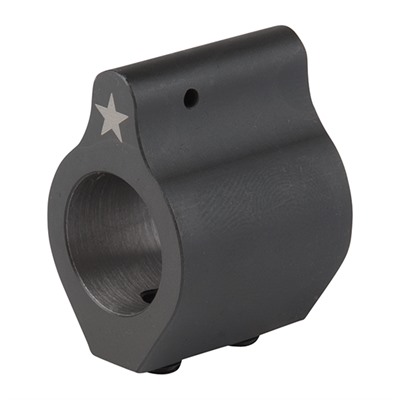
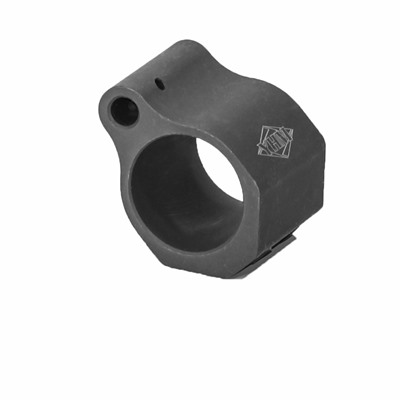
After the Wilson, the next fixed .750 options are the Sons of Liberty Gun Works V2 at $45 and the BCM low profile at $42.49. Yankee Hill Machine's low profile .750 is the most affordable option in this row, at $16.63. If your barrel has a .625 journal, BCM's low profile block was the most popular .625 option over the same quarter, and it's $44.95.
$50 to $119
In stock

Superlative Arms fills the rest of this band. Its .750 Bleed Off in melonite stainless with set screws was the second most picked block from $50 to $119, and it uses the same forward venting design as our premium pick for $89.99. Superlative also offers the identical .750 design as a clamp on version, currently starting at $80.99.
How we pick
Each pick is the gas block that the most different builders added to a build on GunPartPicker in its price band or journal size, July 1 to September 30, 2026, among blocks in stock when this page was written. One person adding the same block many times counts once, specifications come from the manufacturer's or retailer's listing, and the prices on the product cards update live.
Explore More Guides
Complete Your Build
Compare gas blocks side by side, check compatibility and find the best price across stores in the GunPartPicker AR-15 builder.
Filed underAR-15/Gas Systems/Buyer's Guide
FAQ
Frequently asked questions
What is the best AR-15 gas block?
- The Strike Industries Collar Adjustable Gas Block was the most picked gas block on GunPartPicker from July 1 to September 30, 2026, with 22% of gas block picks. It fits .750 journals, clamps on with three screws and adjusts by rotating a collar to one of six detented positions. The Wilson Combat Lo-Profile .750 was second at 18%.
What is the best budget AR-15 gas block?
- The Wilson Combat Lo-Profile .750 was the most picked gas block under $50 on GunPartPicker from July 1 to September 30, 2026. It's a fixed 4140 chromoly steel block with a black phosphate finish and hardened set screws, and retailers list the gas tube roll pin as included. It was $29.42 at the least expensive retailer with it in stock in early October 2026.
Do I need an adjustable gas block?
- Only if you shoot suppressed or want to tune the rifle's gas. A suppressor sends more gas back through the action, and an adjustable block lets you reduce that flow. Builders were split: from July 1 to September 30, 2026, 50% of gas block picks were fixed blocks and 49% were adjustable.
What gas block diameter do I need?
- The one that matches your barrel's gas journal, which the barrel's listing or spec sheet names. A block that doesn't match can't seal around the gas port. Among picks where the diameter is known, from July 1 to September 30, 2026, .750 took 81%, .936 took 8%, .625 took 6% and .875 took 5%.
What is a bleed off gas block?
- A bleed off block, such as the Superlative Arms Bleed Off, leaves the gas passage open and vents excess pressure forward out of the front of the block, so only the gas the carrier needs travels down the tube. A conventional adjustable block instead narrows the passage with its adjustment screw.
Should I get a set screw or clamp on gas block?
- Set screw blocks are inexpensive and quick to install, but they can migrate on a smooth journal, so builders dimple the barrel or use removable thread locker. Clamp on blocks squeeze the whole journal with screws and don't need dimples, but they need correct torque. Strike specifies a maximum of 15 inch pounds for its collar block's clamp screws.
What is the best premium gas block?
- The Superlative Arms Bleed Off clamp on .875 in titanium with a DLC coating was the most picked gas block over $120 on GunPartPicker from July 1 to September 30, 2026. It only fits a .875 journal, and it was $169.99 to $188.99 at retailers with it in stock in early October 2026.
How does GunPartPicker pick gas blocks?
- Each pick is the gas block that the most different builders added to a build on GunPartPicker in its price band or journal size, among blocks in stock when the guide was written. One person adding the same block many times counts once. Specs come from the manufacturer's or retailer's listing.
Written by
GPP Editorial TeamAR Build Specialists
GunPartPicker guides are powered by data from real builds. What builders actually select tells the story.
Read next
All guides → BARRELS/03.01.26AR-15 Barrel Length Chart: Velocity, Gas and the Best Barrels
 GAS SYSTEMS/03.23.26Best AR-15 Gas Tubes for 2026: What Builders Actually Buy
 BARRELS/10.01.26AR-15 Barrel Length: What Builders Actually Pick
 BUFFERS & RECOIL/09.17.26FRT Compatible Hosts: Which Rifles Actually Run Them
 BUFFERS & RECOIL/09.24.26Best Buffers and Springs for High Cycle Rate Triggers
 BCGS/10.12.26DI vs Piston, Settled by Build Data
 BUFFERS & RECOIL/09.29.26What Your AR-15 Actually Needs to Run an FRT
 CLONE BUILD/09.16.26M4A1 URGI Clone Build Guide: The Modern SOCOM Standard
Tools for this guide
- Tuning toolBuffer Weight CalculatorEnter your gas system, barrel length, buffer tube and ammo, add a suppressor or a fast trigger, and get the buffer weight to start with plus the buffers in stock that match.
- Paint planner toolGun Paint PlannerRattle can guns online before you spray. Paint, stencil and camo a real photo of about 1,800 guns: AR-15s, AR-10s, AR-9s, AKs, every Glock, pistols, shotguns and bolt action rifles, the way the rattlecanned guns on r/rattlecannedguns are done, with Krylon, Rust-Oleum, Aluma-Hyde, DuraCoat and Cerakote colors, then get the cans to buy in spray order.
- Legal toolGun Travel CheckerCan I bring my gun to another state? Pick where you start, where you are going and what is coming along: carry pistol, AR-15, magazines, suppressor, SBR, brace, forced reset or binary trigger, hollow points. Every state on the route is checked for transporting firearms across state lines: magazine limits, assault weapon bans, NFA rules, carry permit type and trigger bans, with what to do before the state line.