Where things actually stand
This is the part most coverage gets wrong, so it is worth being precise.
On 17 July 2026 the Third Circuit, sitting en banc, struck down New Jersey's assault firearm ban and its magazine capacity limit by 10 votes to 5 in Association of New Jersey Rifle and Pistol Clubs v. Platkin. It was the first time a federal appeals court had struck down a state assault weapons ban.
The court then stayed its own ruling. New Jersey petitioned the Supreme Court, and the ban remains in force while that plays out. The Supreme Court has set argument for 2 December 2026.
| Metric | Value |
|---|---|
| Struck down | Jul 17, 2026 |
| But stayed | Still enforced |
| Supreme Court | Dec 2, 2026 |
There is also a genuine circuit split behind this: the Seventh Circuit upheld Illinois's ban about a week before the Third Circuit went the other way, which is a large part of why the Supreme Court took it up.
How the New Jersey test works
New Jersey uses a two-feature test. A semi-automatic rifle that accepts a detachable magazine is generally treated as an assault firearm if it has at least two of:
- A folding or telescoping stock
- A pistol grip that protrudes conspicuously beneath the action
- A bayonet mount
- A flash suppressor, or a threaded barrel designed to accommodate one
- A grenade launcher
Two is the threshold, which means a rifle with exactly one listed feature is outside the test. That is different from states that prohibit any single feature, and it changes the building strategy considerably.
The three compliant paths
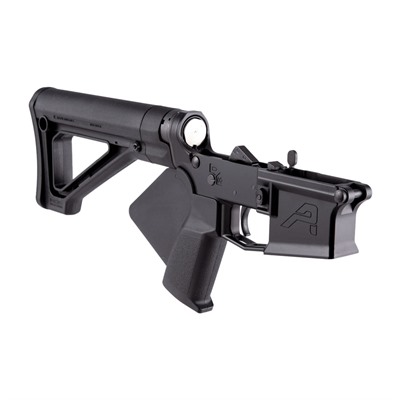
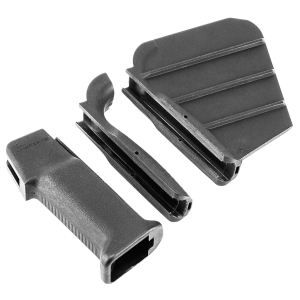
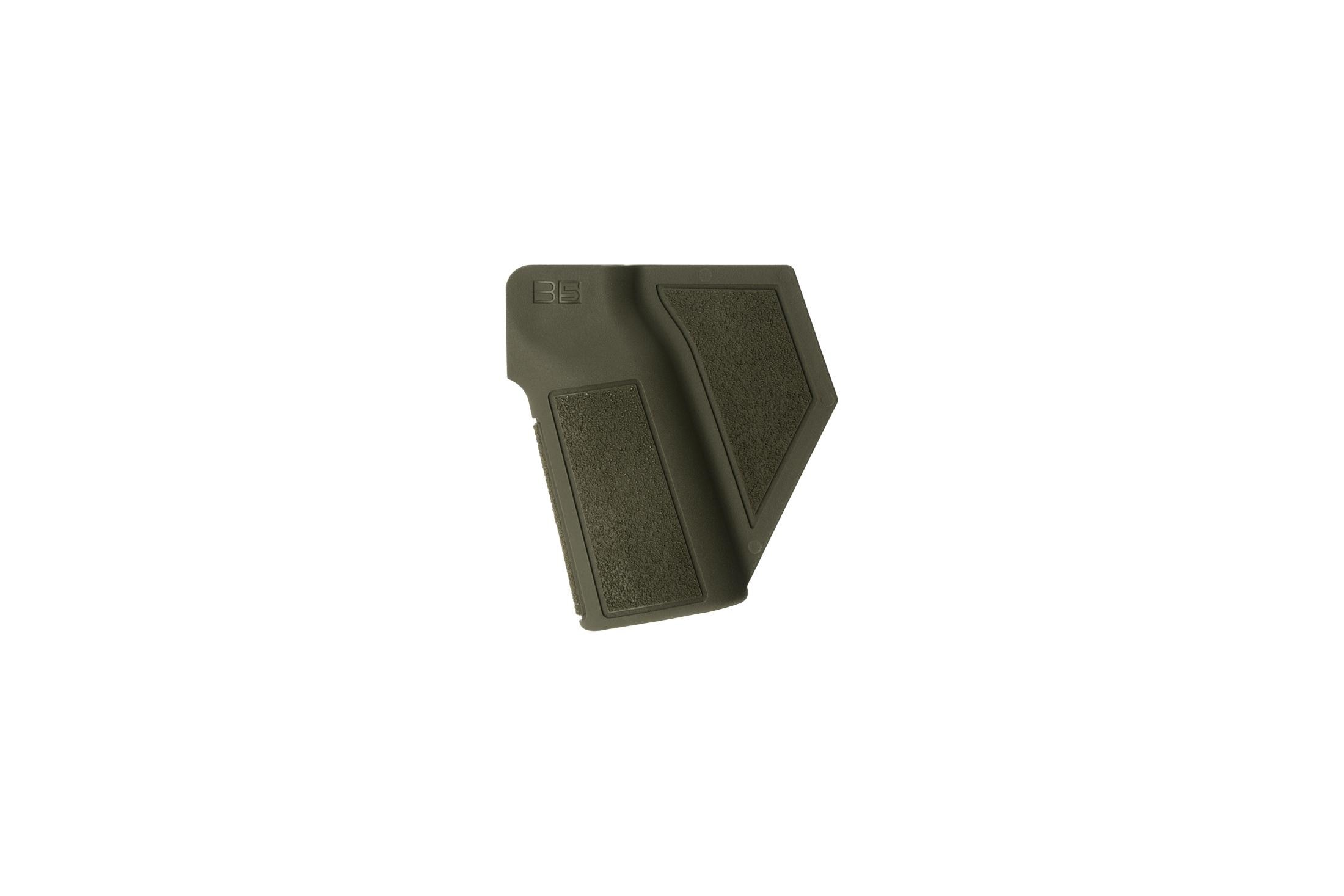
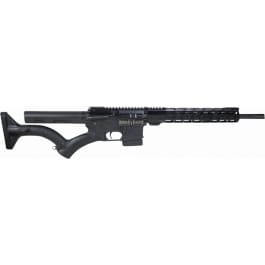
Featureless. Remove the features entirely. A fixed stock, a grip that does not protrude conspicuously beneath the action, and a bare or pinned muzzle with no threads. This is the most common approach and the one with the widest parts support.

Featureless grips change the geometry so the grip does not protrude beneath the action:
One feature only. Because the threshold is two, you can keep a single listed feature. In practice that usually means keeping a standard pistol grip and giving up the telescoping stock and threaded muzzle. This is worth understanding, because a lot of people over-comply and build featureless when they did not need to.
Fixed magazine. Permanently affixing a compliant-capacity magazine takes the rifle out of the detachable-magazine category the test depends on. It is a real option and it changes how you reload considerably.
Magazine capacity is a separate question
The magazine limit was part of what the Third Circuit struck down and is equally covered by the stay. Treat the existing capacity limit as in force.
This matters because capacity and features are separate tests. A featureless rifle fed by an over-capacity magazine is still a problem, and complying with one does not get you the other.
What we would buy today
Buy a rifle that is compliant now. Do not buy on the assumption the ban is about to fall, because the stay could hold for a long time and a Supreme Court argument date is not an outcome.
A factory New Jersey compliant rifle is the safest route, because the compliance decisions have been made and documented by the manufacturer. If you are building, a featureless complete lower removes the two decisions most likely to go wrong.
Keep whatever you build genuinely compliant rather than reversible-in-a-hurry. A rifle that could easily be converted back is not a compliance strategy.
If the ban does fall
Should the stay lift or the Supreme Court affirm the Third Circuit, standard configuration rifles would become transferable in New Jersey. Nothing you buy now becomes useless in that scenario: a featureless lower is still a functioning lower, and a fixed stock is still a stock.
That asymmetry is the argument for buying compliant now rather than waiting. Compliance parts stay useful either way. Non-compliant parts are a liability until the day the law actually changes, and that day has not arrived.
Related reading
Our California-legal AR-15 guide covers a stricter single-feature regime, and the Rhode Island guide covers another feature-based state.
Filed underGrips/State Law/AR-15/Stocks/Lower Receivers/Buyer's Guide/Explainer
FAQ
Frequently asked questions
Is the New Jersey assault weapons ban still in effect?
- Yes, as of September 2026. The Third Circuit struck it down on 17 July 2026 in ANJRPC v. Platkin, then stayed its own ruling pending Supreme Court review. A court finding a law unconstitutional is not the same as that law stopping. Verify current status before acting.
When will the Supreme Court decide the New Jersey case?
- Argument is set for 2 December 2026. An argument date is not an outcome, and a decision typically follows months later. Until the stay lifts or the Court rules, comply with the ban as written.
How many features make a rifle an assault firearm in New Jersey?
- Two. A semi-automatic rifle accepting a detachable magazine generally qualifies with at least two of: folding or telescoping stock, conspicuously protruding pistol grip, bayonet mount, flash suppressor or threaded barrel, or grenade launcher.
Can I keep a pistol grip on a New Jersey compliant AR-15?
- Potentially, because the threshold is two features rather than one. Keeping a standard pistol grip while giving up the telescoping stock and threaded muzzle can comply. Many people over-comply and build featureless when they did not need to. Verify with a New Jersey attorney.
What is a featureless AR-15?
- A rifle built without the listed features: a fixed stock, a grip that does not protrude conspicuously beneath the action, and a bare or pinned muzzle without threads. It is the most common compliance approach and has the widest parts support.
Should I wait for the ban to fall before buying?
- No. The stay could hold for a long time and an argument date is not an outcome. Compliance parts remain useful either way, since a featureless lower is still a functioning lower, while non-compliant parts are a liability until the law actually changes.
Written by
GPP Editorial TeamAR Build Specialists
GunPartPicker guides are powered by data from real builds. What builders actually select tells the story.
Read next
All guides → STATE LAW/09.25.26Illinois PICA in 2026: What You Can Still Buy
 STATE LAW/09.18.26New York Legal AR-15 in 2026: What You Can Still Buy
 STATE LAW/09.17.26Glock Chassis and PDW Kits: What to Know Before You Buy
 STOCKS/03.02.26AR-15 Stock Popularity Report: What 15,000+ Builders Actually Choose
 LOWER RECEIVERS/09.29.26Aero Precision After the Receivership: Did Builders Leave?
 LOWER RECEIVERS/03.02.26AR-15 Lower Receiver Trends: 15,000+ Builds Analyzed
 STATE LAW/10.01.26Binary Triggers by State: Where They Are Legal
 LOWER RECEIVERS/10.06.26The Parts Builders Pick First
Tools for this guide
- Legal toolGun Travel CheckerCan I bring my gun to another state? Pick where you start, where you are going and what is coming along: carry pistol, AR-15, magazines, suppressor, SBR, brace, forced reset or binary trigger, hollow points. Every state on the route is checked for transporting firearms across state lines: magazine limits, assault weapon bans, NFA rules, carry permit type and trigger bans, with what to do before the state line.
- Planning toolAR Build Cost CalculatorHow much does it cost to build an AR-15? Pick caliber, barrel length, stock or brace and optic, then drag both edges of the price band from the cheap end to the top end. Every slot fills with the part builders add most that is in stock, priced live. The headline total is the core rifle, optics and extras are priced separately, and beside them sits what builders really pay per slot, measured from real part picks. Roll a random build, or open yours in the builder in one click. Computed from over 1 million AR parts selected on GunPartPicker since 2020.
- Legal toolBarrel and Overall Length CheckerEnter barrel length, muzzle device and how the back end is configured, and see whether the build is a rifle, a short barreled rifle, a pistol or an AOW under federal law, with the barrels in stock at that length.