A legal opinion is not a law, a regulation, a court order or a change to the form your dealer fills in. The Justice Department published one on September 18, 2026 saying the federal ban on selling handguns to 18 to 20 year olds is unconstitutional and cannot be criminally enforced. Every part of that sentence is true, and none of it means a twenty year old can walk into a store today and reliably walk out with a pistol.
What follows is the boundary. What the opinion says, what it deliberately refuses to say, what has not moved at all, and what dealers are actually doing about it five days in. Everything here is dated, and every claim is tied to the document it came from.
| Metric | Value |
|---|---|
| DOJ position | Will not charge |
| The statute | Still law |
| ATF regulations | Unchanged |
| Frames and receivers | Not covered |
What the opinion is
On September 17, 2026 the Office of Legal Counsel issued a 49 page memorandum opinion for the Attorney General titled Application of 18 U.S.C. 922(b)(1) and (c)(1) to Young Adults, signed by Assistant Attorney General T. Elliot Gaiser. DOJ published it the next day as press release 26-1078.
Its conclusion, in its own closing words, is that those two sections
may not be enforced to impose criminal penalties on dealers who sell handguns ... to a class of law-abiding adults who in nearly every other domain are full members of the political community.
The reasoning runs through Bruen's two steps. Eighteen to twenty year olds are part of "the people", handguns are arms in common use, so the burden moves to the government to find a historical tradition that matches, and OLC says there is not one. Founding era militia statutes did the opposite of excluding young adults: they required service starting at eighteen and required the enrollee to furnish his own arms.
Two things about that are worth being precise about, because most coverage has skipped both.
It binds the executive branch, not the courts. OLC says so directly. It acknowledges that the question "has deeply divided members of the federal bench", then says the contrary decisions should not "control this Office in the advice it gives you as you assist the President in the performance of his independent constitutional duty to take Care that the Laws be faithfully executed." That is an internal instruction about charging decisions. It creates no precedent and it binds no judge.
It speaks only about criminal penalties. That phrase appears in the holding, in the press release headline and in the final paragraph. An FFL's other exposure, losing the license under 18 U.S.C. 923(e) and 27 C.F.R. 478.73, is an administrative proceeding rather than a prosecution, and the opinion does not address it.
The Paper Trail
Every entry below is a document or a dated filing, colour coded by who produced it
- 2024Public record
Worth v. Jacobson, 108 F.4th 677, invalidates Minnesota's under 21 carry restriction.
- 2024Public record
Rocky Mountain Gun Owners v. Polis, 121 F.4th 96, sustains Colorado's age based purchase restrictions.
- 2025Public record
Reese v. ATF, 127 F.4th 583, holds 922(b)(1) and (c)(1) unconstitutional as applied to 18 to 20 year olds. This is the case DOJ is now in settlement talks over.
- 2025Public record
McCoy v. ATF, 140 F.4th 568, sustains the federal restrictions. NRA v. Bondi, 133 F.4th 1108, sustains Florida's. Lara v. Commissioner Pa. State Police, 125 F.4th 428, goes the other way on Pennsylvania carry. The split is now four circuits wide.
- 2026Public record
Wolford v. Lopez, 146 S. Ct. 2032, and United States v. Hemani, 146 S. Ct. 1692. OLC leans on both to say the circuits that upheld age limits got the method wrong.
- Sep 17, 2026First party
Application of 18 U.S.C. 922(b)(1) and (c)(1) to Young Adults. The holding is that the sections may not be enforced to impose criminal penalties on dealers.
- Sep 18, 2026First party
Press release 26-1078 from the Office of Public Affairs, with the full opinion attached.
- Sep 21, 2026Public record
In its Fifth Circuit appeal DOJ requests an extension to let the parties discuss a negotiated resolution, a change from earlier scheduling requests.
- Sep 22, 2026Community
On the r/FFLs board an FFL relays what their ATF industry operations investigator told them in person, which is to keep declining under 21 handgun sales.
- PendingFirst party
None of the three has happened. Until one does, the published federal instruction to dealers still says 21.
| Date | Event | Source |
|---|---|---|
| 2024 | record | |
| 2024 | record | |
| 2025 | record | |
| 2025 | record | |
| 2026 | record | |
| Sep 17, 2026 | official | |
| Sep 18, 2026 | official | |
| Sep 21, 2026 | record | |
| Sep 22, 2026 | community | |
| Pending | official |
The split it is stepping into is genuinely wide. The Fifth Circuit struck the federal age rules in Reese v. ATF, 127 F.4th 583 (2025). The Fourth Circuit sustained them in McCoy v. ATF, 140 F.4th 568 (2025), the Eleventh sustained Florida's version in NRA v. Bondi, 133 F.4th 1108 (2025), and the Tenth sustained Colorado's in Rocky Mountain Gun Owners v. Polis, 121 F.4th 96 (2024). Going the other way, the Eighth struck Minnesota's carry age in Worth v. Jacobson, 108 F.4th 677 (2024) and the Third struck Pennsylvania's in Lara, 125 F.4th 428 (2025). OLC's answer is that the 2026 Supreme Court decisions in Wolford and Hemani changed the method those courts used, so their results no longer follow.
The five things the opinion expressly does not touch
This is the part to read before you do anything. The opinion lists its own limits in the final page, and the list is longer than the holding.
- The enhanced check for under 21 buyers stays. 18 U.S.C. 922(t)(1)(C), the extended investigative period Congress prescribed for purchasers under twenty one, is named and left alone. A young buyer is still subject to it.
- Everything age neutral about a commercial sale stays. Form 4473, the NICS check, the recordkeeping. OLC says it does not address "the age-neutral conditions and qualifications on commercial sales" at all.
- The prohibited person categories stay. 18 U.S.C. 922(g) is untouched, and the opinion says nothing in it should cast doubt on those.
- Under 18 is unchanged. Both the possession rule at 922(x) and the sale rule as it applies to people under eighteen are outside the scope.
- Frames and receivers, silencers and several other categories are outside the scope entirely. The opinion's third footnote says so in a list, and it is the footnote with the most direct consequence for anyone building rather than buying.
The part almost nobody is printing: your stripped lower is still a 21 purchase
Section 922(b)(1) does not say "handgun". It bars a licensee from selling any firearm other than a shotgun or rifle to a buyer under twenty one. A bare AR-15 lower receiver is a firearm under 18 U.S.C. 921(a)(3)(B), and it is not a shotgun and not a rifle, because it has no barrel. ATF's long standing position follows from that: a receiver transfers in the Other column on the 4473 and needs a buyer who is twenty one, even when the finished gun will be an ordinary rifle.
That produces the oddity every new builder runs into. An eighteen year old can buy a complete AR-15 rifle from a dealer. The same eighteen year old cannot buy the stripped receiver to build one.
The DOJ opinion does not fix that, and it is not an oversight. Footnote 3 places "firearm frames and receivers" outside the scope alongside silencers, destructive devices and a handful of other categories, because the Attorney General's question was about handguns. So on the executive branch's own current reading, the receiver rule survives the opinion untouched.
For a parts site that is the whole ballgame, because the receiver is where our builders start.
| Metric | Value |
|---|---|
| Lower receiver picks | 10,678 |
| Median price paid | $199 |
| Sold as stripped | 35.8% |
| Sold as complete lower | 38.6% |
Lower receivers are the most selected slot on GunPartPicker, 10,678 picks from 8,530 sessions in the ninety days to September 23, 2026, at a median of $199 at the moment of selection. Those are prices builders actually clicked rather than list prices, so the live cards below will show a different number.
About a third of those picks are explicitly stripped receivers at a median of $155, and a slightly larger share are complete lowers at a median of $250. Neither helps an under 21 buyer. A complete lower is still a receiver with furniture bolted to it, not a rifle, so it transfers as Other in exactly the same way.

Out of stock
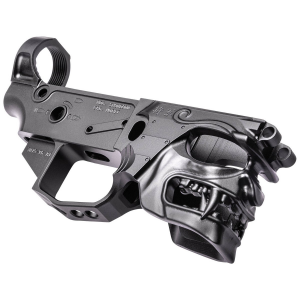

If you want the longer version of how receivers are classified and why the marking on the box does not decide it, the AR-15 lower receiver guide covers the mechanical side.
What FFLs are actually doing about it
Five days in, the honest answer is almost nothing, and the reasons are specific rather than timid.
The clearest public account comes from a dealer rather than a lawyer. On September 22 a Texas FFL posting on the r/FFLs board described asking their ATF industry operations investigator about exactly this, and reported being told that a state licence to carry issued to someone under twenty one does not change the federal rule, and that the advice was not to sell. The same dealer was careful about the weight of it, noting that an investigator's view "is not legally binding and is not something that can hold up in court". The thread that prompted it was a twenty year old Texas LTC holder asking whether any dealer was selling yet, and the answer in the thread was no.
The dissent in that discussion is the useful part. The same dealer pointed out that nothing in 922(b)(1) restricts a private, intrastate transfer from an unlicensed seller, which is the path that was already open to 18 to 20 year olds in states that allow it and which the opinion did not need to create.
On the compliance side, FFLGuard, which advises dealers on exactly this kind of exposure, published an action alert the same week telling clients to "proceed deliberately" and listing seven steps. The three that matter most for anyone reading this as a buyer are: identify every independently applicable state and local age restriction, preserve Form 4473 and NICS requirements in full, and avoid extending the opinion past its stated handgun sale conclusion. They explicitly do not tell dealers to start selling.
Your state is the layer that decides it
For a large share of the country this opinion changes nothing at all, because the federal rule was never the only rule.
Two of the most cited trackers do not fully agree on the list, which is worth knowing before you rely on either. Giffords and Everytown both put the following states at twenty one for every firearm, handgun and long gun alike:
| Twenty one for all firearms under state law |
|---|
| California, Colorado, Delaware, Florida, Hawaii, Illinois, Rhode Island, Vermont |
Both also list a larger group that sets twenty one for handguns specifically, and here the two sources diverge at the edges. Between them the group includes Connecticut, Maryland, Massachusetts, Nebraska, Nevada, New Jersey, New Mexico, New York, Ohio, Oregon, Pennsylvania, Virginia, Washington and the District of Columbia, with several of those also reaching semi-automatic long guns. Everytown counts twenty one states with a minimum age policy of some kind as of its January 14, 2026 update.
In every one of those places a state age law does the work on its own, and a DOJ decision not to prosecute under federal law leaves it standing. In the remaining states the federal rule was the whole barrier, which is why the practical question there comes down to whether an individual dealer is willing to move before ATF says anything.
We built the per state version of this so you do not have to read a paragraph to find one number. Every state has its own page at /gun-laws/{state}/age, for example Texas, California, Pennsylvania or Florida, each showing the handgun age, the long gun age, the possession age, the neighbouring states and, where the trackers contradict each other, a plain statement that they do.
If you are 18 to 20 and you want to build
There is a version of this that is already settled and has been for decades, and it gets lost in the headline.
Almost nothing on an AR-15 is a firearm in the legal sense. Barrels, handguards, triggers, stocks, grips, optics, muzzle devices and bolt carriers are parts. They carry no federal age floor at a dealer, they ship to your door rather than to an FFL, and none of that depends on how the under 21 question resolves. The receiver is the only piece in the box that the law is arguing about.
So the buildable path for an eighteen year old has always been to acquire a complete rifle lawfully, then change everything on it. That is not a workaround, it is how most builds on this site actually happen.

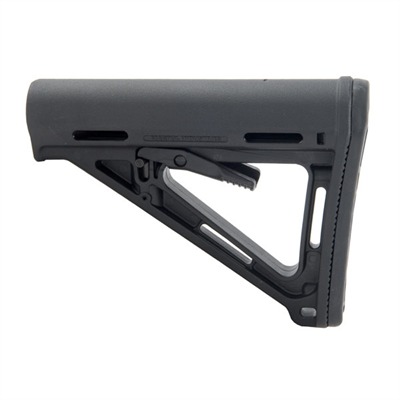
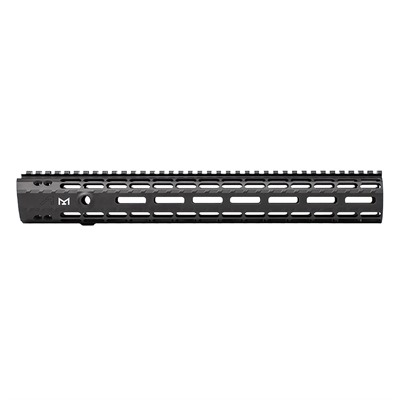
If you are starting from nothing, the first AR-15 buyer's guide walks the order of operations, and the trigger guide covers the single upgrade that changes the most for the money.
What to watch next
Three things would each move this from an opinion to a practice, and none of them has happened yet.
ATF guidance or an open letter to licensees. This is the one dealers are waiting on, because it is the document an investigator will hold them to at their next compliance inspection. Its absence is the reason the answer in stores is still no.
A change to Form 4473 or to the NICS workflow. The form and the systems that read it are where the rule is actually enforced day to day. A legal opinion that leaves the form alone leaves the transaction blocked in practice.
A settlement in the Fifth Circuit case. On September 21 DOJ asked for more time in its appeal specifically to let the parties discuss a negotiated resolution, in the litigation brought by the Firearms Policy Coalition, the Second Amendment Foundation and the Louisiana Shooting Sports Association. A consent judgment would produce a court order, which is a different and much stronger instrument than an internal legal opinion.
Until one of those lands, the accurate summary is narrow. The Justice Department has said it will not prosecute a dealer for this. It has not told dealers they may do it, it has not changed the form, it has not touched the regulations, it has not reached frames or receivers, and it cannot reach your state's own age law at all.
Filed underFFL Intelligence/AR-15/Lower Receivers/Explainer
FAQ
Frequently asked questions
Can an 18 to 20 year old buy a handgun from a gun store right now?
- In practice, almost certainly not. The DOJ opinion says federal prosecutors will not charge a dealer for the sale, but it does not authorise the sale, it does not change 27 C.F.R. 478.96(b), 478.99(b) or 478.124(a), and ATF has published no guidance. Most dealers are declining, most retail systems block the transaction on date of birth, and in roughly twenty states a separate state age law applies regardless of what DOJ does.
Is the federal under 21 handgun law repealed?
- No. 18 U.S.C. 922(b)(1) and (c)(1) are still on the books and no court has struck them nationwide. The Fifth Circuit held them unconstitutional as applied in Reese v. ATF in 2025, but the Fourth, Tenth and Eleventh Circuits have upheld age based restrictions, so the split is unresolved. An OLC opinion binds the executive branch's own decisions and creates no precedent.
Does this mean an 18 year old can buy a stripped AR-15 lower receiver?
- No, and the opinion says so itself. Section 922(b)(1) covers any firearm other than a shotgun or rifle, and a bare receiver is a firearm that is neither, so it transfers in the Other column of the 4473 and needs a buyer who is twenty one. Footnote 3 of the opinion expressly places firearm frames and receivers outside its scope. A complete lower is treated the same way, because it is still a receiver rather than a rifle.
Can an 18 year old still buy a complete AR-15 rifle?
- Yes. The federal age restrictions never applied to rifles or shotguns, or to ammunition for them. An eighteen year old could buy a complete rifle from a dealer before this opinion and can after it, subject to any state law that says otherwise. The odd result is that the finished rifle is available at eighteen while the receiver to build one is not.
Does the background check change for an under 21 buyer?
- No. The opinion expressly leaves 18 U.S.C. 922(t)(1)(C) alone, which is the enhanced investigative period Congress prescribed for purchasers under twenty one. It also says it does not address the age neutral conditions on commercial sales, which covers Form 4473, NICS and the dealer's recordkeeping. All of that stands.
What is an FFL's actual risk if they sell to a 20 year old now?
- The opinion addresses criminal penalties only, and it says so in its holding. It does not speak to revocation of the licence under 18 U.S.C. 923(e) and 27 C.F.R. 478.73, which is an administrative proceeding rather than a prosecution, and it does not bind a future administration's view. That gap is why compliance counsel such as FFLGuard are telling dealers to wait for ATF rather than to start selling.
Which states still ban handgun purchases under 21 no matter what DOJ says?
- State law is the binding layer wherever it exists. California, Colorado, Delaware, Florida, Hawaii, Illinois, Rhode Island and Vermont set twenty one for every firearm. A larger group including Connecticut, Maryland, Massachusetts, Nebraska, Nevada, New Jersey, New Mexico, New York, Ohio, Oregon, Pennsylvania, Virginia, Washington and the District of Columbia sets twenty one for handguns specifically. The trackers disagree at the edges, so check your own state's code rather than relying on any list.
Can an 18 to 20 year old buy a handgun in a private sale?
- Under federal law, yes, and that has not changed. Section 922(b)(1) restricts licensed dealers, not private parties, so a lawful intrastate transfer from an unlicensed seller was already available to an eighteen year old. Many states restrict or prohibit private transfers, and the opinion itself points at California, Colorado and Washington as examples, so this depends entirely on where you are.
When will ATF say something?
- No date has been announced. The three things that would settle it in practice are an ATF open letter or guidance to licensees, a change to Form 4473 or the NICS workflow, and a settlement in the Fifth Circuit litigation brought by the Firearms Policy Coalition, the Second Amendment Foundation and the Louisiana Shooting Sports Association, where DOJ asked on September 21, 2026 for more time to discuss a negotiated resolution.
Written by
GPP Editorial TeamAR Build Specialists
GunPartPicker guides are powered by data from real builds — what builders actually select tells the story.
Read next
All guides → LOWER RECEIVERS/03.02.26AR-15 Lower Receiver Trends: 15,000+ Builds Analyzed
 LOWER RECEIVERS/09.16.26AR-15 vs AR-10: What Actually Carries Over
 MAGAZINES/09.23.26BCM9: The 9mm Carbine Bravo Company Teased and Never Priced
 LOWER RECEIVERS/08.12.26Colorado's New Gun Law (SB25-003): What Changed & What to Buy
 LOWER RECEIVERS/08.18.26Rhode Island's Assault Weapons Ban: What to Buy
 LOWER RECEIVERS/08.16.26California-Legal AR-15 (2026): Featureless vs. Fixed-Mag & What to Buy
 BARRELS/09.22.26The Cheapest Complete AR-15 You Can Build Right Now
 STATE LAW/09.25.26Illinois PICA in 2026: What You Can Still Buy
Tools for this guide
- Planning toolAR Build Cost CalculatorHow much does it cost to build an AR-15? Pick caliber, barrel length, stock or brace and optic, then drag both edges of the price band from the cheap end to the top end. Every slot fills with the part builders add most that is in stock, priced live. The headline total is the core rifle, optics and extras are priced separately, and beside them sits what builders really pay per slot, measured from real part picks. Roll a random build, or open yours in the builder in one click. Computed from over 1 million AR parts selected on GunPartPicker since 2020.
- Legal toolGun Travel CheckerCan I bring my gun to another state? Pick where you start, where you are going and what is coming along: carry pistol, AR-15, magazines, suppressor, SBR, brace, forced reset or binary trigger, hollow points. Every state on the route is checked for transporting firearms across state lines: magazine limits, assault weapon bans, NFA rules, carry permit type and trigger bans, with what to do before the state line.