Gun Paint Planner·Updated September 28, 2026
Rattle Can Tiger Stripe: History, Colors and Paint Jobs on Real Guns
Tiger stripe is the jungle camo of the Vietnam War. Green, brown and black brush strokes run over a light olive or khaki base, made for close range fighting in thick cover. Here it is painted with real spray can colors on 12 real guns. Pick yours to open it in the planner, then reroll the layout or paint over it by hand.
Quick answer
- It takes 4 spray cans: Khaki, Olive, Brown, Black.
- Spray it light to dark: Khaki first, Black last.
Cans and spray order from the Krylon and Rust-Oleum color charts, matched in GunPartPicker's paint planner.
Tiger Stripe camo on 12 real guns
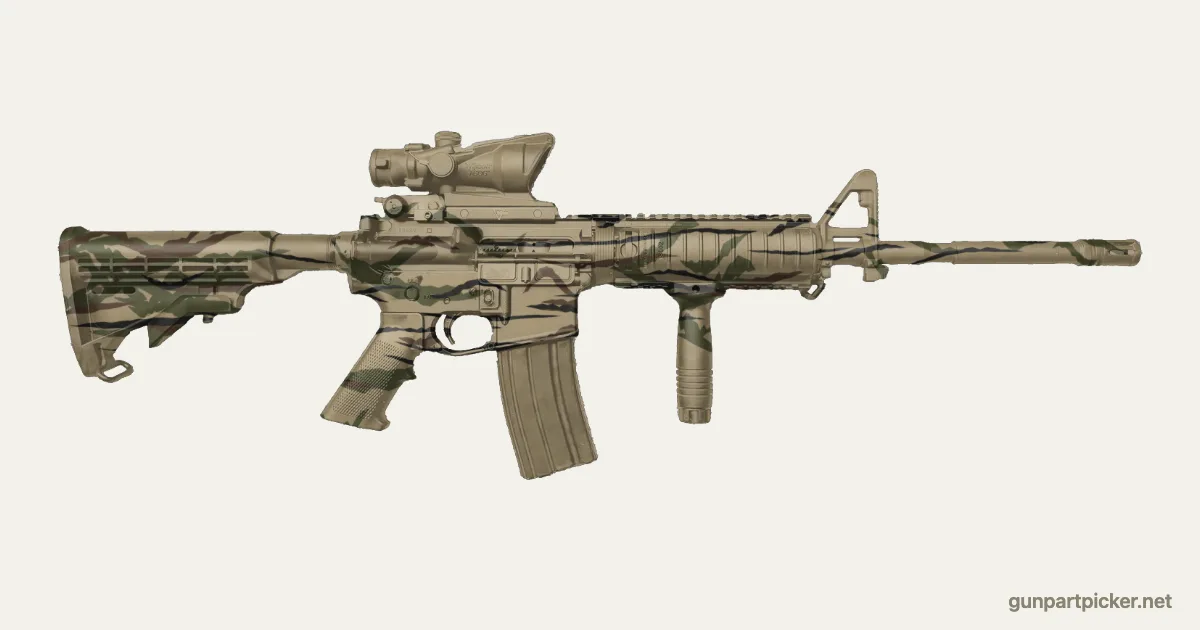
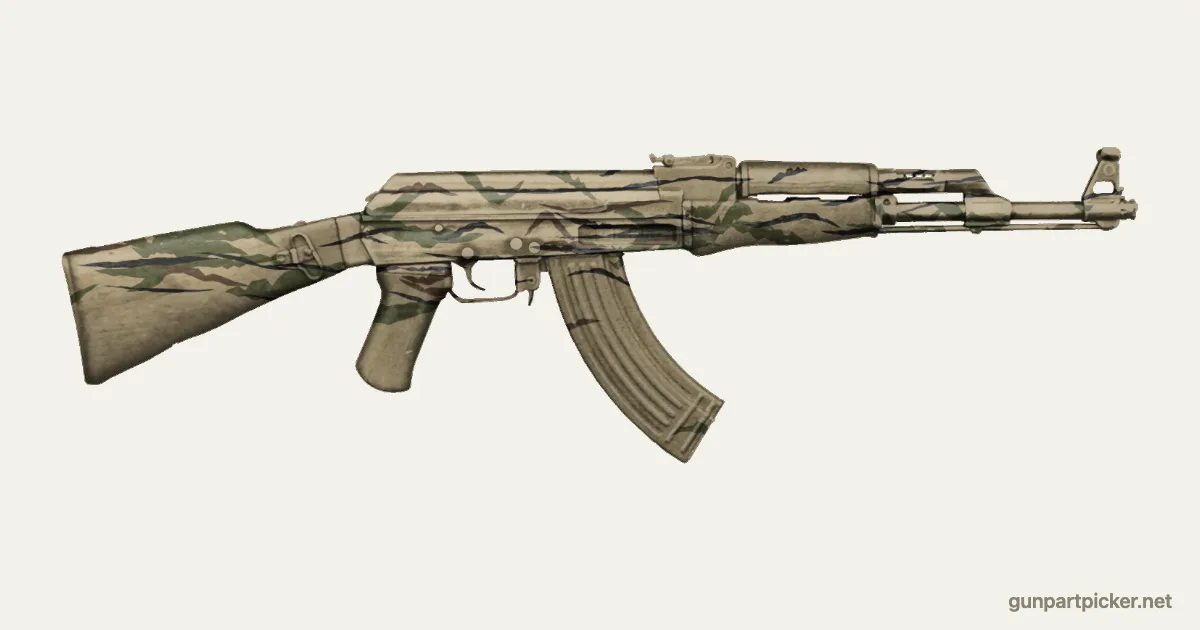
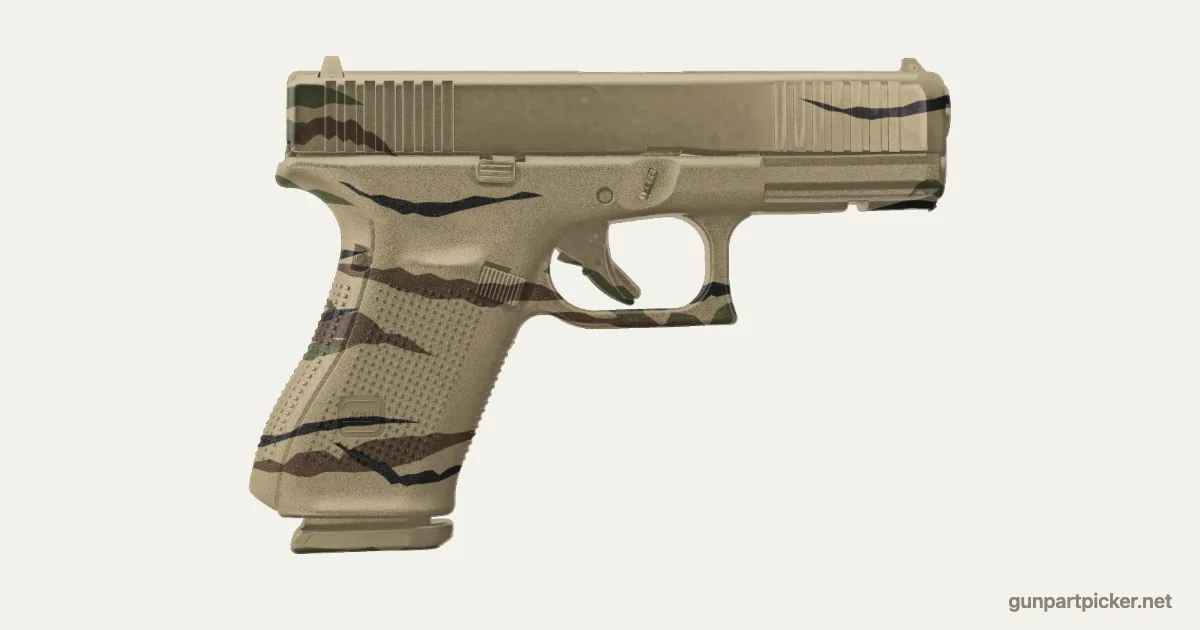
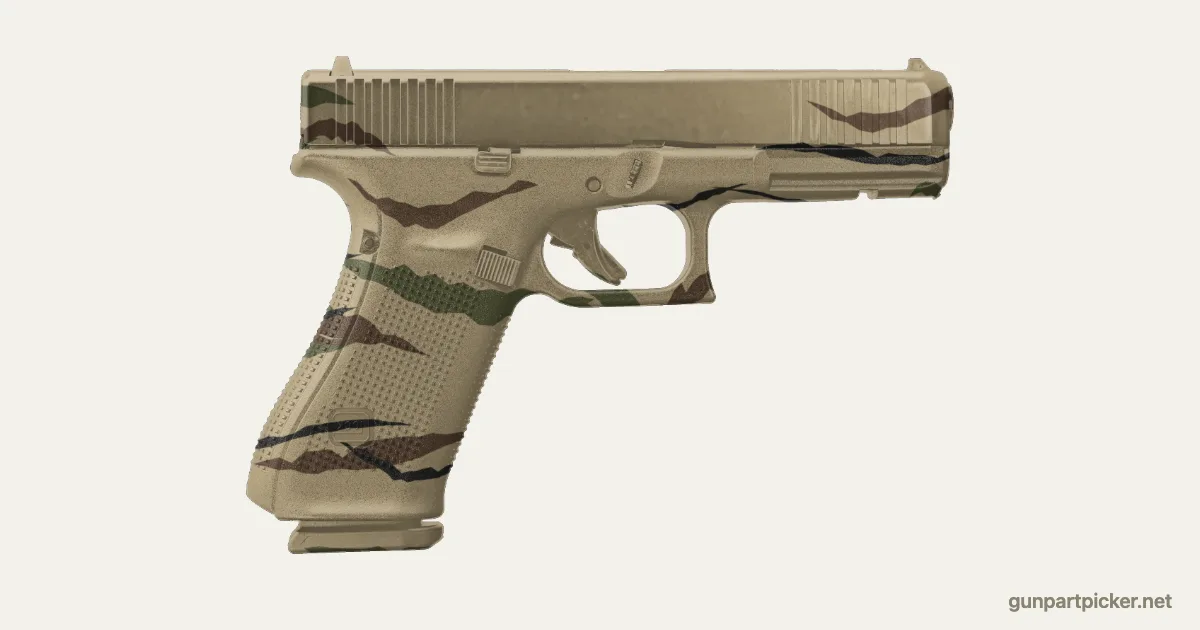
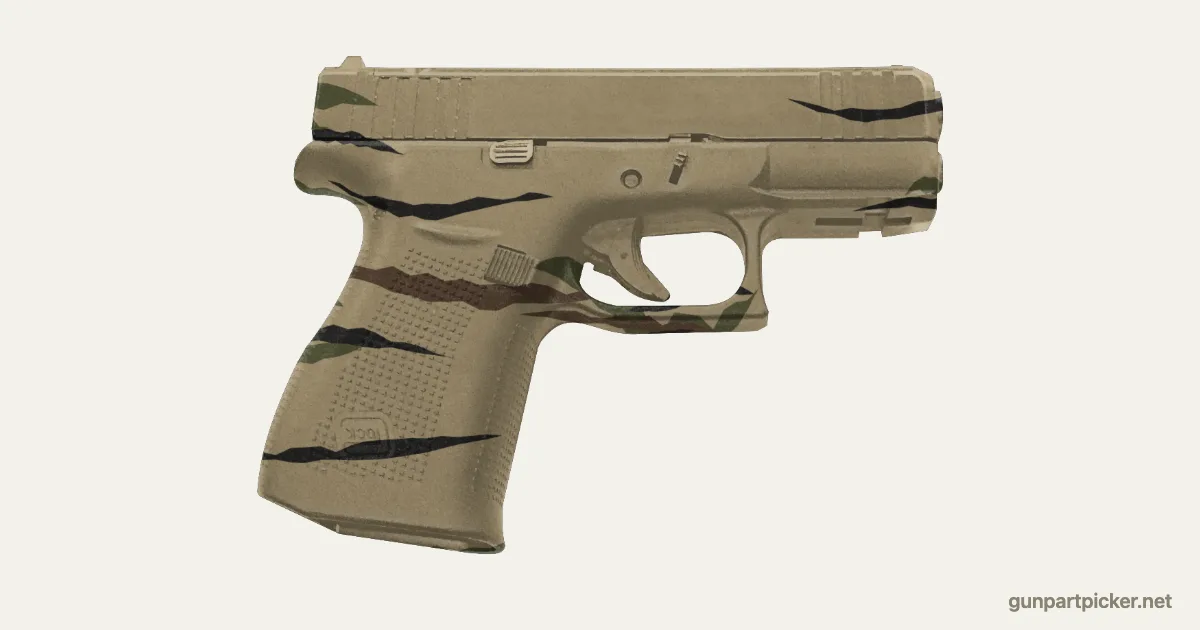
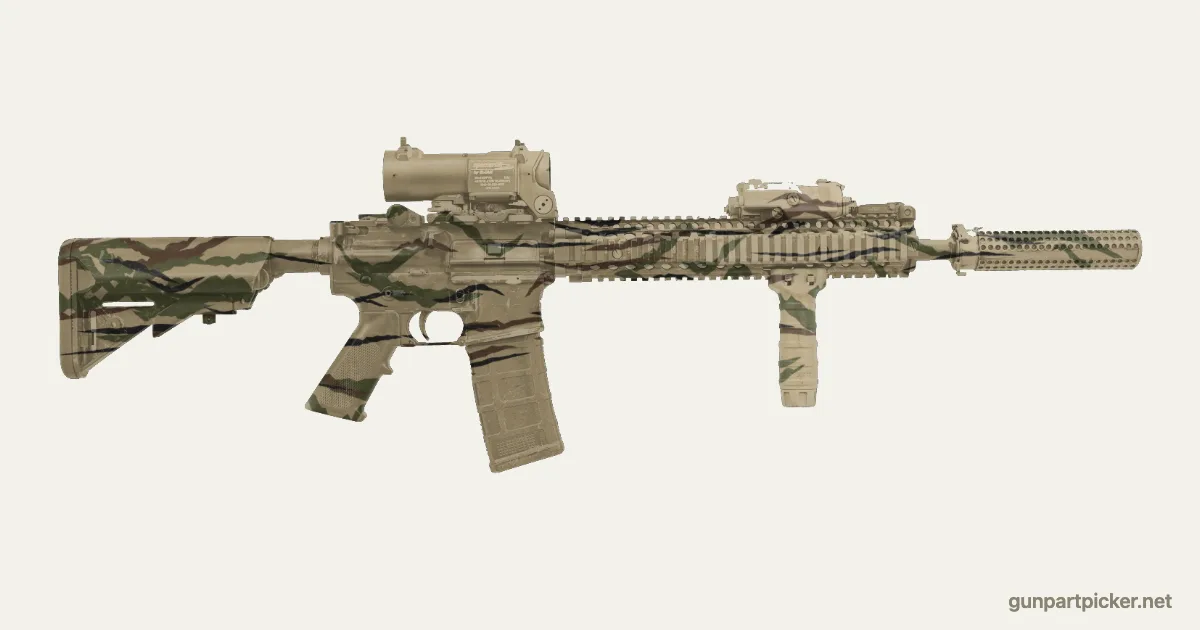
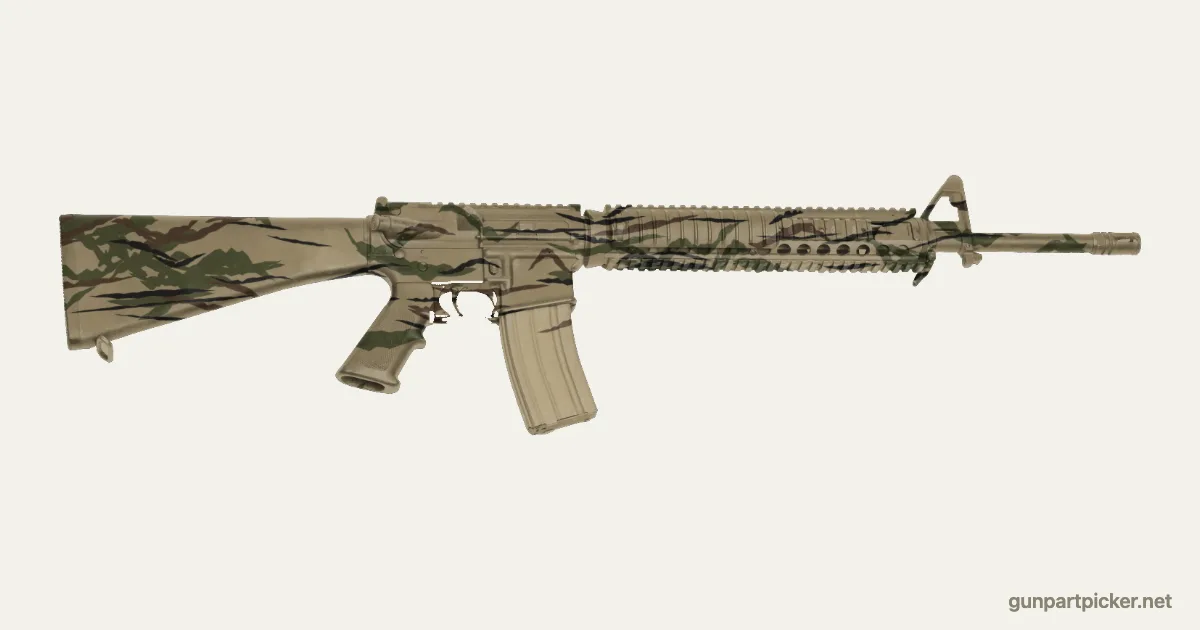
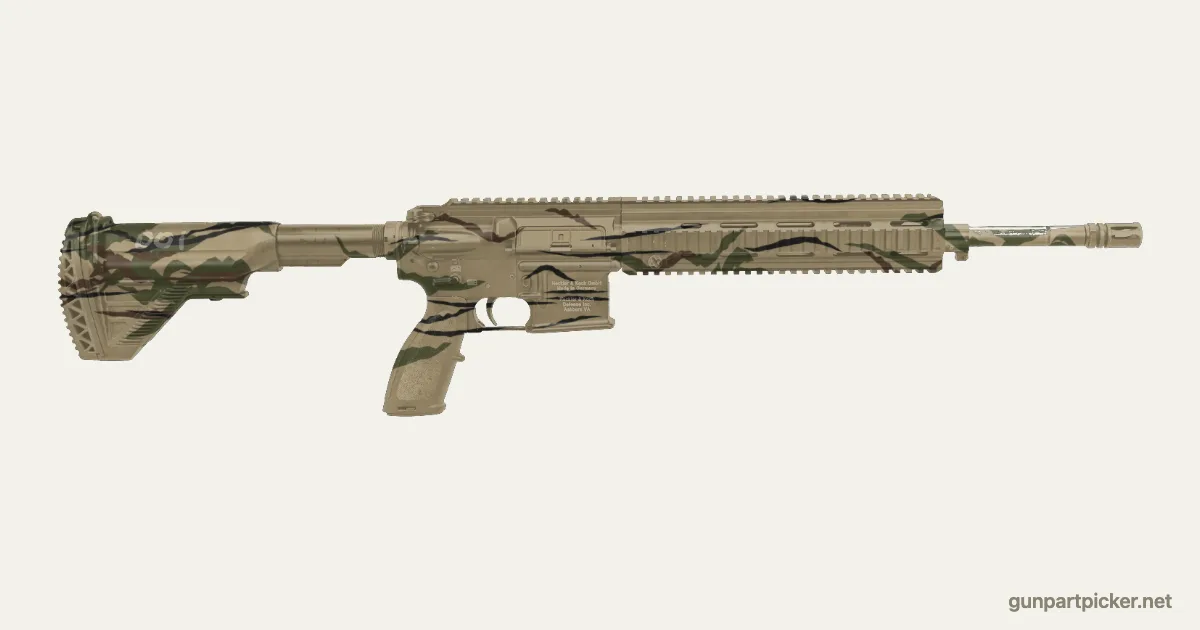
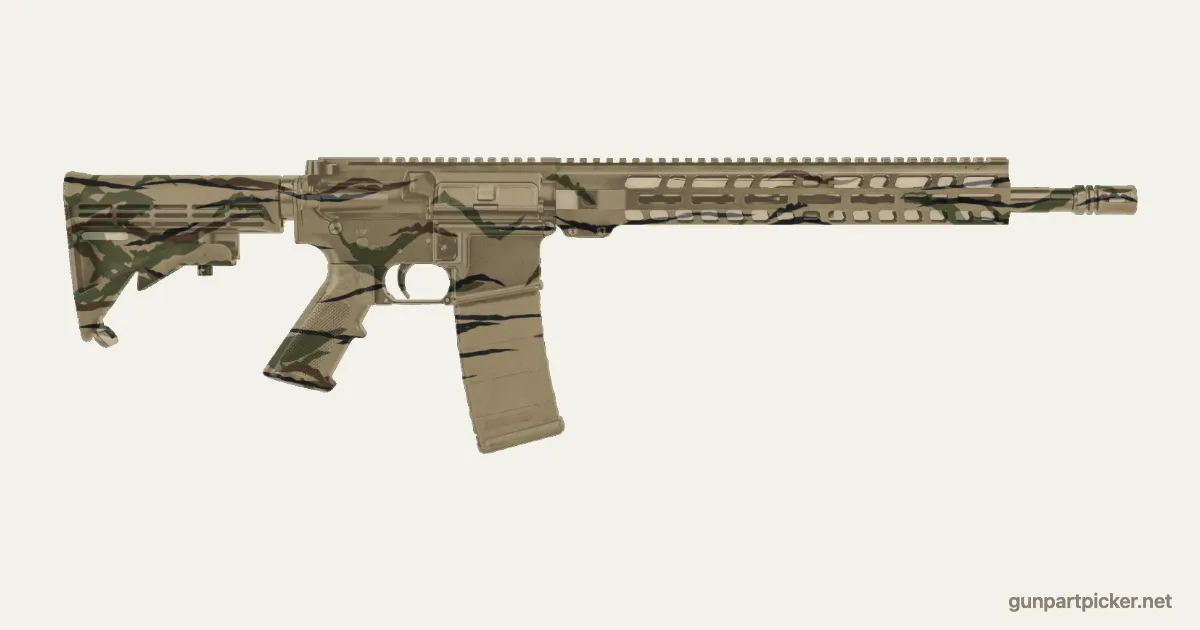
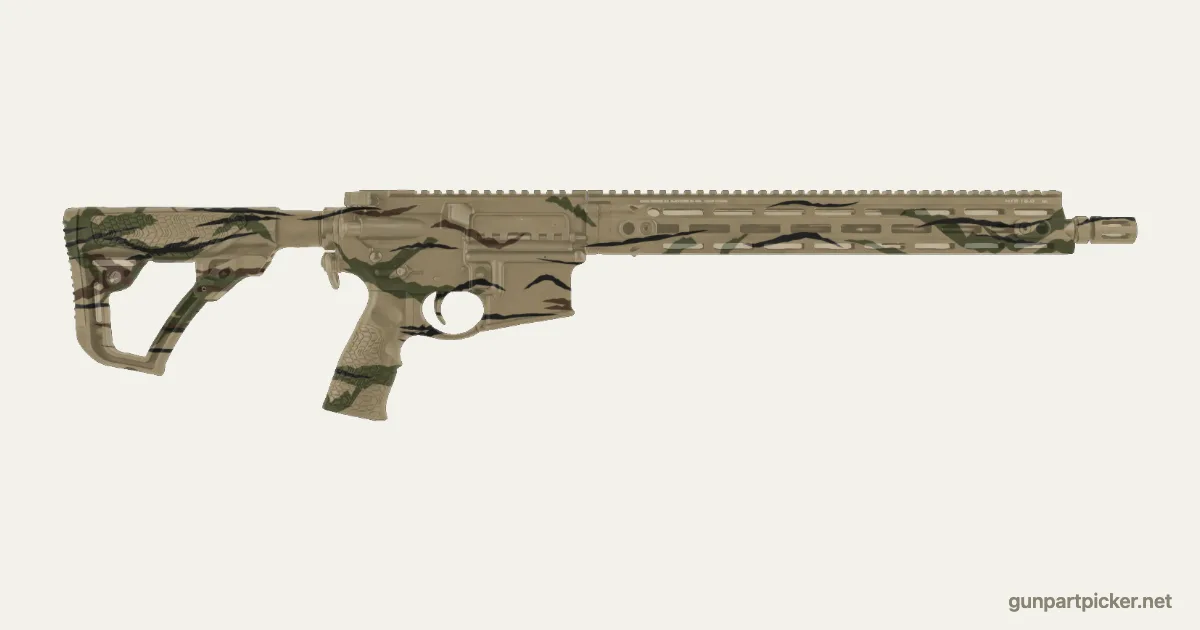
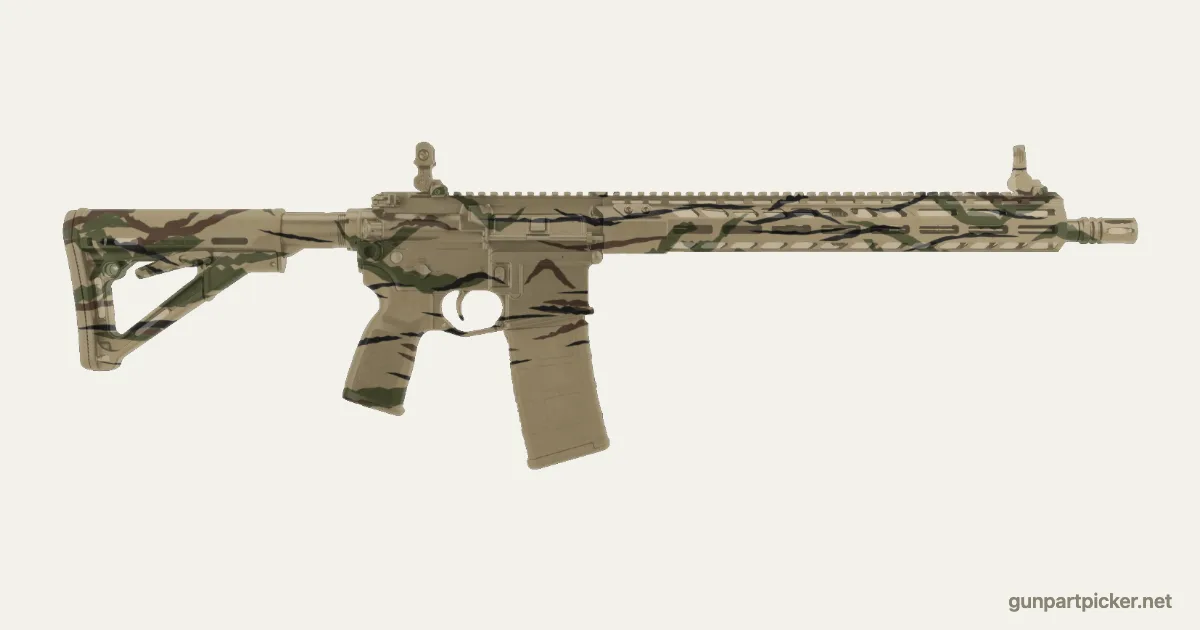
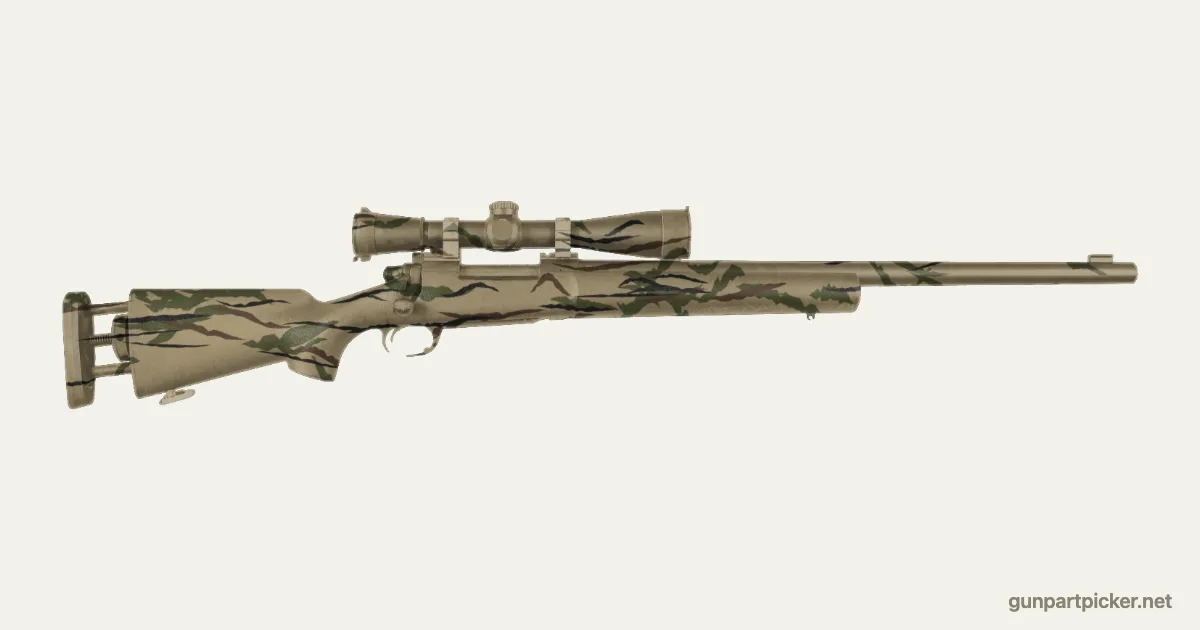
Where tiger stripe camo comes from
Tiger stripe started with South Vietnamese forces. It grew out of the French lizard pattern from the First Indochina War, but the strokes interlock instead of overlapping. Nobody knows who drew the first one.
US Special Forces picked it up in late 1962 and early 1963. It was never official US issue. Early wearers had fatigues made by local tailors because the Vietnamese sizes were too small for Americans.
From 1963 on, advisors and the 5th Special Forces Group ordered it from makers in Vietnam, Thailand, Korea and Okinawa. Every maker cut it a little differently, so you'll find dozens of variants. Collectors gave them nicknames like Advisor sparse and John Wayne dense.
The Civilian Irregular Defense Group wore it from 1963 until the program ended in 1971. Australian and New Zealand SAS wore it too. Late in the war, many US recon teams moved to ERDL, the pattern M81 woodland was later built from.
On guns, tiger stripe is the go to look for an AK-47 and a favorite on AR-15s. You'll see it in Cerakote, on furniture and on a lot of rattle can builds.
- Origin
- South Vietnam, from the French lizard pattern
- US use
- Special Forces from late 1962, never official issue
- Colors
- Light olive or khaki base, green, brown, black
- Era
- Vietnam War, 1960s to early 1970s
Spray cans for a Tiger Stripe paint job
In spray order, lightest first. Either brand works; do not mix them in one job.
Krylon
- 1Camouflage Khaki
- 2Camouflage Olive
- 3Camouflage Brown
- 4Camouflage Black
Rust-Oleum
- 1Camouflage Khaki
- 2Camouflage Deep Forest Green
- 3Camouflage Earth Brown
- 4Camouflage Black
Painting tiger stripe on a gun
Lay the khaki base, then the strokes lightest to darkest: olive, brown, and black last. Cut painter's tape into long tapered strips to get the brush stroke shape.
Keep every stroke running the length of the gun. Real tiger stripe flows sideways and the strokes lock together. Random angles turn it into generic camo.
We'd try this one on an AK first. The long receiver and wood colored furniture make the strokes easy to read, and you'll get the hang of the tape before you touch an AR.
How to spray Tiger Stripe on a gun
1. Strip it down
On an AR pull the bolt carrier group and split the upper and lower. On an AK take off the dust cover and bolt carrier. On a Glock take the slide off. Remove the optic or plan to tape it.
2. Degrease everything
Wipe every outside surface with acetone or isopropyl alcohol. Paint will not hold over gun oil.
3. Mask what moves
Plug the chamber and muzzle, tape the ejection port, magazine well, trigger and safety, and cover the optic lenses.
4. Base coat in khaki
Two light coats over the whole gun, 8 to 12 inches away, 10 minutes apart.
5. Lay the tiger stripe pattern
Vietnam era brush strokes over a light base. Spray olive, then brown, then black, light to dark, letting each color flash off before the next.
6. Let it cure
Handle it after an hour but give it a full day before it goes in a case, and a few days before hard use.
More rattle can camo patterns
Frequently Asked Questions
Was tiger stripe official US military issue?
No. US Special Forces and advisors wore it in Vietnam from late 1962, but it was bought locally from tailors and contract makers in Asia, never issued as a standard US uniform.
What colors are in tiger stripe camo?
A light olive or khaki base with green, brown and black brush strokes. In spray cans that's Krylon Khaki, Olive, Brown and Black.
What spray paint do you need for a Tiger Stripe paint job?
4 cans of Krylon, sprayed in this order: Khaki, Olive, Brown, Black. Rust-Oleum has a match for every color.
Can you paint Tiger Stripe camo on a real gun?
Yes. Strip and degrease the gun, mask the bore, chamber and anything that moves, lay the lightest color first and build the look light to dark with tape and stencils. Plan on an afternoon plus a day to cure.
Cite this tool: GunPartPicker, “Rattle Can Tiger Stripe: History, Colors and Paint Jobs on Real Guns”, https://gunpartpicker.net/gun-paint-planner/camo/tiger-stripe. Paint colors from the Krylon and Rust-Oleum color charts; gun photos credited on each gun's page. Free to cite with attribution.
Read next
All guides →
More Gun Tools
- PlanningAR Build Cost CalculatorHow much does it cost to build an AR-15? Pick caliber, barrel length, stock or brace and optic, then drag both edges of the price band from the cheap end to the top end. Every slot fills with the part builders add most that is in stock, priced live. The headline total is the core rifle, optics and extras are priced separately, and beside them sits what builders really pay per slot, measured from real part picks. Roll a random build, or open yours in the builder in one click. Computed from over 1 million AR parts selected on GunPartPicker since 2020.
- CompatibilityGlock Size ComparisonPick any two Glocks and see them to scale as real photos sized to Glock's published dimensions, side by side, from behind and as an X-ray, with the difference in length, height, width and weight in one line and the pistols in stock for each.
- LegalGun Travel CheckerCan I bring my gun to another state? Pick where you start, where you are going and what is coming along: carry pistol, AR-15, magazines, suppressor, SBR, brace, forced reset or binary trigger, hollow points. Every state on the route is checked for transporting firearms across state lines: magazine limits, assault weapon bans, NFA rules, carry permit type and trigger bans, with what to do before the state line.
- CompatibilityMuzzle Thread CheckerPick your barrel's caliber and platform, get the standard thread pitch, and see every muzzle device and suppressor in the catalog that actually threads on, with live prices.
- CompatibilityFRT and Binary Trigger PickerChoose your platform and see every forced reset trigger, binary trigger and Super Safety the catalog carries for it, what the host needs to run one, and where each is in stock.
- CompatibilityGlock Red Dot Fit CheckerPick how your Glock slide is cut and see which red dots mount directly, which need a plate, and the plates and optics in stock right now.
- CompatibilityP385 Size ComparisonSee the SIG P385 CARRY, COMP and FULL to scale against the P365-XMACRO, the P320 and the Glock 19, 17, 45 and 43X, as real photos sized to the published length and height, with every dimension and where to order one.
- TuningTwist Rate CalculatorPick a bullet and a twist rate, get the Miller stability factor, then see barrels with that twist and ammo loaded with that bullet, with today's price per round.
- TuningBuffer Weight CalculatorEnter your gas system, barrel length, buffer tube and ammo, add a suppressor or a fast trigger, and get the buffer weight to start with plus the buffers in stock that match.
- LegalBarrel and Overall Length CheckerEnter barrel length, muzzle device and how the back end is configured, and see whether the build is a rifle, a short barreled rifle, a pistol or an AOW under federal law, with the barrels in stock at that length.
- LegalSBR Planner (3D)Set the barrel anywhere from 7.5 to 16 inches, put a stock, a brace or a folder on the back, pin a muzzle device or slide on a can. The ruler under the rifle shows whether you've cleared the 16 inch barrel line and the 26 inch overall line. Pick your state for its SBR, suppressor and assault weapon rules, then price every part and open the build in one click.
- PlanningNight VisionLook around a real 360 degree scene through Gen 1, Gen 2+, Gen 3 green and white phosphor tubes, digital night vision and thermal. Turn the moon down from full to overcast, switch on an IR light, compare two devices side by side. Or walk a 3D farm at night and spot the people, hogs and deer hiding in it. Then see the PVS-14, PVS-31, GPNVG-18 and the thermal scopes people buy, with prices.