Parts pricing on this platform moves constantly, and almost every published figure about what an AR costs is a snapshot from whenever somebody wrote it down.
This one is not. The numbers below are computed from live in-stock offers across the retailers we track and rewritten every morning.
Today's index
| Metric | Value |
|---|---|
| Budget build | $597 |
| Mid-tier build | $1782 |
| Spread | 198% |
Three figures, and the third is the interesting one.
Budget build is the sum of the cheapest genuinely in-stock offer in each core slot. It is a floor, not a recommendation, and hitting it requires buying from whoever happens to be cheapest in every category at once.
Typical build is the sum of the median price in each slot. This is closer to what a normal person actually pays, because nobody optimises every slot.
The spread between them is what shopping around is worth. When the spread widens, patience pays. When it narrows, the market is tight and waiting gains you little.
What the index covers
Ten core slots: lower receiver, upper receiver, barrel, bolt carrier group, handguard, trigger, stock, pistol grip, charging handle and buffer tube assembly.
That is a functioning rifle and nothing more. It deliberately excludes optics, sights, lights, slings, magazines and ammunition, because those vary enormously with intent and would make the index meaningless as a comparison over time.
Budget separately for those. Our cheapest complete build guide covers what they add.
How the figures are calculated
Two decisions matter and both are deliberate.
In-stock only. An offer nobody can fill is not a price. Out of stock listings are excluded entirely, which is why this index can move upward when availability tightens even if nothing has been repriced.
Percentiles, not extremes. The catalog contains mispriced and mislabelled rows, and the absolute cheapest listing in a category is usually one of them rather than a genuine deal. The budget figure uses the tenth percentile of in-stock offers, which is a floor you can actually buy at.
Categories with too few offers to be meaningful are skipped rather than published thin.
Reading movement over time
A few things move this index, and distinguishing them is useful.
Supply. When stock tightens, the cheap end disappears first. The budget figure rises before the typical figure does, and the spread narrows. That is the clearest early signal of a constrained market.
Genuine repricing. Both figures move together. Slower, and usually driven by input costs or demand.
Sales events. The budget figure drops sharply while the typical figure barely moves, widening the spread. Our Black Friday guide covers what actually discounts and what does not.
What it does not tell you
This is a parts index, not a value judgement. A build at the budget figure and a build at the typical figure are not the same rifle, and the difference is concentrated in the slots that matter most.
As our build order analysis sets out, the barrel and bolt carrier group are where cheapness costs you, and they are also two of the slots with the widest price range. A build that hits the budget number by economising there is a worse rifle than the figure suggests.
Use the index to time your purchase, not to decide what to buy.
Building versus buying complete
The question this index raises for most people is whether building is actually cheaper than buying a finished rifle, and the honest answer is: often not, and that is fine.
A factory rifle is assembled at volume with parts bought at volume. At the budget end of the market, a complete rifle frequently undercuts the sum of its parts, because you are competing with a manufacturer's purchasing power using retail pricing.
What building buys you is control. You choose the barrel, the trigger, the handguard length and the gas system rather than accepting somebody else's compromise, and you learn how the rifle works while assembling it. At the middle and upper end, where factory rifles carry a brand premium, building also starts to win on cost.
Compare the index against complete rifles in the same bracket before assuming that building saves money. If it does not, build because you want the rifle you want.
How to actually use this page
Check it before committing to the expensive slots rather than reading it once.
Barrels and complete uppers swing considerably with stock levels. Grips and small controls barely move. So buy the stable cheap parts whenever suits you, and watch this page for the two or three slots where timing is worth real money.
A barrel bought during a dip can cost meaningfully less than the identical barrel a few weeks later, and that difference is usually larger than everything you could save by economising across every small part combined.
Filed underAR-15/Budget Build/Premium Build/Buyer's Guide/Explainer
FAQ
Frequently asked questions
How much does it cost to build an AR-15?
- The figures on this page are computed from live in-stock offers and rewritten every morning, so they reflect today's market. The index shows a budget floor, a typical build cost, and the spread between them across ten core slots.
What does the build cost index include?
- Ten core slots: lower and upper receiver, barrel, bolt carrier group, handguard, trigger, stock, pistol grip, charging handle and buffer tube assembly. It excludes optics, lights, slings, magazines and ammunition, which vary too much with intent.
Why does the index use percentiles instead of the lowest price?
- Because the catalog contains mispriced and mislabelled listings, and the absolute cheapest offer in a category is usually one of those rather than a genuine deal. The tenth percentile of in-stock offers is a floor you can actually buy at.
What does the spread between budget and typical mean?
- It is what shopping around is worth right now. A wide spread means there are real deals in the market for anyone willing to look. A narrow spread usually means constrained supply, where patience gains you little.
Why would build cost rise without prices changing?
- Because the index counts in-stock offers only. When availability tightens, the cheap end sells out first, so the budget figure rises before the typical figure does even though nothing has been repriced.
Should I use the index to decide what parts to buy?
- No, use it to time when you buy. A build hitting the budget figure by economising on the barrel and bolt carrier group is a worse rifle than the number suggests, since those are exactly the slots where cheapness costs you.
Written by
GPP Editorial TeamAR Build Specialists
GunPartPicker guides are powered by data from real builds. What builders actually select tells the story.
Read next
All guides → AR-15/09.28.26Budget vs Mid-Tier vs Premium: Three Builds at Today's Prices
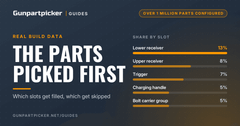 LOWER RECEIVERS/10.06.26The Parts Builders Pick First
 AR-15/03.16.26What Do You Wish You Knew Before Buying Your First AR-15?
 AR-15/03.22.26GunPartPicker: A PCPartPicker for Guns
 BARRELS/10.07.26Which AR-15 Parts Are Below Their Recent Average
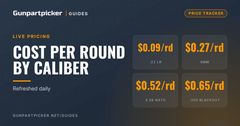 GUIDE/10.08.26Cost Per Round by Caliber
 GUIDE/10.09.26Ammo Price Watch: What to Buy and When
 AR-15/10.09.26AR-15 Upgrades by Setup: Pistol, 14.5, 16 Inch, 300 Blackout and Factory Rifles
Tools for this guide
- Planning toolAR Build Cost CalculatorHow much does it cost to build an AR-15? Pick caliber, barrel length, stock or brace and optic, then drag both edges of the price band from the cheap end to the top end. Every slot fills with the part builders add most that is in stock, priced live. The headline total is the core rifle, optics and extras are priced separately, and beside them sits what builders really pay per slot, measured from real part picks. Roll a random build, or open yours in the builder in one click. Computed from over 1 million AR parts selected on GunPartPicker since 2020.
- Paint planner toolGun Paint PlannerRattle can guns online before you spray. Paint, stencil and camo a real photo of over 400 guns: AR-15s, AR-10s, AR-9s, AKs, every Glock, pistols, shotguns and bolt action rifles, the way the rattlecanned guns on r/rattlecannedguns are done, with Krylon, Rust-Oleum, Aluma-Hyde, DuraCoat and Cerakote colors, then get the cans to buy in spray order.
- Legal toolGun Travel CheckerCan I bring my gun to another state? Pick where you start, where you are going and what is coming along: carry pistol, AR-15, magazines, suppressor, SBR, brace, forced reset or binary trigger, hollow points. Every state on the route is checked for transporting firearms across state lines: magazine limits, assault weapon bans, NFA rules, carry permit type and trigger bans, with what to do before the state line.