Real build data, Q3 2026
Jul 1 to Sep 30, 2026Every ranking on this page comes from parts real builders added to their builds on GunPartPicker, Jul 1 to Sep 30, 2026. A pick counts each time a builder adds the part to a build in our builder, filed under the part's own category. Prices and stock are checked daily across every store we track. No surveys, no search trends, no sponsored picks.
Quick picks
Live prices- 1
- 2
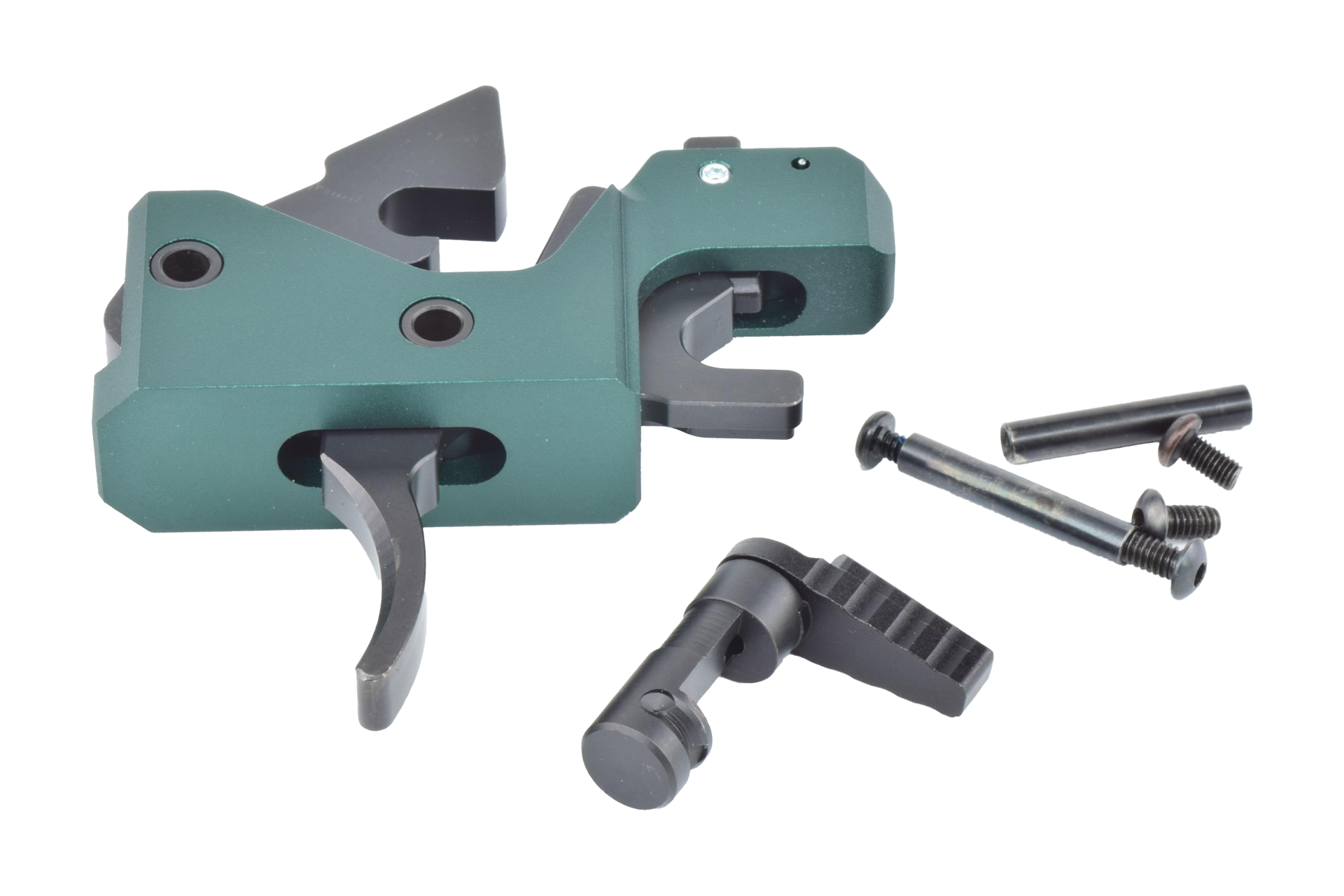 Also popularPartisan Triggers Disruptor AR-15 3 Position Drop In Forced Reset Trigger2 stores/In stock
How we pick: ranked by how often builders added each part to a real build on GunPartPicker in Q3 2026, in stock parts first, then by tier. Prices and stock are checked daily across every store we track.
Forced reset triggers are legal under federal law, banned in 15 states plus DC, and unsettled in three more. Here's the state picture and the rapid fire triggers you can buy today.
- Best AR-15 FRT in stock: Partisan Triggers Disruptor, around $275 (about $300 with an ambi selector).
- Best value FRT: AS Designs ARC-Fire V2 Ambi Kit, around $250.
- Best binary trigger: Franklin Armory BFSIII, $385 to $430.
- Legal in every state: CMC Triggers Drop-In Two Stage Flat, around $200.
In stock


Partisan Triggers Disruptor
Best AR-15 FRT in stock. The Disruptor is a three position, drop-in forced reset trigger for the AR-15. Like every FRT, it uses the bolt carrier's travel to push the trigger forward against your finger after each shot, so you're back at the wall far sooner than you could reset it yourself.
We'd start here because it's a true FRT you can order today without a long wait. A second listing adds an ambidextrous safety selector for about $25 more.
What we like:
- Drop-in unit for the AR-15, per the listing.
- In stock at around $275, or about $300 with the ambi selector.
- One round per function of the trigger, the test the federal settlement turned on.
Watch out for:
- Restricted in 15 states plus DC, and unsettled in Florida, Iowa and Virginia.
- Only two stores carry it, and both list the same price.
- An undergassed carbine won't drive the reset reliably, so plan your gas and buffer first.
AS Designs ARC-Fire V2 Ambi Kit
Best value FRT. The ARC-Fire V2 is the cheapest AR-15 forced reset trigger we list in stock. The kit ships with ambidextrous selector levers in 0, 90 and 180 degree throws, plus mil-spec levers if you'd rather keep the standard feel.
You'll save about $25 over the Disruptor. You'll also have only one store to buy from.
What we like:
- Around $250, the lowest in stock price on an AR-15 FRT we track.
- Ambi kit with 0, 90 and 180 degree selector positions.
- Mil-spec levers included, per the listing.
Watch out for:
- One store has it in stock, so the price can move fast.
- Same legal map as every FRT: restricted in 15 states plus DC.
- Needs the same healthy gas system and buffer setup as any FRT.
Franklin Armory BFSIII
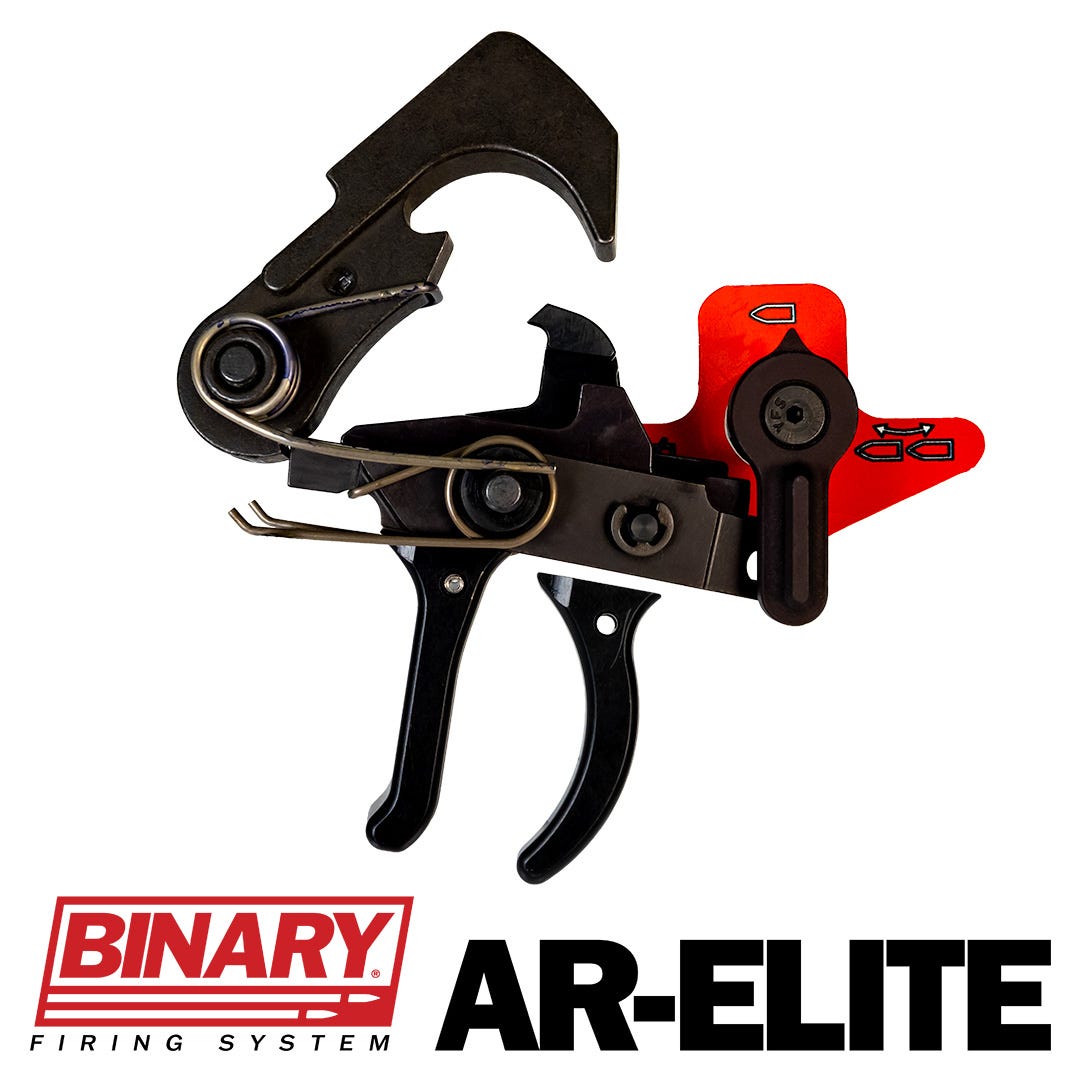
Best binary trigger. A binary trigger fires once when you pull and once when you release. That's a different mechanism from an FRT, and some states treat it differently, so the BFSIII is the fast trigger to look at when your state restricts FRTs but not binaries.
Minnesota and Nevada restrict FRTs but aren't on the binary ban list. Virginia's trigger activator ban doesn't reach binaries either, because the second shot needs a second movement, the release.
What we like:
- Three positions: safe, semi and binary, so you can run it as a normal trigger.
- In stock at five stores, most at around $387.
- No federal restriction on binary triggers.
Watch out for:
- Banned in 13 states, some by name.
- Costs over $100 more than either FRT above.
- The release shot fires every time you let go in binary mode, so you have to stay on target until you do.
CMC Triggers Drop-In Two Stage Flat
Legal in every state. If your state restricts both FRTs and binaries, a good two-stage trigger is the upgrade you can run anywhere. The CMC gives you a light take-up, then a crisp break on a flat bow, in a drop-in cassette that installs without fitting.
You won't get a faster reset than your finger gives you. You will get a cleaner, more repeatable press than a mil-spec trigger.
What we like:
- Two-stage pull with a flat trigger bow.
- Drop-in cassette, per the listing.
- Around $200, with no state law limiting a standard trigger.
Watch out for:
- Only one store has it in stock right now.
- No speed gain over a standard reset.
- If you'd rather a single-stage feel, look at our AR-15 trigger guide instead.
Are FRT triggers legal in 2026?
Yes, under federal law. Under the 2025 Justice Department settlement with Rare Breed Triggers, ATF no longer treats a forced reset trigger that fires one round per function of the trigger as a machine gun.
Federal law defines a machine gun as one that fires more than one round per single function of the trigger. An FRT resets the trigger fast, but you still release and press it for every round. One function, one shot.
That settles federal law only. Your state can still ban FRTs under its own machine gun, rapid fire device or multiburst trigger statute, and a state ban applies no matter what the federal position is.
Federal vs state at a glance
| Metric | Value |
|---|---|
| Federal law | Legal |
| States restricting | 15 + DC |
| Unsettled | FL, IA, VA |
| No state ban | 32 |
When did FRT triggers become legal?
ATF had classified the FRT-15 and similar devices as machine guns and seized them from owners and makers. In July 2024 a federal district court in Texas vacated that classification, because the devices need one function of the trigger per round, and ordered seized triggers returned.
In May 2025 the Justice Department settled its remaining case with Rare Breed Triggers. It agreed these devices aren't machine guns under the National Firearms Act, stopped enforcing against owners and agreed to return seized units to owners who asked.
The settlement doesn't protect a trigger modified into an auto sear. Converting one is still a serious federal felony.
What states are FRT triggers legal in?
Forced reset triggers have no state ban in 32 states. They're restricted in 15 states plus DC, and three states have wording that may reach them but hasn't been tested in court.
FRT Legality by Share of US Jurisdictions
50 states plus DC
| Item | Share (%) |
|---|---|
| No state ban | 63% |
| Restricted (states plus DC) | 31% |
| Unsettled (FL, IA, VA) | 6% |
- Restricted (15 states plus DC): California, Colorado, Connecticut, Delaware, Hawaii, Illinois, Maryland, Massachusetts, Minnesota, Nevada, New Jersey, New York, Oregon, Rhode Island and Washington, plus the District of Columbia.
- Unsettled (3 states): Florida, Iowa and Virginia. Each has a statute whose wording may reach FRTs, and no court has applied it to them.
- No state ban (32 states): Everywhere else, as long as the gun itself is legal for you to own.
Most state bans never say "forced reset trigger." They prohibit a "multiburst trigger activator," a "trigger activator" or a rate of fire enhancer. Search your state code for those terms, or follow our guide to checking your state's wording.
Are FRT triggers legal in Texas?
Yes. Texas counts a gun as a machine gun only above two shots per function of the trigger, and it has no rate of fire device statute. The next regular session that could add one is in 2027. See Texas FRT law.
Are FRT triggers legal in Virginia?
Unsettled. Virginia has banned trigger activators since 2020, and a violation is a Class 6 felony. Neither a court nor the attorney general has said whether an FRT counts, so treat it as restricted until a Virginia lawyer tells you otherwise. See Virginia FRT law.
Are FRT triggers legal in Maryland?
No. Maryland bans any device that raises the rate the trigger is activated or the rate of fire. FRTs aren't named in that list, but the Maryland attorney general said in June 2025 that they're illegal under Maryland law. See Maryland FRT law.
Florida and Iowa
Florida's bump-fire definition (Fla. Stat. 790.222) may reach FRTs and hasn't been tested. Iowa bans selling a device that raises a gun's rate of fire, not owning one, so a sale may break Iowa law even where owning one doesn't.
Are drop-in FRTs legal?
Drop-in describes how the trigger installs, not how the law treats it. A drop-in FRT gets the same federal treatment as any FRT that fires one round per function of the trigger, and the same state bans apply to it.
If you're in one of the 15 restricted states or DC, a drop-in FRT is just as prohibited as one you fit by hand.
FRT vs binary trigger
A forced reset trigger fires one round per pull and uses the bolt carrier to shove the trigger forward for you. A binary trigger fires one round on the pull and a second on the release, and most have a selector position that returns them to normal semi-auto.
The law splits them too. Binary triggers aren't federally regulated, and the binary ban list has 13 states, not 15. Super safeties are a third kind of device that gets a forced reset effect without replacing the fire control group. Our FRT vs binary vs super safety guide goes through all three.
Will FRT triggers be banned?
Federally, the 2025 settlement stands. The changes are coming state by state.
Connecticut's rate of fire enhancement ban names forced reset triggers outright from October 1, 2026, and a violation is a class D felony. Oregon's SB 243, passed in September 2025, bans rapid fire activators including FRTs, binary triggers and bump stocks. Texas bills to add a conversion device crime died in committee in 2025.
If you're moving, settle it first. A trigger you own legally in one state doesn't become legal in another, and there's generally no grandfathering for someone who moves in with one.
How we pick
We only list triggers our tracked stores have in stock, at the price you'd pay today, and we match every legal line to our gun laws by state pages, which cite each statute. For Glock and AK hosts, see our Glock FRT guide and AK FRT guide, and our FRT host guide covers the gas and buffer setup an AR-15 needs to run one.
Filed underAR-15/Triggers/Buyer's Guide/Explainer
FAQ
Frequently asked questions
Are FRT triggers legal in 2026?
- Federally, yes. Under the May 2025 DOJ settlement with Rare Breed Triggers, ATF no longer treats an FRT that fires one round per function of the trigger as a machine gun. Your state can still ban them, and 15 states plus DC do.
Is an FRT a machine gun?
- Not under federal law. A machine gun fires more than one round per function of the trigger. An FRT fires one round per function and just resets faster.
What states are FRT triggers legal in?
- 32 states have no state ban. California, Colorado, Connecticut, Delaware, Hawaii, Illinois, Maryland, Massachusetts, Minnesota, Nevada, New Jersey, New York, Oregon, Rhode Island, Washington and DC restrict them. Florida, Iowa and Virginia are unsettled.
When did FRT triggers become legal?
- A federal district court in Texas vacated ATF's machine gun classification in July 2024, and the Justice Department settled with Rare Breed Triggers in May 2025.
Are drop-in FRTs legal?
- Drop-in describes installation, not legal status. A drop-in FRT gets the same federal treatment and the same state bans as any other FRT.
What's the difference between an FRT and a binary trigger?
- An FRT fires once per pull and uses the bolt carrier to reset the trigger. A binary fires on the pull and again on the release. Binary triggers aren't federally regulated and are banned in 13 states.
Did the ATF give back seized FRTs?
- Yes. The settlement included returning seized units to owners who asked for them.
Written by
GPP Editorial TeamAR Build Specialists
GunPartPicker guides are powered by data from real builds. What builders actually select tells the story.
Read next
All guides → TRIGGERS/03.02.26Best AR-15 Triggers of 2026, Ranked by Real Builder Picks
 TRIGGERS/09.15.26Best AR-15 Forced Reset Triggers in 2026
 STATE LAW/10.01.26Binary Triggers by State: Where They Are Legal
 BUFFERS & RECOIL/09.17.26FRT Compatible Hosts: Which Rifles Actually Run Them
 TRIGGERS/09.24.26SHOT Show 2027: What Builders Actually Care About
 STATE LAW/09.17.26AK Forced Reset Triggers: The 2026 Field
 STATE LAW/09.17.26Glock Forced Reset Triggers: What Fits and What Is Legal
 STATE LAW/10.02.26Maryland SB334: What to Buy Before January 1
Tools for this guide
- Compatibility toolFRT and Binary Trigger PickerChoose your platform and see every forced reset trigger, binary trigger and Super Safety the catalog carries for it, what the host needs to run one, and where each is in stock.
- Paint planner toolGun Paint PlannerRattle can guns online before you spray. Paint, stencil and camo a real photo of about 1,800 guns: AR-15s, AR-10s, AR-9s, AKs, every Glock, pistols, shotguns and bolt action rifles, the way the rattlecanned guns on r/rattlecannedguns are done, with Krylon, Rust-Oleum, Aluma-Hyde, DuraCoat and Cerakote colors, then get the cans to buy in spray order.
- Legal toolGun Travel CheckerCan I bring my gun to another state? Pick where you start, where you are going and what is coming along: carry pistol, AR-15, magazines, suppressor, SBR, brace, forced reset or binary trigger, hollow points. Every state on the route is checked for transporting firearms across state lines: magazine limits, assault weapon bans, NFA rules, carry permit type and trigger bans, with what to do before the state line.