People buy a forced reset trigger, install it in whatever rifle they already own, and find it runs inconsistently. The usual next move is to blame the device.
It is almost never the device. A forced reset trigger depends on the bolt carrier travelling fast enough and far enough to drive the reset on every cycle, which means the host rifle is doing most of the work. Get the host right and most devices run. Get it wrong and no device will.
| Metric | Value |
|---|---|
| Fix first | Gas |
| Fix second | Buffer weight |
| Fix last | The trigger |
Gas is the first thing to fix
An undergassed carbine is the single most common reason an FRT runs badly. The carrier does not reach full speed, the reset is weak or late, and you get inconsistent behaviour that feels like a defective trigger.
Short barrels are the worst offenders because they combine a small gas port with short dwell time. A rifle that runs fine with a standard trigger can be comfortably undergassed for FRT use, because a standard trigger does not care how fast the carrier moves as long as it cycles.
An adjustable gas block is the right tool here. It lets you open the system up for FRT use and close it back down if you later run the rifle suppressed, which pushes gas the other way. Fixed gas blocks are fine on a rifle that happens to be correctly gassed and useless when it is not.
If you are building specifically to run one of these, buy the adjustable block at the same time as the trigger, not after the first frustrating range trip.
Buffer weight is your tuning control
Buffer weight decides how fast and how hard the carrier returns, which is precisely what drives the reset. It is also the cheapest and fastest thing to change.
Too heavy and the carrier returns slowly, the reset is sluggish, and the rate drops. Too light and the rifle cycles violently, beats itself up, and can outrun the magazine.
There is no universal correct weight, because it depends on your gas, your barrel length and your ammunition. What matters is that you treat it as adjustable rather than fixed. Buy a couple of weights and test, which is far cheaper than replacing anything else in the system.
Our buffer guide and buffer spring guide cover the weight options and what each one changes.
The bolt carrier group
The reset surface works against the carrier, so the carrier needs to be consistent.
Use a full mass carrier. Lightweight and low mass carriers reduce the momentum available to drive the reset and are the wrong direction entirely for this application, even though they are often marketed for faster cycling.
Beyond mass, what matters is that the rear face is square and the finish is consistent. Our BCG guide covers the coatings and what they actually change.
The parts you need
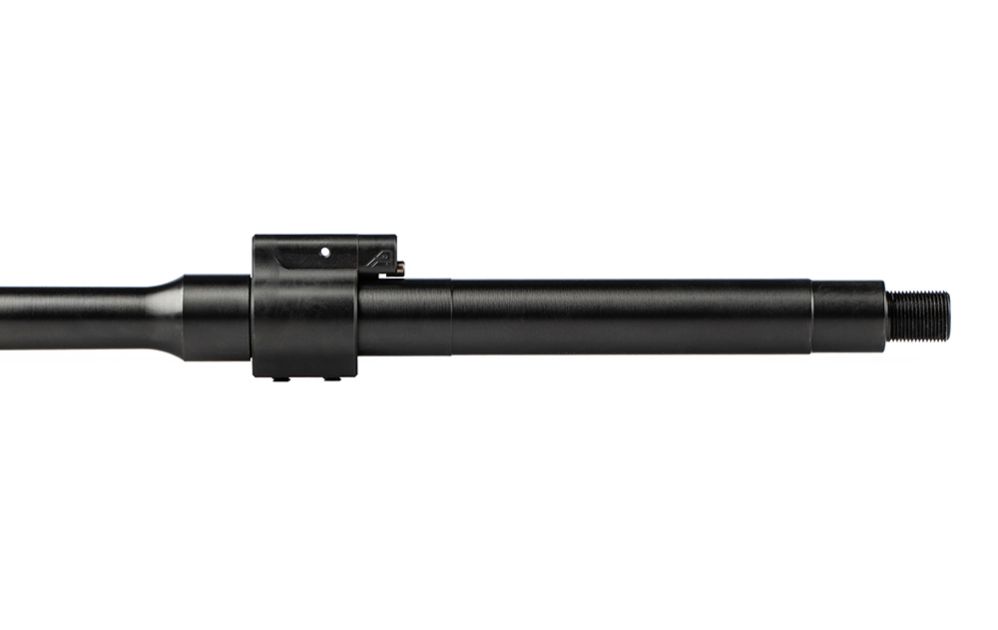
An adjustable gas block, so you can dial the system in:

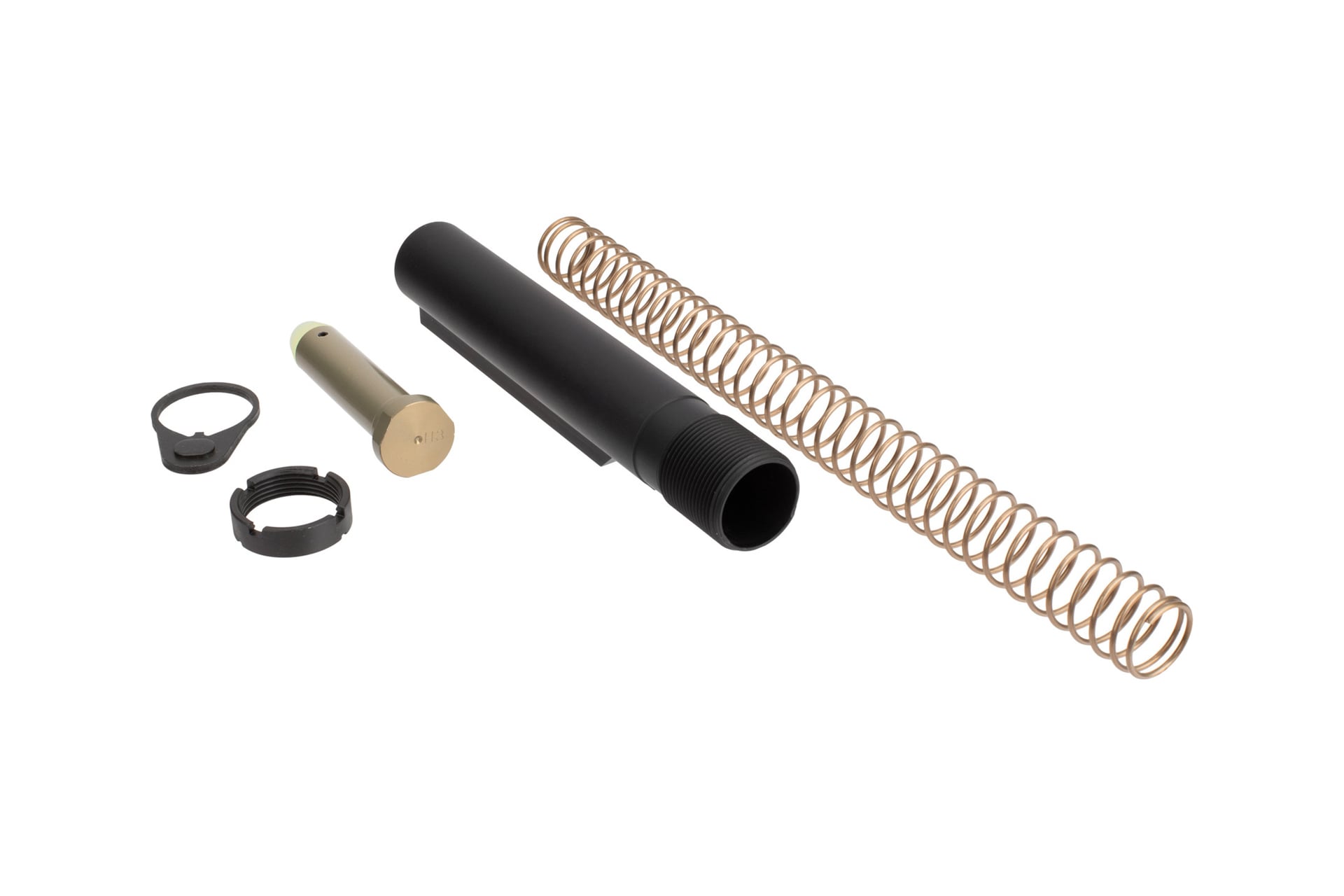
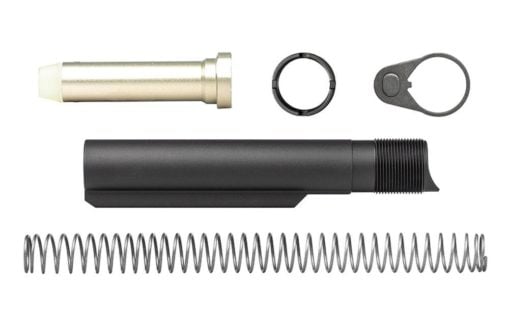
Buffers, bought as a set so you can tune rather than guess:

Diagnosing it when it runs badly
Work through this in order, changing one thing at a time.
- Confirm with known-good ammunition. Weak or heavily fouling range ammunition drops cycle speed enough to make a marginal setup inconsistent. This is misdiagnosed as a trigger fault constantly.
- Check the gas. If you have an adjustable block, open it up. If the behaviour changes, gas was your problem.
- Change buffer weight. Go one step lighter if the reset feels sluggish.
- Check the magazine. At high cycle rates, a tired magazine spring cannot feed fast enough, and the resulting stoppage looks like a trigger problem.
- Then look at the trigger.
Maintenance changes too
Round count climbs fast, so the maintenance interval has to come down. The buffer, action spring, gas rings and the trigger group itself all see accelerated wear. Inspect the buffer and spring regularly rather than on a normal schedule, and expect to replace springs more often than you would on a standard rifle.
Keep the rifle wetter than you normally would. Higher cycle rates generate more heat and strip lubricant faster.
The short version
Budget for the gas block and buffers as part of the purchase, not as an afterthought. A fast trigger on a marginal host is a frustrating rifle, and the parts that fix it cost a fraction of what the trigger did.
Filed underBuffers & Recoil/AR-15/BCGs/Triggers/Gas Systems/Competition/How-To
FAQ
Frequently asked questions
Why does my forced reset trigger run inconsistently?
- Most often the host is undergassed, so the bolt carrier does not travel fast enough to drive the reset reliably. Check ammunition first, then gas, then buffer weight. The trigger itself is usually the last thing that is actually wrong.
Do I need an adjustable gas block for an FRT?
- Close to mandatory on short barrels, and a good idea generally. It lets you open the system up for reliable reset and close it down again if you later run a suppressor, which pushes gas the other way. Buy it with the trigger, not after.
What buffer weight should I use with an FRT?
- There is no universal answer because it depends on your gas, barrel length and ammunition. Treat buffer weight as a tuning control rather than a fixed part, buy two or three weights and test. It is the cheapest change in the system.
Can I use a lightweight bolt carrier with an FRT?
- No, that is the wrong direction. The reset works against carrier momentum, so a full mass carrier is what you want. Lightweight carriers reduce the momentum available to drive the reset even though they are marketed for faster cycling.
Does an FRT wear out an AR-15 faster?
- Yes, mostly through round count. The buffer, action spring, gas rings and trigger group see accelerated wear. Shorten your inspection interval, replace springs more often than usual, and keep the rifle better lubricated than you normally would.
Can magazines cause FRT problems?
- Yes. At high cycle rates a tired magazine spring cannot feed fast enough, and the resulting stoppage looks exactly like a trigger fault. Test with fresh, known-good magazines before changing anything expensive.
Written by
GPP Editorial TeamAR Build Specialists
GunPartPicker guides are powered by data from real builds. What builders actually select tells the story.
Read next
All guides → BUFFERS & RECOIL/09.17.26AR9 FRT Build: Blowback Tuning for a Forced Reset Trigger
 BUFFERS & RECOIL/09.17.26FRT Compatible Hosts: Which Rifles Actually Run Them
 BUFFERS & RECOIL/09.24.26Best Buffers and Springs for High Cycle Rate Triggers
 BUFFERS & RECOIL/09.24.26Extar EP9 MDB: Roller Delay in a Budget PDW
 BCGS/10.12.26DI vs Piston, Settled by Build Data
 TRIGGERS/09.15.26Best AR-15 Forced Reset Triggers in 2026
 TRIGGERS/09.28.26Binary Triggers in 2026: What to Know Before You Buy
 TRIGGERS/09.25.26FRT vs Binary vs Super Safety: What Is Actually Different
Tools for this guide
- Tuning toolBuffer Weight CalculatorEnter your gas system, barrel length, buffer tube and ammo, add a suppressor or a fast trigger, and get the buffer weight to start with plus the buffers in stock that match.
- Compatibility toolFRT and Binary Trigger PickerChoose your platform and see every forced reset trigger, binary trigger and Super Safety the catalog carries for it, what the host needs to run one, and where each is in stock.
- Paint planner toolGun Paint PlannerRattle can guns online before you spray. Paint, stencil and camo a real photo of over 400 guns: AR-15s, AR-10s, AR-9s, AKs, every Glock, pistols, shotguns and bolt action rifles, the way the rattlecanned guns on r/rattlecannedguns are done, with Krylon, Rust-Oleum, Aluma-Hyde, DuraCoat and Cerakote colors, then get the cans to buy in spray order.