Real build data, Q3 2026
Jul 1 to Sep 30, 2026Every ranking on this page comes from parts real builders added to their builds on GunPartPicker, Jul 1 to Sep 30, 2026. A pick counts each time a builder adds the part to a build in our builder, filed under the part's own category. Prices and stock are checked daily across every store we track. No surveys, no search trends, no sponsored picks.
Quick picks
Live prices- 2
- 3
- 4
How we pick: ranked by how often builders added each part to a real build on GunPartPicker in Q3 2026, in stock parts first, then by tier. Prices and stock are checked daily across every store we track.
The buffer is the least glamorous part of an AR-15 and the most useful thing you can change when a rifle is not behaving. It costs a fraction of a trigger, it takes two minutes to swap with no tools, and on a rifle running a binary or forced reset trigger it is usually the fix.
What the buffer actually does
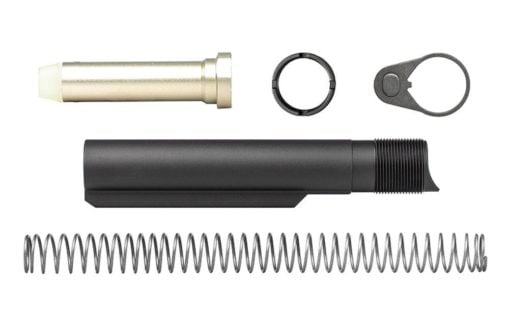
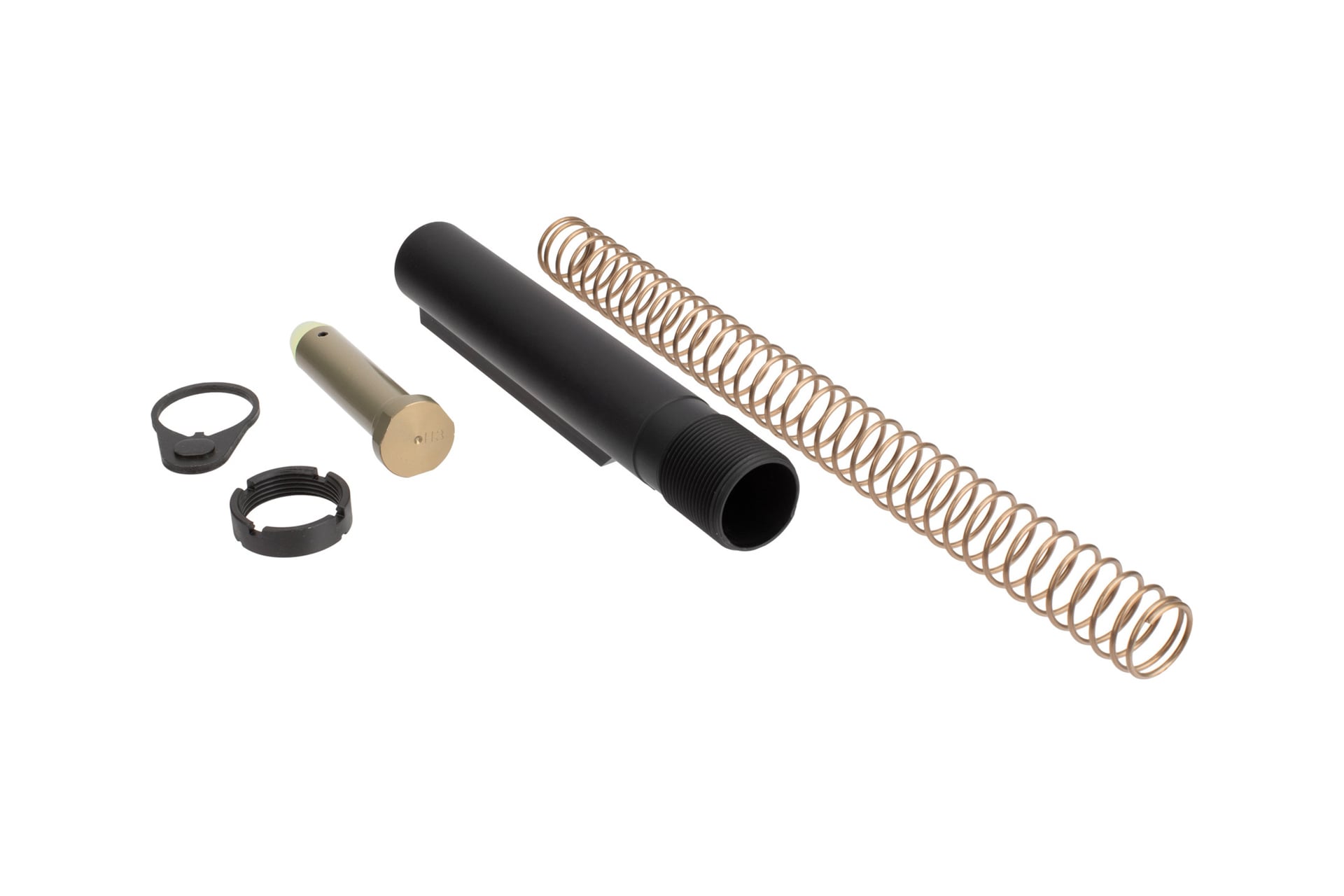
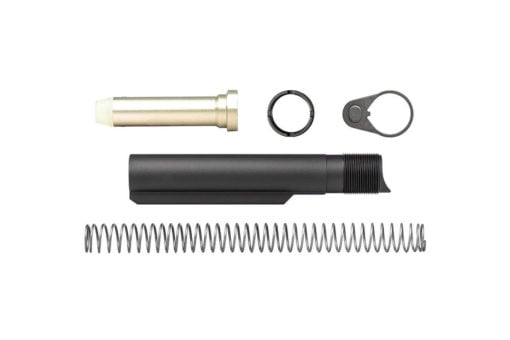
The buffer sits in the receiver extension behind the bolt carrier. When the rifle fires, the carrier travels rearward, compresses the action spring and is stopped and partly absorbed by the buffer. The spring then drives it forward again.
Two things follow from that, and they are the whole basis for tuning.
Buffer weight controls carrier speed. Heavier slows the carrier both ways. Lighter lets it move faster.
Carrier speed is what a forced reset trigger runs on. The reset is driven by the carrier. Too slow and the reset is sluggish or incomplete.
| Metric | Value |
|---|---|
| Sluggish reset | Go lighter |
| Violent, brass thrown far forward | Go heavier |
| Buy | Two or three |
Reading your rifle
You do not need a chronograph or gauges. The rifle tells you.
Signs it is overgassed or the buffer is too light: brass thrown well forward of your position, violent recoil impulse out of proportion to the cartridge, excessive wear marks inside the upper, and at the extreme, the carrier outrunning the magazine so rounds fail to feed.
Signs it is undergassed or the buffer is too heavy: brass dribbling out or landing behind you, the bolt failing to lock back on an empty magazine, short stroking, and on a forced reset trigger, a reset that feels late or inconsistent.
Brass ejection pattern is the single most useful diagnostic and it is free. Watch where it lands.
How to tune it
Change one thing at a time and shoot between changes.
- Start with ammunition. Weak or heavily fouling range ammunition can produce undergassed symptoms in a perfectly good rifle. Confirm with known-good ammunition first.
- If you have an adjustable gas block, start there. Gas is the primary control, buffer weight is the secondary one.
- Then change buffer weight, one step at a time, in the direction the symptoms suggest.
- Consider the spring last. A tired spring behaves like a light buffer. Springs are consumables, especially at high round counts.
Buy a set, not a buffer
This is the part most people get wrong. Buying a single "correct" buffer assumes there is one, and there is not: the right weight depends on your gas port, barrel length, ammunition and whether you run a suppressor.
Buy two or three weights. Test. Keep the ones that work for each configuration. The total cost is still less than most triggers, and you end up with a rifle that is actually tuned rather than one that happens to function.
If you shoot the same rifle both suppressed and unsuppressed, you will almost certainly want different settings for each, which is another argument for an adjustable gas block rather than solving everything with buffer weight.
Springs matter more than people think
The action spring is a consumable and it is cheap. A tired spring produces sluggish return, inconsistent reset and a rifle that feels vague.
At the round counts a binary or forced reset trigger generates, springs wear noticeably faster than on a standard rifle. Replacing one is inexpensive and takes the same two minutes as a buffer swap. Our buffer spring guide covers the options, including flat-wire designs which some builders prefer for smoother cycling.
Treat both the buffer and the spring as maintenance items rather than permanent parts.
Buffers and kits worth looking at

What about hydraulic and captured systems
There is a tier above plain weights: hydraulic buffers and captured spring systems that damp the carrier rather than simply resisting it.
They genuinely smooth the impulse and reduce the harsh bolt-to-buffer impact, which some shooters notice immediately and others cannot feel at all. They cost several times what a plain buffer does.
Our honest view is to tune with plain weights first. If you arrive at a setup that works and you still want a smoother impulse, that is the moment a damped system is worth the money. Buying one to fix a rifle that is badly gassed just puts an expensive part in front of an unsolved problem.
One compatibility check before you order
Buffer length is not universal. Carbine receiver extensions take carbine buffers, rifle-length extensions take rifle buffers, and they are not interchangeable. Pistol and PDW braces vary further.
Confirm which receiver extension you have before ordering. This is the most common returned part in the category, and it is entirely avoidable.
The short version
Buy two or three buffer weights rather than one. Watch your brass. Fix gas first, buffer second, spring last. Replace springs as consumables. It is the cheapest tuning you will ever do on an AR.
Filed underBuffers & Recoil/AR-15/Triggers/Gas Systems/Competition/Buyer's Guide
FAQ
Frequently asked questions
What buffer weight should I use with a binary trigger?
- There is no single correct weight, because it depends on your gas port, barrel length, ammunition and whether you run a suppressor. Buy two or three weights and test. Go lighter if the reset feels sluggish, heavier if the rifle feels violent and throws brass well forward.
How do I know if my AR is overgassed?
- Brass thrown well forward of your position, recoil out of proportion to the cartridge, heavy wear marks inside the upper, and at the extreme the carrier outrunning the magazine. Brass ejection pattern is the most useful free diagnostic you have.
Should I change the buffer or the gas block first?
- Confirm ammunition first, then gas, then buffer weight, then spring. Gas is the primary control and buffer weight is the secondary one, so an adjustable gas block gives you more range of adjustment than buffer weight alone.
How often should I replace the buffer spring?
- Treat it as a consumable. At the round counts a binary or forced reset trigger generates, springs wear noticeably faster than on a standard rifle. A tired spring produces sluggish return and inconsistent reset, and replacement is cheap and quick.
Are carbine and rifle buffers interchangeable?
- No. Carbine receiver extensions take carbine buffers and rifle-length extensions take rifle buffers, and pistol and PDW braces vary further. Confirm which receiver extension you have before ordering. This is the most common avoidable return in the category.
Do I need a different buffer when running suppressed?
- Usually yes. A suppressor increases back pressure and pushes the system toward overgassed, so a heavier buffer often helps. If you shoot the same rifle both ways, an adjustable gas block is a better solution than swapping buffers every time.
Written by
GPP Editorial TeamAR Build Specialists
GunPartPicker guides are powered by data from real builds. What builders actually select tells the story.
Read next
All guides → BUFFERS & RECOIL/09.29.26What Your AR-15 Actually Needs to Run an FRT
 BUFFERS & RECOIL/09.17.26FRT Compatible Hosts: Which Rifles Actually Run Them
 BUFFERS & RECOIL/09.17.26AR9 FRT Build: Blowback Tuning for a Forced Reset Trigger
 TRIGGERS/09.15.26Best AR-15 Forced Reset Triggers in 2026
 TRIGGERS/09.28.26Binary Triggers in 2026: What to Know Before You Buy
 TRIGGERS/09.16.26Best Glock Triggers in 2026
 TRIGGERS/09.25.26FRT vs Binary vs Super Safety: What Is Actually Different
 BUFFERS & RECOIL/09.24.26Extar EP9 MDB: Roller Delay in a Budget PDW
Tools for this guide
- Tuning toolBuffer Weight CalculatorEnter your gas system, barrel length, buffer tube and ammo, add a suppressor or a fast trigger, and get the buffer weight to start with plus the buffers in stock that match.
- Compatibility toolFRT and Binary Trigger PickerChoose your platform and see every forced reset trigger, binary trigger and Super Safety the catalog carries for it, what the host needs to run one, and where each is in stock.
- Paint planner toolGun Paint PlannerRattle can guns online before you spray. Paint, stencil and camo a real photo of about 1,800 guns: AR-15s, AR-10s, AR-9s, AKs, every Glock, pistols, shotguns and bolt action rifles, the way the rattlecanned guns on r/rattlecannedguns are done, with Krylon, Rust-Oleum, Aluma-Hyde, DuraCoat and Cerakote colors, then get the cans to buy in spray order.