Putting a forced reset trigger in a 9mm AR is popular for good reason. The cartridge is cheap, recoil is mild, and a pistol caliber carbine is exactly the sort of host where a fast trigger is fun rather than punishing.
It is also a harder build than putting the same trigger in an AR-15, and the reason is the operating system. Get the tuning right and it runs. Skip it and you have a rifle that fails to reset, bounces its bolt and drops light primer strikes.
| Metric | Value |
|---|---|
| Check first | Bolt clearance |
| Needs most | Buffer weight |
| Prevents | Bolt bounce |
| Decisive | State law |
Why an AR9 is different
An AR-15 is gas operated. Gas from the barrel drives the bolt carrier, and you tune the energy with the gas block and the buffer.
Most AR9s are straight blowback. There is no gas system at all. The cartridge pushes the bolt rearwards directly, and the only things controlling that are the mass of the bolt, the weight of the buffer and the strength of the spring.
That matters for a forced reset trigger in two ways. The trigger is timed off the carrier's movement, so the carrier has to interact with the trip mechanism correctly. And a heavy blowback bolt slamming home tends to bounce, which a fast trigger exposes far more than a standard one does.
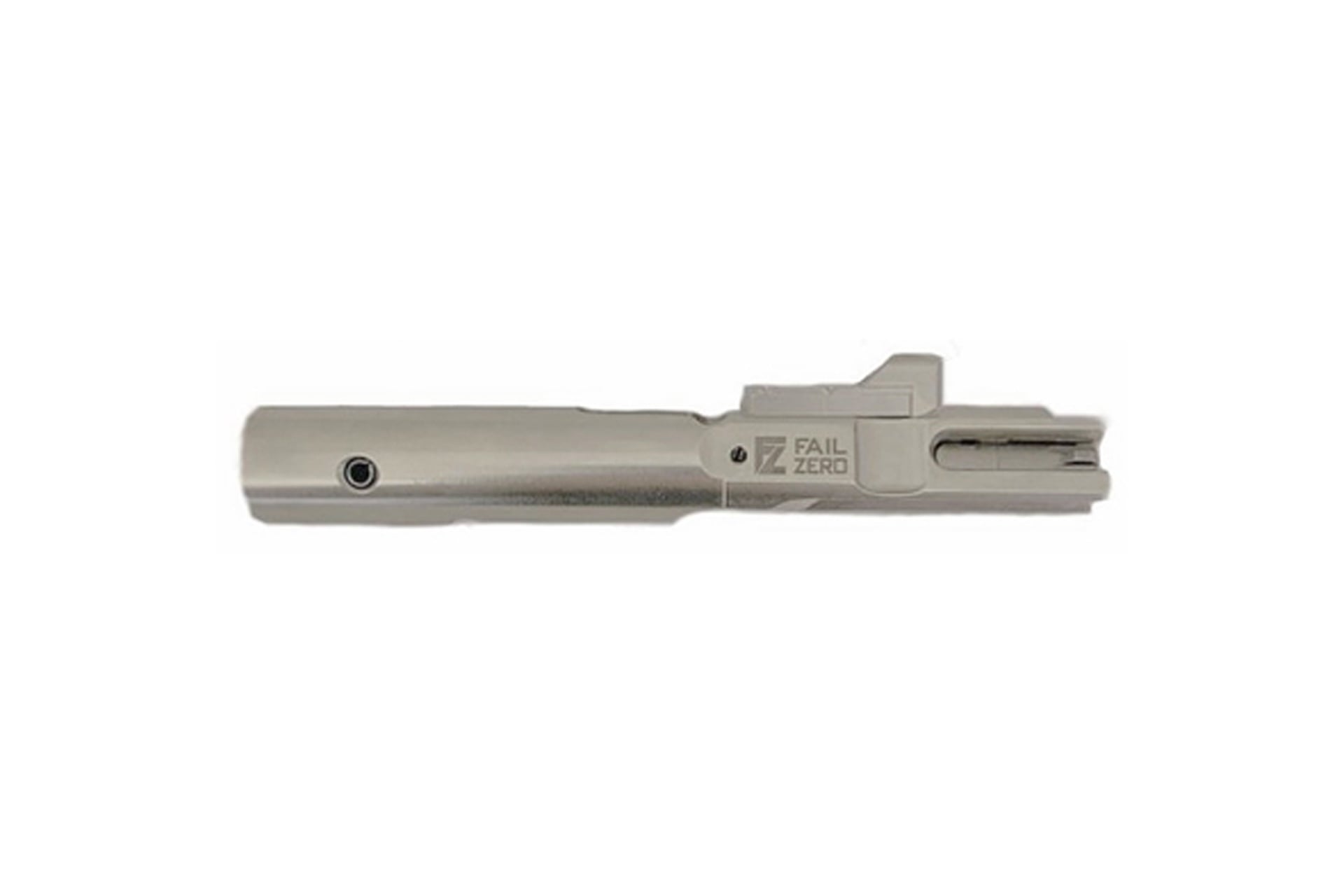
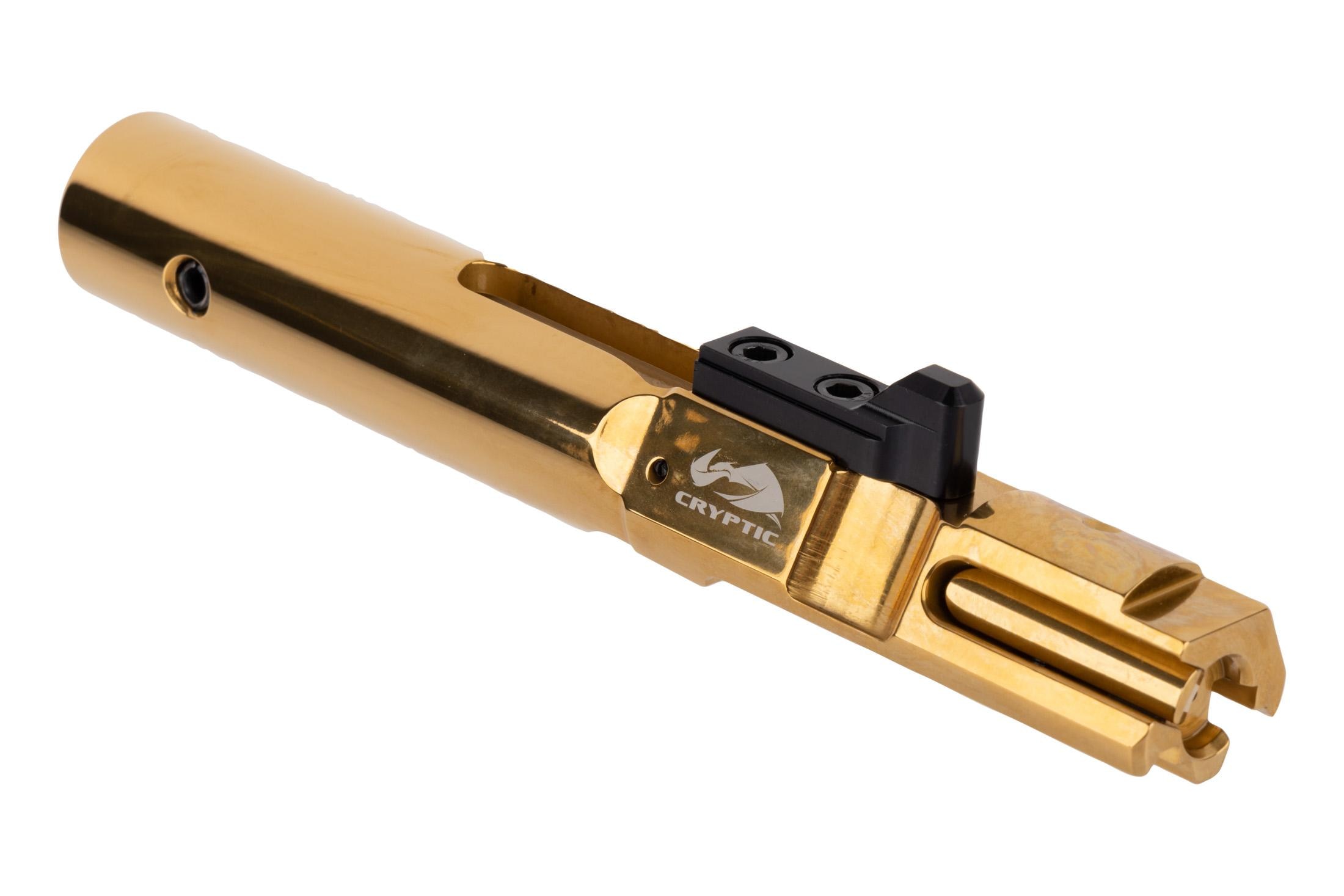
The bolt: clearance before anything else
The forced reset mechanism uses a trip lever that the carrier has to engage and clear on every cycle. On a gas AR-15 carrier that surface is standard. On a 9mm blowback bolt it often is not.
Many blowback bolts carry extra mass at the rear, and that weight can sit exactly where the trip lever needs room. When it does, the trigger will not reset properly or will bind. Some bolts sit far enough back that they need nothing. Others need clearance.
Do not start cutting a bolt yourself. Removing mass from a blowback bolt changes the whole balance of the system, and it is the kind of modification that should come from the bolt maker or a competent gunsmith. The better route is to buy a bolt its maker states is compatible with forced reset triggers, and to confirm with the trigger maker before ordering either.

Buffer weight is where these builds live or die
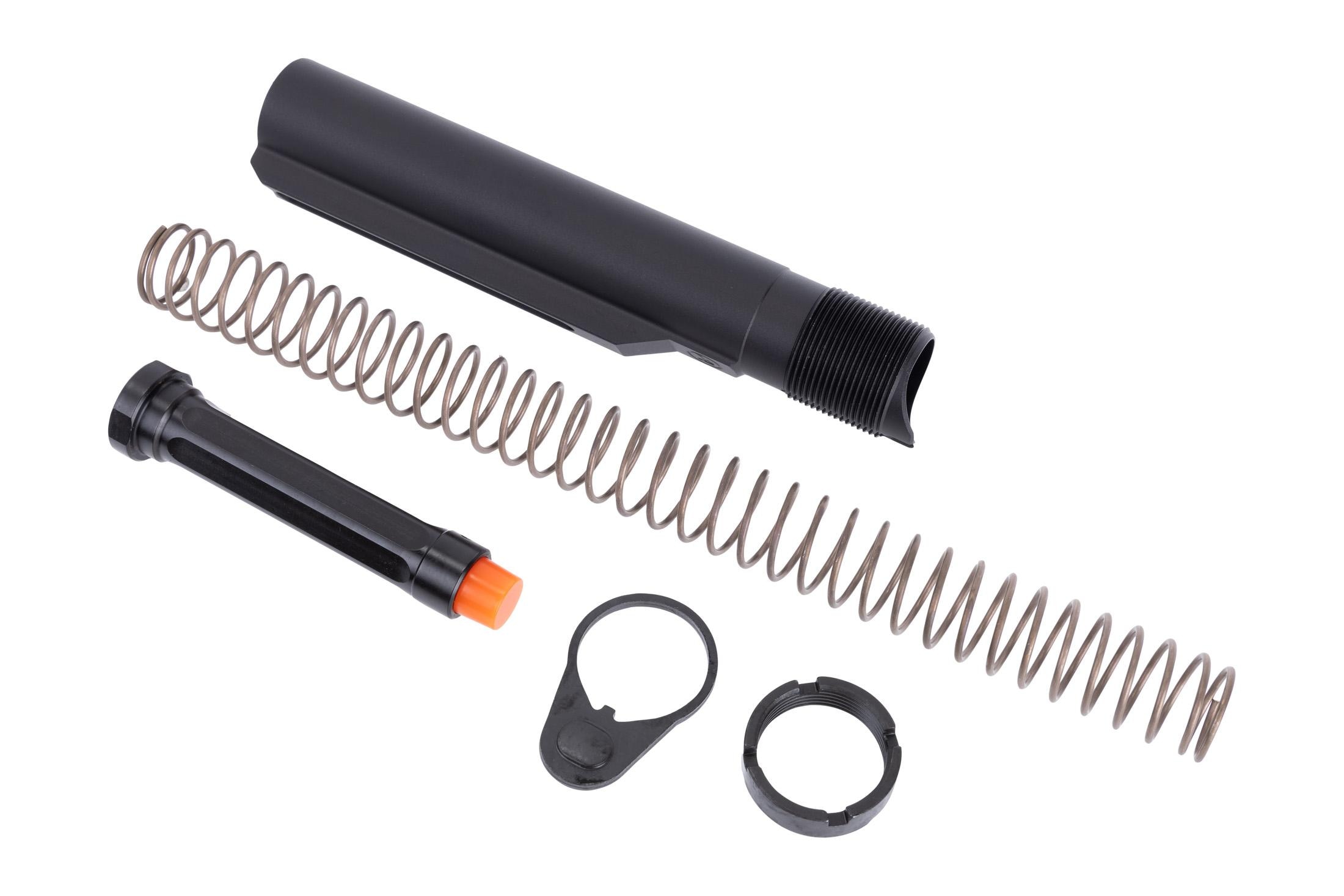
A blowback AR9 needs more buffer weight than any other AR configuration, and a forced reset trigger raises the requirement again.
The problem being solved is bolt bounce. A heavy bolt arriving in battery at speed can rebound slightly off the breech face. On a standard trigger you rarely notice. On a fast trigger the hammer can fall while the bolt is still moving, which produces light primer strikes and out of battery problems.
The answer is mass and damping. A heavy 9mm specific buffer slows the bolt, and designs with sliding internal weights or hydraulic damping absorb the impact instead of returning it. Forced reset specific 9mm buffers exist precisely because standard 9mm buffers are frequently not enough.


The spring
Pair the heavy buffer with a spring suited to it. Many AR9 builders run a heavier than standard spring to keep bolt velocity in check and help the bolt stay home. Match the spring to your buffer tube length, carbine or pistol, and do not assume an AR-15 carbine spring is correct.

The lower
The two common 9mm lower formats are Glock pattern and Colt SMG pattern magazines. Glock pattern lowers are more popular for good reason: the magazines are everywhere, they are cheap, and they are what most people already own.
A dedicated 9mm lower is generally the better base for a fast trigger build than a standard AR-15 lower with a magazine well block, because the magazine is held more consistently and last round bolt hold open works properly on a well designed dedicated receiver.


The trigger
Most AR-15 pattern forced reset triggers and forced reset selectors will fit an AR-15 pattern 9mm lower, because the fire control pocket is the same. Fitting is rarely the problem. Timing is, and everything above is what makes the timing work.
Confirm with the trigger maker that the specific device supports 9mm blowback use, and understand the three mechanism types before choosing. Our FRT vs binary vs super safety guide explains the differences, and the FRT host requirements guide covers the same energy logic on a gas AR-15.
Common failures and what causes them
Trigger will not reset, or binds. The bolt is fouling the trip lever. This is the clearance problem above, not a trigger defect.
Light primer strikes. Bolt bounce. Add buffer weight or move to a damped buffer.
Out of battery or doubled rounds. Also bolt bounce, and it is the one to take seriously. Stop and fix the buffer before shooting further.
Feeding stoppages, especially with hollow points. A marginal feed ramp. This is a barrel issue, not a trigger one, and better barrels with an improved feed ramp solve it.
Runs with one ammunition and not another. Blowback systems are sensitive to load power. Tune with the ammunition you intend to shoot and keep a note of what works.
What we would actually build
A dedicated Glock pattern 9mm lower, a bolt its maker confirms works with forced reset triggers, a heavy damped or adjustable 9mm buffer with a matching spring, and a quality barrel with a good feed ramp. Tune it with standard ammunition first, confirm clean cycling and no bolt bounce, and only then fit the fast trigger.
If you would rather avoid blowback tuning altogether, a delayed blowback 9mm carbine is gentler on itself and on the trigger. Our best 9mm PCC guide covers the operating systems side by side.
Filed underBuffers & Recoil/AR-15/BCGs/Triggers/How-To
FAQ
Frequently asked questions
Can you put a forced reset trigger in an AR9?
- Yes, most AR-15 pattern forced reset triggers fit an AR-15 pattern 9mm lower because the fire control pocket is the same. Fitting is rarely the issue. Making it run depends on bolt clearance for the trip lever, enough buffer weight to stop bolt bounce and the right spring.
Why won't my AR9 forced reset trigger reset?
- Usually because the bolt is fouling the trip lever. Many 9mm blowback bolts carry extra mass at the rear exactly where the lever needs room. Use a bolt its maker confirms is compatible with forced reset triggers rather than cutting one yourself.
What buffer weight does an AR9 FRT need?
- More than any other AR configuration, and more than a standard 9mm buffer in many cases. The goal is to stop bolt bounce, which causes light strikes and out of battery problems at fast trigger speeds. Heavy damped or adjustable weight 9mm buffers are the usual answer.
Is an FRT legal in a 9mm AR pistol?
- The 2025 federal settlement expressly left room for pistols where the magazine sits ahead of the grip, which covers AR pattern 9mm pistols. Fifteen states and DC restrict the device category regardless of federal posture. Verify your state law before buying. This is not legal advice.
What causes light primer strikes in an AR9 with a fast trigger?
- Bolt bounce. A heavy blowback bolt can rebound slightly off the breech face, and a fast trigger lets the hammer fall before it settles. More buffer weight, or a buffer with sliding weights or hydraulic damping, is the fix.
Should I use a Glock mag lower or a Colt pattern lower for an AR9 FRT build?
- Glock pattern lowers are the popular choice because the magazines are cheap and widely owned. A dedicated 9mm lower is generally a better base than an AR-15 lower with a magazine well block, since it holds the magazine more consistently and supports proper last round bolt hold open.
Written by
GPP Editorial TeamAR Build Specialists
GunPartPicker guides are powered by data from real builds — what builders actually select tells the story.
Read next
All guides → BUFFERS & RECOIL/09.17.26FRT Compatible Hosts: Which Rifles Actually Run Them
 BUFFERS & RECOIL/09.24.26Extar EP9 MDB: Roller Delay in a Budget PDW
 BUFFERS & RECOIL/09.24.26Best Buffers and Springs for High Cycle Rate Triggers
 LOWER RECEIVERS/08.16.26California-Legal AR-15 (2026): Featureless vs. Fixed-Mag & What to Buy
 HANDGUARDS/09.18.26Suppressor Ready Handguards: Inner Diameter and Tucked Cans
 BCGS/03.02.26The Most Trusted AR-15 BCGs: A 15,000-Build Data Analysis
 TRIGGERS/03.02.26AR-15 Trigger Popularity Report: Ranked From 14,000+ Builder Picks
 TRIGGERS/09.15.26Best AR-15 Forced Reset Triggers in 2026
Tools for this guide
- Tuning toolBuffer Weight CalculatorEnter your gas system, barrel length, buffer tube and ammo, add a suppressor or a fast trigger, and get the buffer weight to start with plus the buffers in stock that match.
- Compatibility toolFRT and Binary Trigger PickerChoose your platform and see every forced reset trigger, binary trigger and Super Safety the catalog carries for it, what the host needs to run one, and where each is in stock.
- Legal toolGun Travel CheckerCan I bring my gun to another state? Pick where you start, where you are going and what is coming along: carry pistol, AR-15, magazines, suppressor, SBR, brace, forced reset or binary trigger, hollow points. Every state on the route is checked for transporting firearms across state lines: magazine limits, assault weapon bans, NFA rules, carry permit type and trigger bans, with what to do before the state line.