The federal position
For several years this was genuinely unsettled and worth being careful about. It is much clearer now.
In July 2024 a federal district court in Texas, in National Association for Gun Rights v. Garland, vacated the ATF's classification of the FRT-15 and similar devices as machineguns, on the reasoning that they require one function of the trigger per round fired, and ordered seized triggers returned. In May 2025 the Department of Justice settled its remaining litigation with Rare Breed Triggers, confirming these devices are not machine guns under the National Firearms Act, agreeing not to enforce against owners, and agreeing to return seized units to owners who asked by September 30, 2025. Our FRT legal status guide walks through the settlement in more detail.
That settlement carries a condition worth stating: it does not protect a device modified into an actual auto sear. Converting one is a serious federal felony and nothing in the settlement changes that.
| Metric | Value |
|---|---|
| Federal | Settled 2025 |
| State bans | 15 states + DC |
| The trap | The wording |
The state question is the live one
This is where people get caught, and the reason is linguistic rather than legal.
Most state bans never use the phrase "forced reset trigger." They are typically written as prohibitions on a "multiburst trigger activator," a "trigger activator," or a rate of fire enhancer. Those terms predate FRTs and were often drafted with bump stocks or older devices in mind, and they are broad enough to capture these devices.
So somebody searching their state code for "forced reset" finds nothing and concludes they are fine. That is exactly the wrong conclusion.
The states commonly identified as restricting them
As of our latest check, the jurisdictions generally identified as prohibiting these devices through trigger activator or rate-of-fire statutes are:
California, Colorado, Connecticut, Delaware, Hawaii, Illinois, Maryland, Massachusetts, Minnesota, Nevada, New Jersey, New York, Oregon, Rhode Island, Washington, and the District of Columbia.
Treat that as a starting point for your own verification, not a conclusion. These statutes get amended, courts modify them, and the precise scope of a broadly worded trigger activator provision is exactly the kind of thing reasonable lawyers disagree about.
Two more states deserve a flag. Florida and Virginia have no statute that names these devices, but each has broadly written device language that some state firearms attorneys read as reaching them. Treat both as unsettled rather than clear.
If your state is on that list, assume prohibited until an attorney tells you otherwise. If it is not, still read your own statute using the search terms above.
Why a broad statute is harder to reason about
A ban naming a specific product is easy to apply. A ban on any device that increases the rate of fire is not.
Broadly drafted provisions can potentially reach devices well beyond what the drafters had in mind, including in some readings binary triggers and other rate-affecting hardware. That ambiguity is uncomfortable, and it is a real reason to get advice rather than reasoning from the device category.
What this means practically
In a permissive state, the federal position is settled and the practical questions are the ones our FRT buyer's guide covers: which trigger, whether your rifle is a suitable host, and what gas and buffer setup it needs to run reliably. FRT supply is still catching up after the settlement, so the rapid-fire triggers we track in stock today are mostly binary units.


In a restricted state, do not buy one, and be careful about travelling with one. Firearms law does not follow you across a state line in your favour, and transporting a prohibited device into a state that bans it is its own offence.
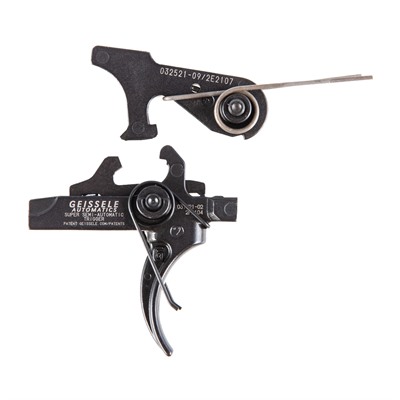
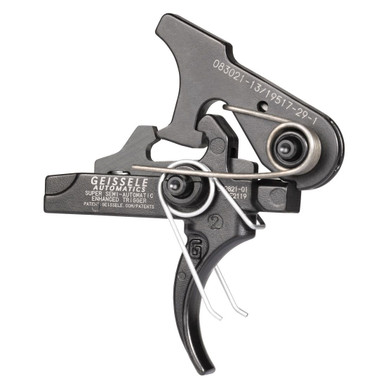
If you are unsure, a binary trigger is often available in places an FRT is not, though several of the same statutes reach those too. Check both separately rather than assuming one answer covers the other. A quality two-stage trigger is the upgrade that is legal in every state, and it is what most serious shooters run anyway.

Moving states
This catches people repeatedly. A device lawfully owned in one state does not become lawful to bring into another, and there is generally no grandfathering for someone relocating with prohibited hardware.
If you are moving into a state on that list, resolve it before you move rather than after.
Why this keeps changing
It helps to understand the shape of the disagreement, because it tells you how stable any answer is likely to be.
The federal argument turned on a definition: a machinegun fires more than one round per single function of the trigger. A forced reset device still requires a function of the trigger for each round, which is why the courts landed where they did.
State statutes mostly do not use that definition. They regulate outcome rather than mechanism, prohibiting devices that increase the rate of fire however they achieve it. A device can therefore be entirely lawful federally and prohibited in your state at the same time, with neither answer being wrong.
That structural difference is why "is it legal" has no single answer, and why the federal settlement did not end the question for most people. Expect state law here to keep moving for a while yet.
What we would do
Search your state code for the terms above. If you find a trigger activator provision, stop and get advice. If you do not, you are probably fine, and it is still worth a conversation with an attorney before spending money on a category this politically active.
The federal fight is largely over. The state ones are not, and they are the ones that apply to you.
Filed underState Law/AR-15/Triggers/Controls/Explainer
FAQ
Frequently asked questions
Are forced reset triggers federally legal?
- As of 2026, largely yes. A federal district court in Texas held in July 2024 that these devices are not machineguns because they require one function of the trigger per round, and a May 2025 DOJ settlement with Rare Breed Triggers confirmed that and ended enforcement against owners. Modifying one into an auto sear remains a serious federal felony.
Which states ban forced reset triggers?
- The jurisdictions commonly identified are California, Colorado, Connecticut, Delaware, Hawaii, Illinois, Maryland, Massachusetts, Minnesota, Nevada, New Jersey, New York, Oregon, Rhode Island, Washington and DC. Treat that as a starting point for verification, not a conclusion.
Why can't I find forced reset triggers in my state's laws?
- Because most state bans never use that phrase. They are written as prohibitions on a multiburst trigger activator, a trigger activator, or a rate of fire enhancer. Search those terms instead, or you will conclude your state has no statute when it does.
Do state bans on trigger activators also cover binary triggers?
- Sometimes, and it depends on the wording. Broadly drafted rate-of-fire provisions can reach devices well beyond what drafters had in mind. Check both categories separately rather than assuming one answer covers the other.
Can I travel with a forced reset trigger?
- Be very careful. Firearms law does not follow you across a state line in your favour, and transporting a prohibited device into a state that bans it is its own offence. Check each jurisdiction you will pass through, not only your destination.
What if I move to a state that bans them?
- There is generally no grandfathering for someone relocating with prohibited hardware, so lawful ownership in your old state does not carry over. Resolve it before you move rather than after, which is where people most often get caught.
Written by
GPP Editorial TeamAR Build Specialists
GunPartPicker guides are powered by data from real builds. What builders actually select tells the story.
Read next
All guides → STATE LAW/10.01.26Binary Triggers by State: Where They Are Legal
 STATE LAW/09.17.26AK Forced Reset Triggers: The 2026 Field
 STATE LAW/09.17.26Glock Forced Reset Triggers: What Fits and What Is Legal
 STATE LAW/10.02.26Maryland SB334: What to Buy Before January 1
 TRIGGERS/09.15.26Best AR-15 Forced Reset Triggers in 2026
 TRIGGERS/09.25.26FRT vs Binary vs Super Safety: What Is Actually Different
 TRIGGERS/10.06.26Best AR-15 Upgrades 2026: What Builders Actually Pick
 TRIGGERS/10.06.26Best AR-9 Upgrades 2026: What 9mm AR Builders Actually Pick
Tools for this guide
- Compatibility toolFRT and Binary Trigger PickerChoose your platform and see every forced reset trigger, binary trigger and Super Safety the catalog carries for it, what the host needs to run one, and where each is in stock.
- Legal toolGun Travel CheckerCan I bring my gun to another state? Pick where you start, where you are going and what is coming along: carry pistol, AR-15, magazines, suppressor, SBR, brace, forced reset or binary trigger, hollow points. Every state on the route is checked for transporting firearms across state lines: magazine limits, assault weapon bans, NFA rules, carry permit type and trigger bans, with what to do before the state line.
- Legal toolBarrel and Overall Length CheckerEnter barrel length, muzzle device and how the back end is configured, and see whether the build is a rifle, a short barreled rifle, a pistol or an AOW under federal law, with the barrels in stock at that length.