Most clone builds copy an issued configuration, so a committee decided what went on the rifle. The contractor rifles in 13 Hours are different. The people carrying them largely bought their own equipment.
That changes what you can learn from the build. Nothing's on the rifle because a procurement cycle put it there. Everything on it earned its place with somebody's own money.
| Metric | Value |
|---|---|
| Barrel | 14.5 to 16 in |
| Optic | Non-magnified |
| The difference | Self-funded |
A general purpose rifle, deliberately
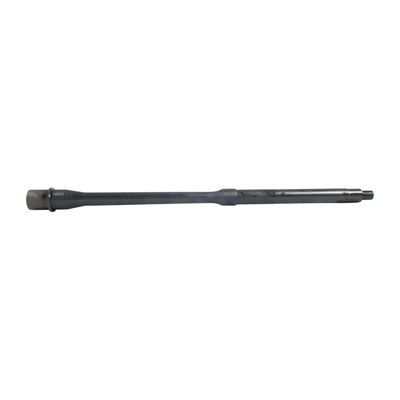
Start with what it isn't. It isn't a 10.3 inch entry gun or an 18 inch precision rifle. It sits in the middle at 14.5 or 16 inches, because it had to work in a vehicle, in a building and across a compound on the same night.
Most people should apply the same reasoning to a first rifle, and our barrel length data shows most builders land in that band.
If you want one rifle that does most things, build this configuration. People whose lives depended on the choice arrived there too.

Optic: speed over magnification
A non-magnified optic or a low-power variable. At the ranges involved, acquisition speed mattered more than resolving detail at distance.
Our LPVO versus red dot data shows builders overwhelmingly select the same today, a fair sign the reasoning generalises.
If you want one recommendation: a quality red dot, mounted low, left switched on.
The light is not optional
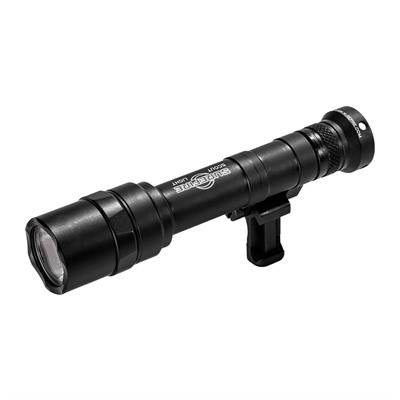
Of everything on this rifle, the light is the part we wouldn't skip, and people skip it first when the budget gets tight.
A weapon light exists for identifying what you're pointing at. A rifle in a defensive role has no more important job than that.
Mount it where your support thumb reaches the switch without breaking your grip. Placement matters more than lumens.

The sling, which nobody films
No film makes a sling look interesting, and it's one of the most useful things on any rifle.
A two-point adjustable sling lets you carry the rifle hands-free, transition to a sidearm, work with both hands, and stabilise the rifle when shooting. It costs a fraction of an optic and changes how usable the rifle is more than most upgrades.
If you build this and buy one accessory beyond the optic and light, make it a sling.
Controls
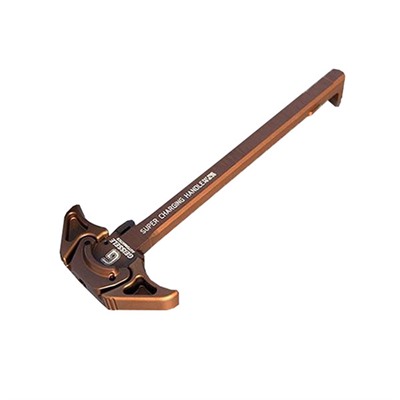
Ambidextrous controls matter on a rifle worked around vehicles and structures, because you'll shoot from both shoulders. An ambidextrous safety is the highest-value single change.

What is deliberately missing
No suppressor, because they're expensive and heavy and the job didn't require one. No magnified optic, because the distances didn't need it. No laser, because night vision wasn't part of the picture.
We'd copy that restraint. You can easily build a rifle that's capable of everything and unpleasant to carry. A rifle chosen by somebody paying for it tends to be lighter and simpler than one chosen from a catalogue.
Magazines and load carriage
The unglamorous half of a fighting rifle is how you carry ammunition for it, and self-funded builds differ most from issued ones here.
Buy good magazines and buy more than you think you need. They're the cheapest component and the most common cause of stoppages. A rifle with excellent parts and tired magazines is an unreliable rifle.
Number them so you can retire a bad one rather than leaving it in rotation. Retire any that have been dropped hard while loaded, because feed lip damage is the usual failure and you can't always see it.
Then work out how you carry spares. A chest rig, a belt or a pocket all work. Discovering at the range that your only plan was holding them doesn't.
Building it today
Start with a 16 inch mid-length upper, a quality bolt carrier group and a free-float M-LOK handguard. Add a red dot, a light positioned for your thumb, and a two-point sling.
You'll have an excellent rifle that does more things well than any specialist configuration on this site.
The M4A1 Block II clone build covers the issued rifle of the same era, and the M4A1 URG-I clone build shows where the pattern went next. Our SEAL team style carbine follows the same plain reasoning, and The Terminal List build covers the modern version.
Filed underClone Build/AR-15/5.56 NATO/Optics/Lights/CQB/Build Guide
FAQ
Frequently asked questions
What rifles did the contractors in 13 Hours use?
- A mix, because contractors largely bought and configured their own equipment rather than being issued a standard rifle. Broadly they were general purpose carbines in the 14.5 to 16 inch range with non-magnified optics and weapon lights.
Why is a contractor build worth copying?
- Because every part was chosen by somebody spending their own money on equipment they would depend on. Nothing is on the rifle because a procurement cycle put it there, which tends to produce lighter, simpler and more practical configurations.
What barrel length should a general purpose AR have?
- 14.5 to 16 inches. Long enough to retain useful velocity and reach, short enough to work in vehicles and buildings. It is where most builders land in our data, and where people whose lives depended on the choice landed too.
Is a weapon light necessary on a defensive rifle?
- Yes. Its primary job is identifying what you are pointing at, which is the most important thing a rifle in a defensive role must do. Mount it where your support thumb reaches the switch without breaking grip; placement matters more than lumens.
What order should I buy accessories in?
- A rifle that works first, then a light, then an optic, then a sling, then everything else. That is consistently the order people choose when spending their own money on equipment they will rely on.
Do I need a sling on an AR-15?
- It is one of the most useful and least glamorous things you can add. A two-point adjustable sling lets you carry hands-free, transition to a sidearm, use both hands and stabilise the rifle, for a fraction of the cost of an optic.
Written by
GPP Editorial TeamAR Build Specialists
GunPartPicker guides are powered by data from real builds. What builders actually select tells the story.
Read next
All guides → CLONE BUILD/10.14.26Act of Valor build: the Bandito Platoon SEAL carbine
 CLONE BUILD/10.15.26Black Hawk Down build: the Ranger and Delta carbines on screen
 CLONE BUILD/09.16.26CQBR Block I Clone Build Guide: Every Part You Need
 CLONE BUILD/09.18.26Christian Craighead's Nairobi Rifle: The L119A2, Part by Part
 CLONE BUILD/09.16.26CQBR Block II Clone Build Guide: The Daniel Defense Upgrade
 CLONE BUILD/10.15.26Heat Build: The Colt 733 From the Bank Shootout
 CLONE BUILD/09.16.26Mk18 Mod 0 Clone Build Guide: The Original CQB Weapon System
 CLONE BUILD/09.16.26Sicario Task Force Build: The Parts List
Tools for this guide
- Legal toolGun Travel CheckerCan I bring my gun to another state? Pick where you start, where you are going and what is coming along: carry pistol, AR-15, magazines, suppressor, SBR, brace, forced reset or binary trigger, hollow points. Every state on the route is checked for transporting firearms across state lines: magazine limits, assault weapon bans, NFA rules, carry permit type and trigger bans, with what to do before the state line.
- Planning toolAR Build Cost CalculatorHow much does it cost to build an AR-15? Pick caliber, barrel length, stock or brace and optic, then drag both edges of the price band from the cheap end to the top end. Every slot fills with the part builders add most that is in stock, priced live. The headline total is the core rifle, optics and extras are priced separately, and beside them sits what builders really pay per slot, measured from real part picks. Roll a random build, or open yours in the builder in one click. Computed from over 1 million AR parts selected on GunPartPicker since 2020.
- Legal toolBarrel and Overall Length CheckerEnter barrel length, muzzle device and how the back end is configured, and see whether the build is a rifle, a short barreled rifle, a pistol or an AOW under federal law, with the barrels in stock at that length.