Magazines are the least interesting thing you can buy for a pistol and the component most likely to make it stop working. Almost every malfunction people blame on ammunition or the gun itself traces back to a magazine.
They are also cheap, which means there is no good reason to run bad ones.
| Metric | Value |
|---|---|
| For carry | Factory |
| For competition | Extended |
| Retire when | It gets dropped hard |
Factory magazines are very good
This is worth stating plainly because it is unusual. On many platforms the factory magazine is the weak point and the aftermarket fixes it. On Glock it is the opposite: the factory magazine is the benchmark, and most aftermarket options are competing on price or capacity rather than on reliability.
For a carry or home defense pistol, buy factory. The thing you are betting on should be the most boring, most proven item available.
Cross-model compatibility
Glock magazines work in a specific direction, and understanding it saves money.
A longer magazine works in a shorter grip. A 17-length magazine functions in a Glock 19 or 26, extending below the grip. That means a 19 owner can use full-size magazines as range or spare magazines with no adapter.
A shorter magazine does not fill a longer grip. A 19-length magazine in a 17 leaves a gap at the base, and while it will usually function, there is nothing supporting your little finger and nothing sealing the magazine well.
This is why our Glock 17 vs 19 vs 45 guide notes the 19's practical advantage: it can use anything longer.
Slimline pistols like the 43, 43X and 48 use an entirely separate magazine family and share nothing with the double-stack guns.
Basepads and extensions
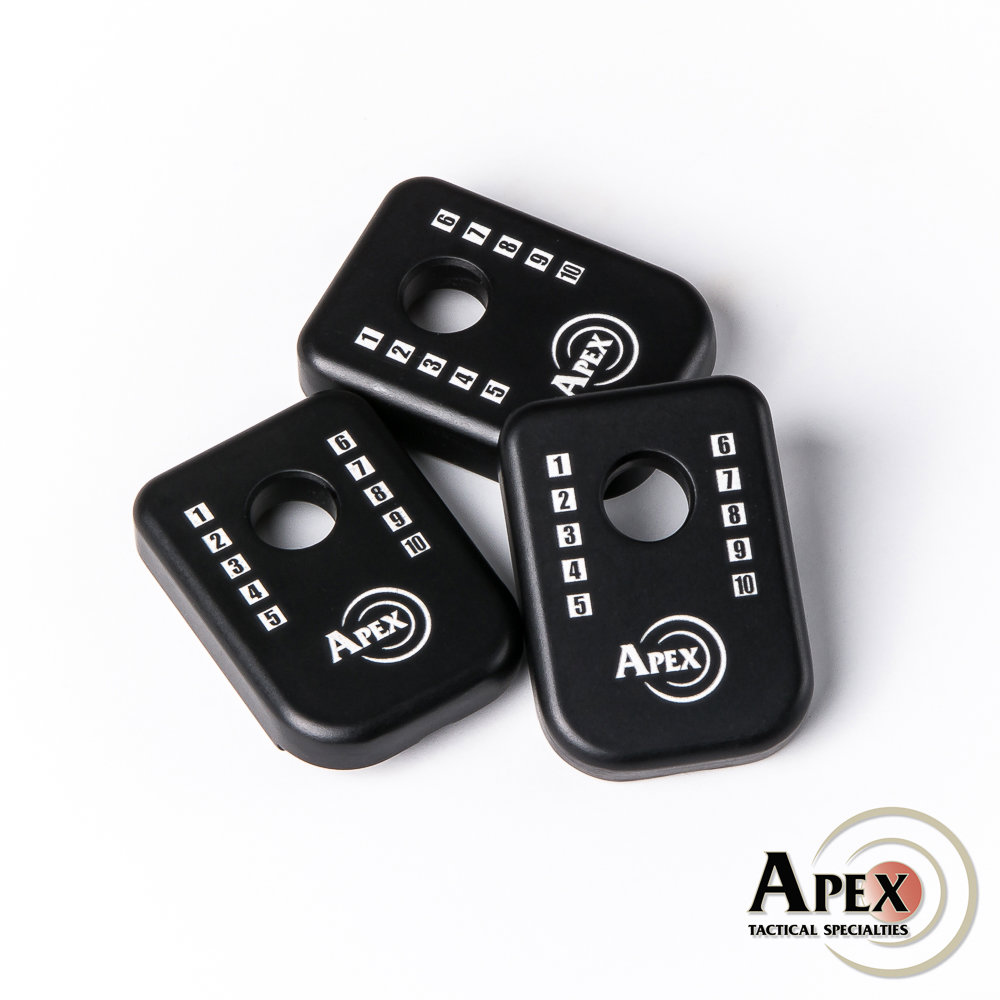
A basepad replaces the floorplate. There are three reasons to fit one.
Capacity. An extension adds rounds by lengthening the body and usually fitting a longer spring and follower. For competition this is the main reason.
A positive seat. A larger basepad gives you something to strike when seating a magazine under pressure, and something to grip when stripping a stuck one. This matters more than capacity for most people.
Protecting the magazine. A metal basepad takes the impact when a magazine is dropped on concrete, which is where feed lip damage starts.
If you fit an extension, verify the spring and follower are matched to the new length. An extension that adds body length without addressing the spring will feed the last rounds poorly, which is the worst possible place for a problem.
When to retire one
Magazines are consumables and people treat them as permanent. Retire one when:
- It has been dropped hard while loaded, especially on a hard surface. Feed lip damage is the usual failure and it is not always visible.
- Rounds no longer sit under the feed lips with the correct nose-up presentation.
- It causes a malfunction you cannot attribute to anything else. Mark it, set it aside, and do not put it back in rotation because you will forget.
Number your magazines with a paint pen. When one causes a problem you will know which, and a magazine you cannot identify is a magazine you cannot retire.
Magazines and basepads worth looking at
Range and competition options:
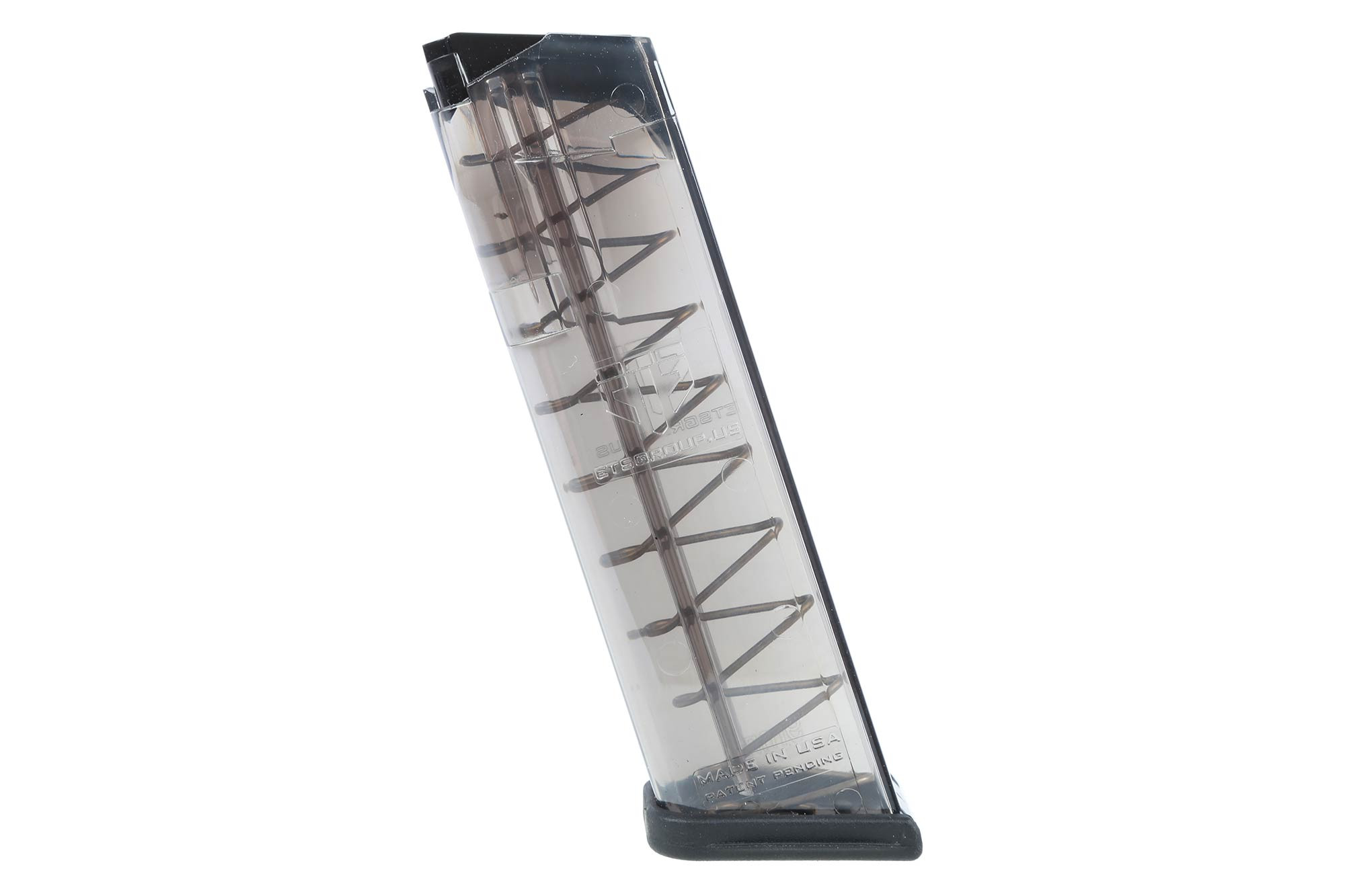
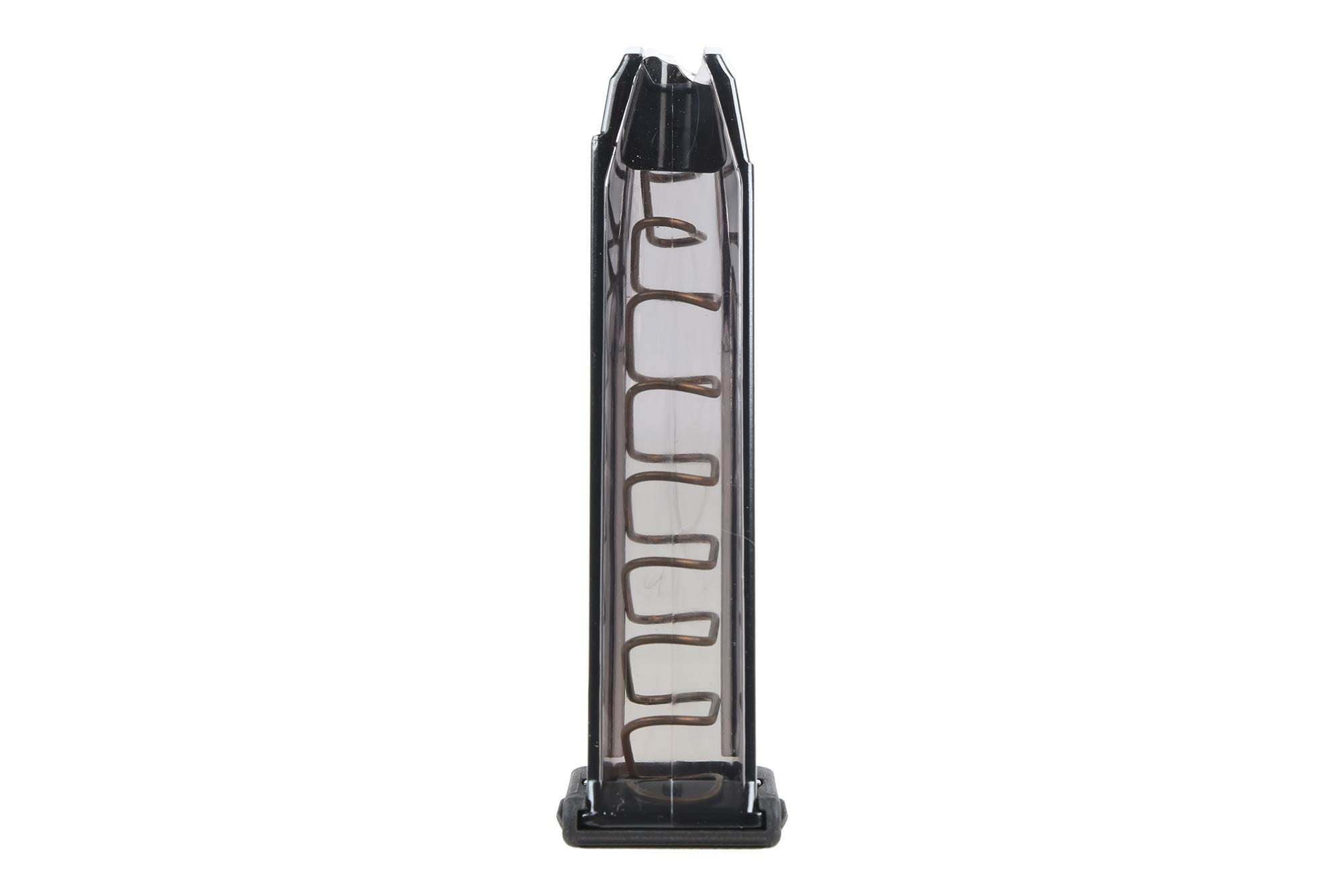

Out of stock
Basepads:
Storing them loaded
The most persistent myth in this area is that leaving a magazine loaded wears out the spring. It does not, in any way that matters. Springs fatigue from cycling, from being compressed and released repeatedly, not from sitting compressed.
A magazine left loaded for years will be fine. A magazine loaded and unloaded daily for years is the one that ages. If you rotate carry magazines, rotate them because you want to inspect and clean them, not because you believe the spring is tiring.
What does degrade is the ammunition, if it sits somewhere damp or hot, and the magazine body if it collects lint and grit. Clean them occasionally and keep them dry.
How many do you need
More than you have. For a carry pistol, the one in the gun plus two spares is a reasonable minimum, kept in rotation so none of them sits compressed forever.
For range use, enough that you are not reloading constantly, which for most people means at least five. Buying in quantity is also when the price difference between factory and aftermarket starts to matter, which is the sensible place to use cheaper magazines: practice, not carry.
The short version
Factory for anything you depend on. Aftermarket for volume range use where price matters. Number them, treat them as consumables, and retire anything that has been dropped hard while loaded.
Filed underGlock/Magazines/Home Defense/Competition/Buyer's Guide
FAQ
Frequently asked questions
Are factory Glock magazines better than aftermarket?
- For reliability, generally yes. Unusually for a pistol platform, the Glock factory magazine is the benchmark rather than the weak point, largely due to its steel liner. Most aftermarket options compete on price or capacity rather than reliability.
Can a Glock 19 use Glock 17 magazines?
- Yes. A longer magazine works in a shorter grip, so a 17-length magazine functions in a 19 or 26 and simply extends below the grip. The reverse does not work well, since a 19-length magazine leaves a gap in a 17 grip.
Do Glock 43 magazines fit a Glock 19?
- No. The slimline pistols, the 43, 43X and 48, use an entirely separate magazine family and share nothing with the double-stack guns. Buy specifically for your frame family.
Are magazine extensions worth it?
- For competition, yes, for capacity. For everyone else the bigger benefit is a positive surface to strike when seating a magazine and to grip when stripping a stuck one. Verify the spring and follower are matched to the new length.
When should I replace a pistol magazine?
- When it has been dropped hard while loaded, when rounds no longer present correctly under the feed lips, or when it causes a malfunction you cannot explain otherwise. Feed lip damage is the usual failure and it is not always visible.
How many magazines do I need?
- For carry, the one in the gun plus at least two spares, kept in rotation so none sits compressed indefinitely. For range use, at least five so you are not constantly reloading. Practice is the sensible place to use cheaper magazines.
Written by
GPP Editorial TeamAR Build Specialists
GunPartPicker guides are powered by data from real builds. What builders actually select tells the story.
Read next
All guides → HOLSTERS/10.02.26Glock 17 vs 19 vs 45: Which Size to Buy
 TRIGGERS/09.16.26Best Glock Triggers in 2026
 OPTICS/05.02.26Are LPVOs Still Cool? An AR Buyer's Guide
 GUIDE/09.17.26Best 9mm PCC in 2026: Pistol Caliber Carbines Compared
 HOLSTERS/09.30.26Best Glock Holsters: Narrowing Down the Field
 MAGAZINES/09.23.26Glock 43X and 48 Upgrades: The Slimline Parts That Actually Fit
 HOLSTERS/09.28.26Glock Size Chart: Every Model's Length, Height, Width and Weight
 BARRELS/09.18.26Best Glock Compensators: What They Actually Do
Tools for this guide
- Legal toolGun Travel CheckerCan I bring my gun to another state? Pick where you start, where you are going and what is coming along: carry pistol, AR-15, magazines, suppressor, SBR, brace, forced reset or binary trigger, hollow points. Every state on the route is checked for transporting firearms across state lines: magazine limits, assault weapon bans, NFA rules, carry permit type and trigger bans, with what to do before the state line.
- Compatibility toolGlock Red Dot Fit CheckerPick how your Glock slide is cut and see which red dots mount directly, which need a plate, and the plates and optics in stock right now.
- Compatibility toolGlock Size ComparisonPick any two Glocks and see them to scale as real photos sized to Glock's published dimensions, side by side, from behind and as an X-ray, with the difference in length, height, width and weight in one line and the pistols in stock for each.