A compensator redirects some of the gas leaving the muzzle upward, and the reaction pushes the muzzle down. On a pistol that is fighting muzzle rise between shots, the effect is genuinely useful and immediately noticeable.
It is also not free, and the cost is in a place most buyers do not look.
| Metric | Value |
|---|---|
| You gain | Flatter tracking |
| You pay | Cycling margin |
| Best fit | Competition |
What you actually get
Flatter tracking. The sight or dot returns to the target faster between shots because the muzzle moved less in the first place.
This shows up most in split times, the interval between rounds on target. If you shoot pairs or strings at speed, a good compensator on a 9mm Glock is a real improvement rather than a marketing one.
What it does not do is reduce felt recoil much. Recoil impulse into your hand is mostly unchanged. The muzzle simply stays flatter, which feels like less recoil and is not the same thing.
What it costs you
Cycling margin. Gas vented upward through the comp is gas that is not driving the slide rearward. On a tilting-barrel pistol like a Glock, that can push a marginal setup into failures to fully cycle, particularly with lighter loads.
The usual fix is a lighter recoil spring, matched to the comp and the ammunition. That is a real tuning exercise, not a bolt-on. See our Glock slides guide for how spring weight interacts with slide mass.
Ammunition sensitivity. A comped pistol tuned for one load can run poorly on another. Competition shooters accept this because they shoot one known load. It is a much bigger problem on a gun you might feed whatever is available.
Blast and flash. Redirected gas goes somewhere, and that somewhere is up and out. Shooting a comped pistol indoors or beside someone is noticeably less pleasant, and the flash sits directly in your line of sight in low light.
Holster fit. A comp changes the pistol's profile, so you need a holster cut for it. Most standard holsters will not accept one. Check our holster guide for what that involves.
Threaded versus integrated
Threaded comps screw onto a threaded barrel, so you need one. Our Glock barrels guide covers thread pitch, which is commonly 1/2x28 for 9mm but is not universal. The advantage is that it is reversible and you can change comps.
Integrated comps are machined into the barrel as one piece. Cleaner, lighter and no alignment or loosening concerns, but you are committed.
Either way, a threaded comp must be properly timed and secured. One that loosens under recoil will shift point of impact and eventually come off.
Should one go on a carry gun
This is the genuine debate and our answer is a qualified no for most people.
The argument for is that flatter tracking helps under stress, when you are unlikely to shoot as well as you do on a range.
The arguments against are harder to dismiss: you have reduced cycling margin on a gun that must work with whatever is in it, you have added blast and flash in a situation likely to be indoors and dark, and you have added length to something you are trying to conceal.
Carry-comp pistols exist and some are well engineered as complete systems. Bolting a comp onto an existing carry gun is a different proposition and a riskier one.
Compensators worth looking at
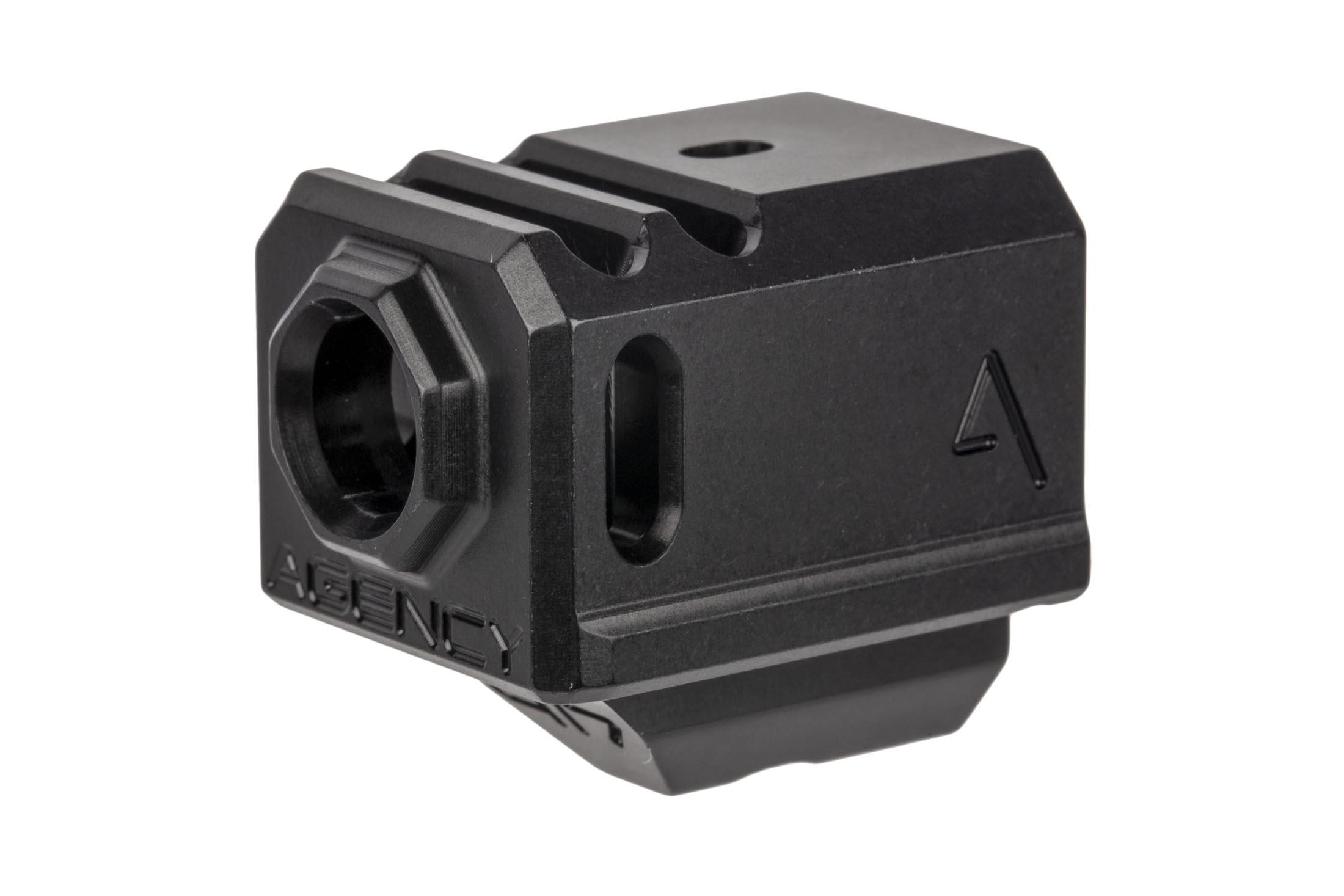

Ports, chambers and why designs differ
Compensator designs vary more than the category suggests, and the differences are real.
Single port designs vent through one large opening. Simple, light, and effective on 9mm where gas volume is modest.
Multi-port and chambered designs stage the gas through several openings or an expansion chamber. They generally reduce rise more and cost more cycling margin, which pushes you further into spring tuning.
Port placement matters as much as count. Ports angled slightly rearward direct more gas back toward the shooter, which is effective and unpleasant. Ports directly upward are the usual compromise.
More aggressive is not automatically better. A comp that flattens the pistol beautifully and will not cycle your ammunition is a worse part than a mild one that always works.
Generation and model fit
Comps are cut for specific models and generations, and Gen 5 differs from earlier guns in ways that matter for some designs. Confirm your exact model and generation before ordering, and confirm the thread pitch matches your barrel rather than assuming.
The short version
Buy one for a competition or range gun where you shoot a known load and care about split times. Match a recoil spring to it and verify the pistol runs over real round count. Think hard before putting one on a carry pistol, and buy a red dot first if you have not already.
Filed underGlock/Barrels/Muzzle Devices/Competition/Buyer's Guide
FAQ
Frequently asked questions
Do Glock compensators actually work?
- Yes, for muzzle rise. A good compensator noticeably reduces how far the muzzle climbs between shots, which shows up in faster split times. It does not meaningfully reduce recoil impulse into your hand, though flatter tracking feels like less recoil.
Do I need a lighter recoil spring with a compensator?
- Usually. Gas vented upward is gas not driving the slide, which reduces cycling margin, especially with lighter loads. Matching a lighter recoil spring to the comp and your ammunition is a normal part of fitting one.
Should I put a compensator on my carry gun?
- For most people, no. You reduce cycling margin on a gun that must work with whatever is in it, add blast and flash in a likely indoor low-light situation, and add length to something you are concealing. Purpose-built carry-comp pistols are a different proposition.
Threaded or integrated compensator?
- Threaded comps need a threaded barrel and are reversible, so you can change them. Integrated comps are machined into the barrel, which is cleaner and lighter with no loosening concerns, but you are committed to that configuration.
Will a compensator affect holster fit?
- Yes. A comp changes the pistol's profile and most standard holsters will not accept one, so you need a holster specifically cut for your comp. Factor that cost in when budgeting.
Is a compensator or a red dot a better upgrade?
- A red dot, for almost everyone. It improves your shooting more, costs less in reliability terms, and has no ammunition sensitivity. Compensators reward shooters who have already exhausted the easier improvements.
Written by
GPP Editorial TeamAR Build Specialists
GunPartPicker guides are powered by data from real builds — what builders actually select tells the story.
Read next
All guides → SLIDES/09.24.26Best Glock Slides and Slide Completion Kits
 TRIGGERS/09.16.26Best Glock Triggers in 2026
 MUZZLE DEVICES/03.23.26AR-15 Muzzle Devices: Ranked From 2,800+ Builder Picks
 OPTICS/05.02.26Are LPVOs Still Cool? An AR Buyer's Guide
 GUIDE/09.17.26Best 9mm PCC in 2026: Pistol Caliber Carbines Compared
 TRIGGERS/09.15.26Best AR-15 Forced Reset Triggers in 2026
 TRIGGERS/09.28.26Binary Triggers in 2026: What to Know Before You Buy
 BUFFERS & RECOIL/09.24.26Best Buffers and Springs for High Cycle Rate Triggers
Tools for this guide
- Compatibility toolMuzzle Thread CheckerPick your barrel's caliber and platform, get the standard thread pitch, and see every muzzle device and suppressor in the catalog that actually threads on, with live prices.
- Planning toolAR Build Cost CalculatorHow much does it cost to build an AR-15? Pick caliber, barrel length, stock or brace and optic, then drag both edges of the price band from the cheap end to the top end. Every slot fills with the part builders add most that is in stock, priced live. The headline total is the core rifle, optics and extras are priced separately, and beside them sits what builders really pay per slot, measured from real part picks. Roll a random build, or open yours in the builder in one click. Computed from over 1 million AR parts selected on GunPartPicker since 2020.
- Legal toolBarrel and Overall Length CheckerEnter barrel length, muzzle device and how the back end is configured, and see whether the build is a rifle, a short barreled rifle, a pistol or an AOW under federal law, with the barrels in stock at that length.