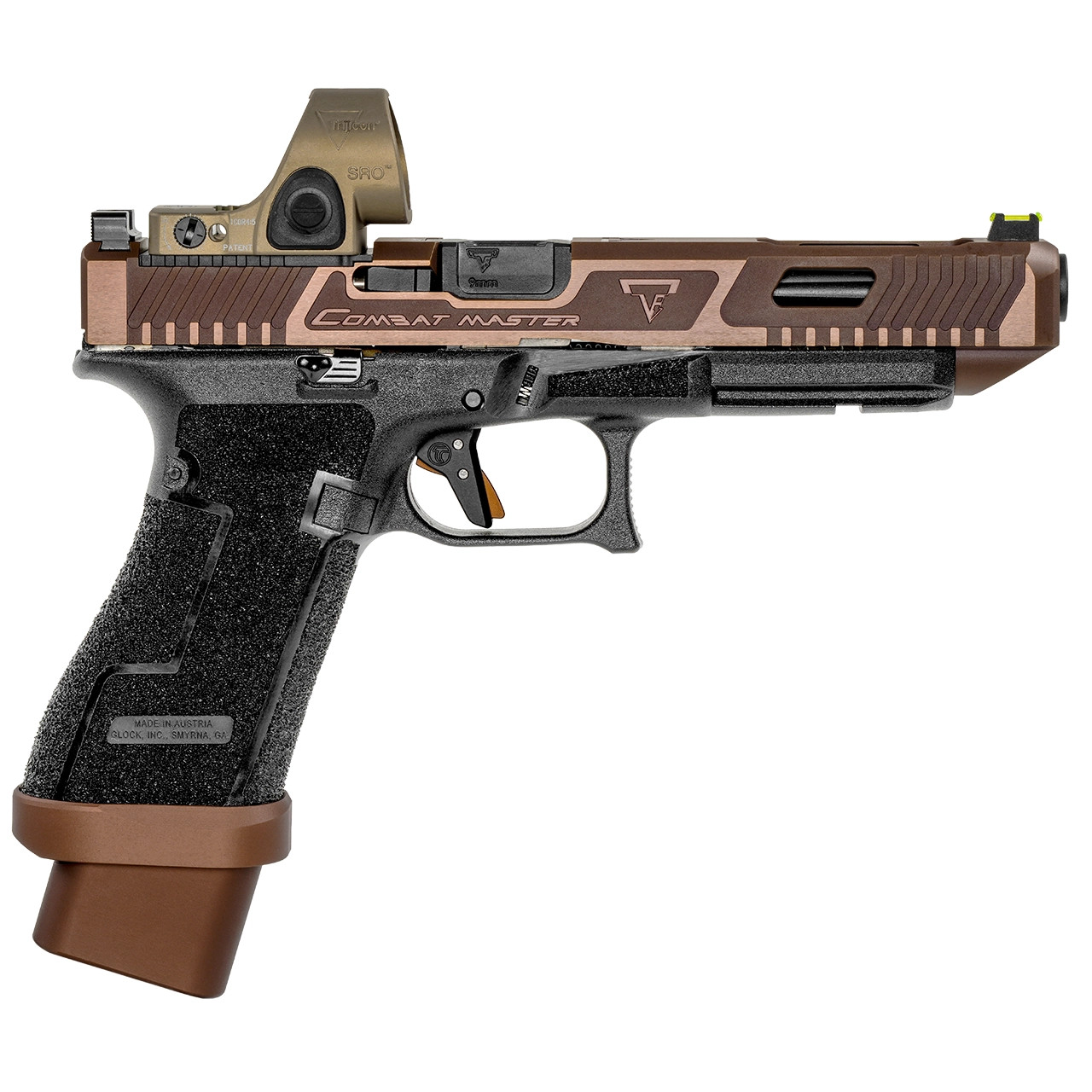
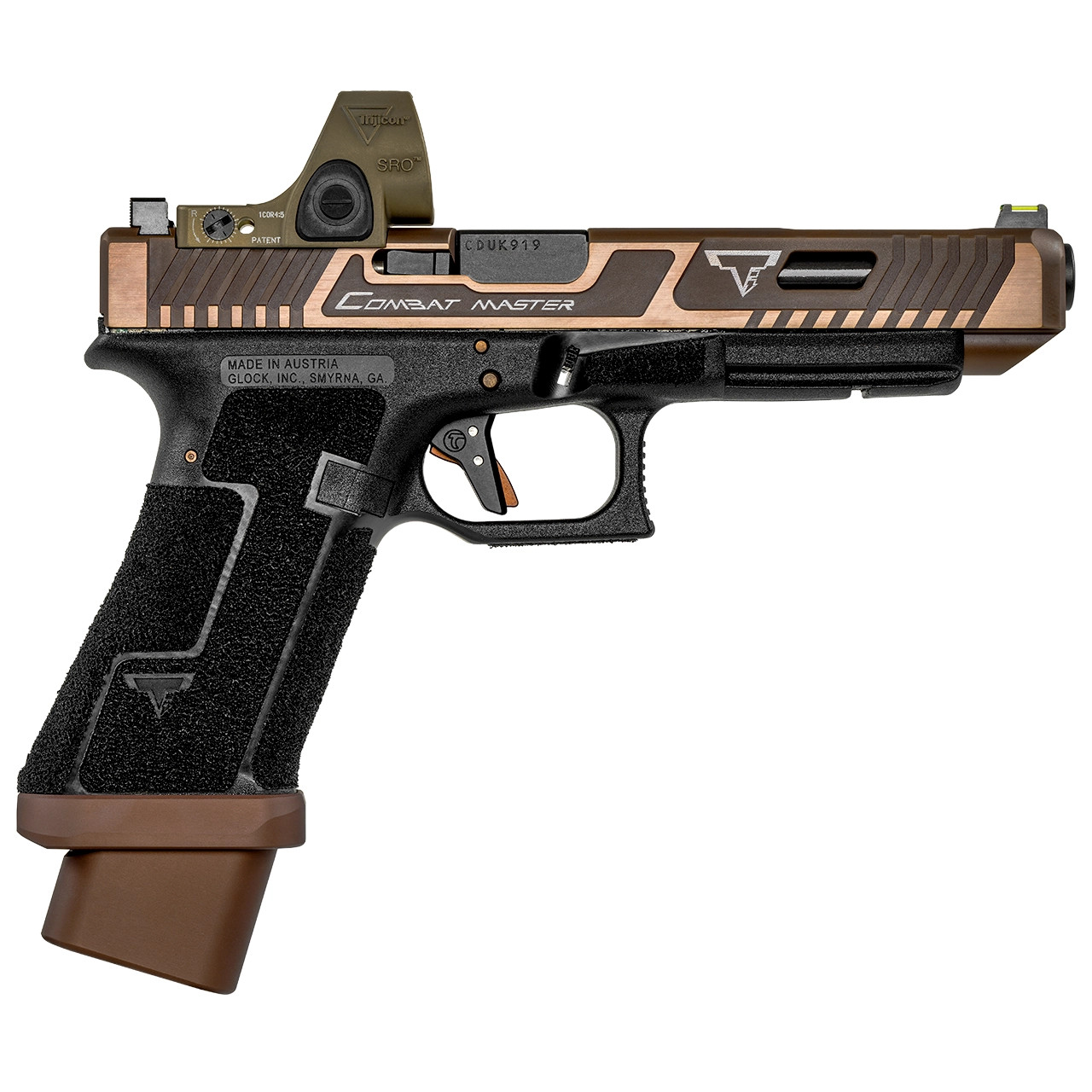
The pistol in the John Wick films is not a tactical gun dressed up. It is a competition pistol, built by a competition shooter, and every single modification on it exists to reduce the time between shots and between reloads.
That is why it looks the way it does, and it is also why most of it does not belong on a carry gun.
| Metric | Value |
|---|---|
| The base | Long-slide Glock |
| The point | Speed |
| Transfers to carry | Almost none of it |
The base pistol
A long-slide Glock, in the Glock 34 length, which is the competition standard. The longer slide gives a longer sight radius and puts more weight forward, both of which help the pistol track flatter and return to target faster.
It is also longer than anything sensible to conceal, which tells you what the gun is for.
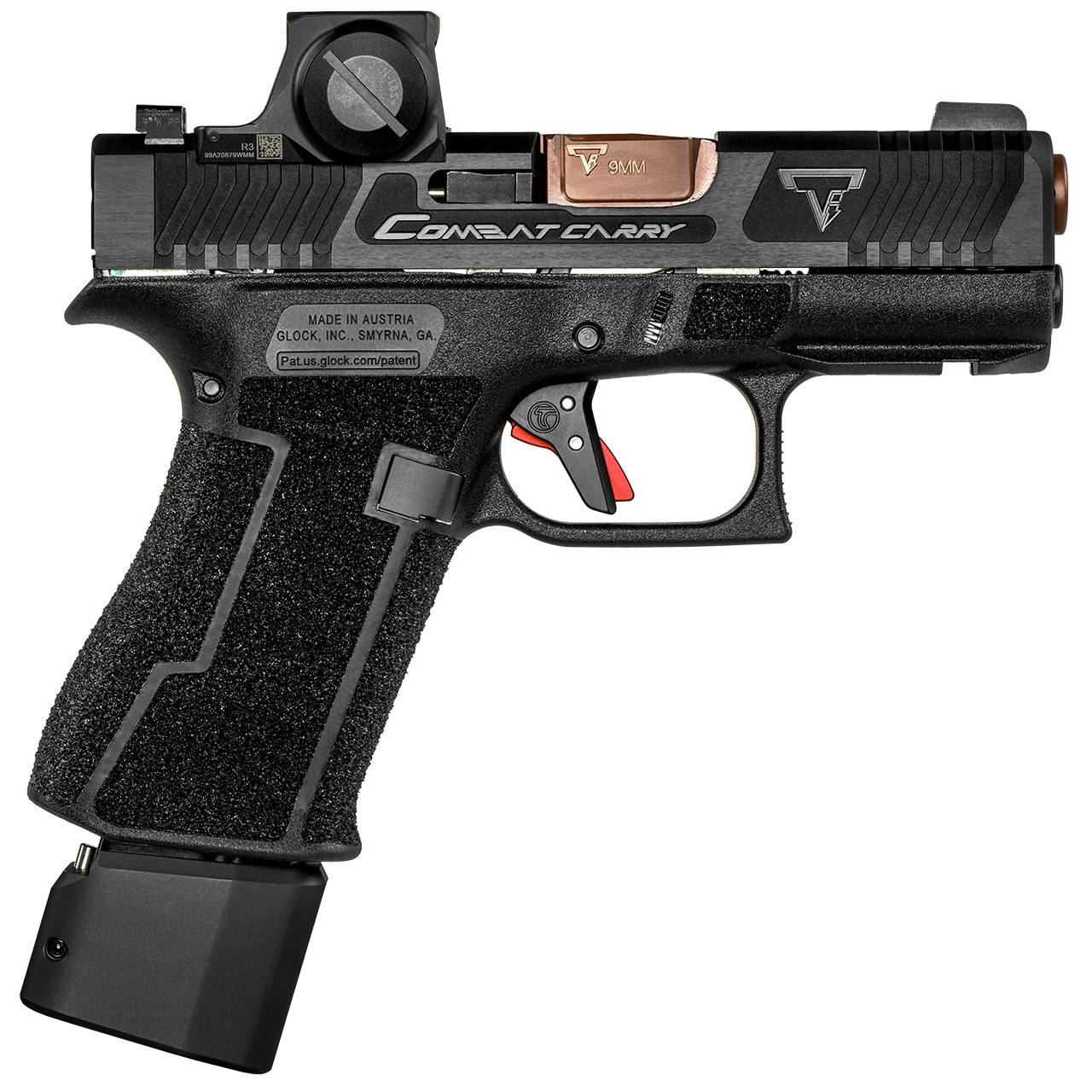
If you want the look on a more practical base, the same treatment exists on shorter frames:
The compensator
Ports cut into the barrel and slide vent gas upward, pushing the muzzle down. On a competition gun shooting known ammunition, this is a genuine and measurable improvement in how fast the sights return between shots.
It costs cycling margin, because gas going up is gas not driving the slide, and it usually needs a matched recoil spring. Our Glock compensators guide covers the trade in full.
This is the most visually distinctive part of the build and the one least suited to a carry gun.
The magwell
A flared magazine well funnels the magazine in during a reload. On a competition gun where a fumbled reload costs a stage, it is worth the bulk.
On a concealed pistol it is a liability: it adds width exactly where the grip already prints most, and it is the part most likely to show under a shirt.
Extended basepads
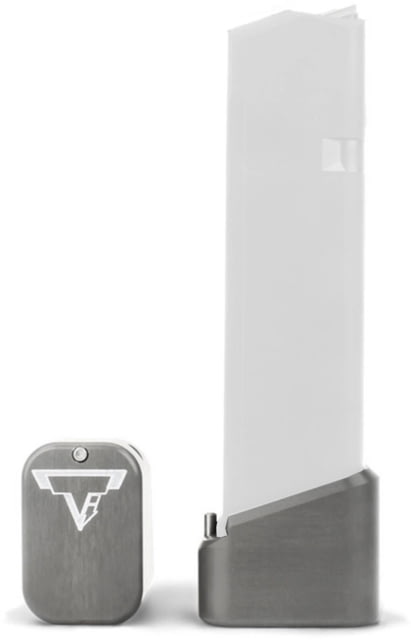
These add capacity and, more importantly, give you something solid to strike when seating a magazine at speed, and something to grip when stripping a stuck one.
Out of stock
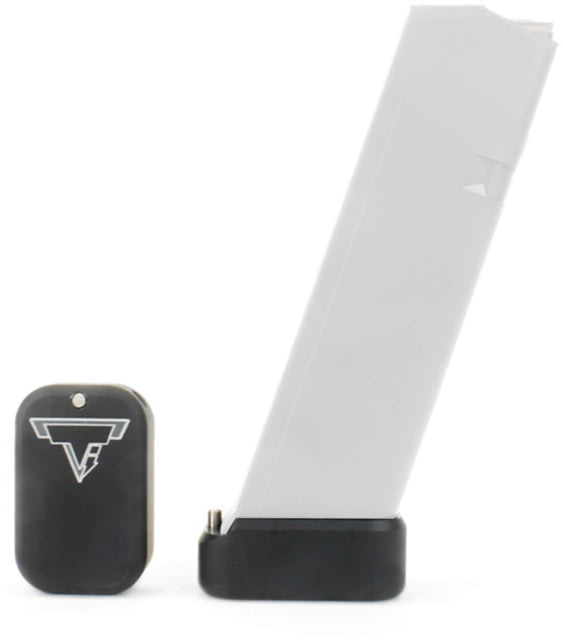
Out of stock
Of everything on this list, basepads are the part that most readily transfers to a normal pistol. Even without the extra capacity, a solid basepad protects the magazine when it hits concrete, which is where feed lip damage starts. See our Glock magazines guide.
The sights
A fibre optic front sight, which gathers light and glows brightly, paired with a plain black rear. That combination is fast to pick up in daylight and is the competition standard.
It is genuinely less useful in the dark than tritium or a red dot, which is the trade a competition shooter happily makes and a carry shooter usually should not.
What actually transfers to a carry gun
Be honest about this, because a lot of people buy the whole list and then try to carry it.
Worth having anywhere: good sights or a red dot, quality magazines, solid basepads, and a trigger that suits you. See our Glock triggers guide.
Range and competition only: the compensator, the magwell, the long slide, and the fibre optic front sight if you might need it at night.
The part of the build nobody can buy
The reason the shooting in these films looks the way it does is not the pistol. It is that the performers trained extensively with people who shoot competitively for a living, and what you are watching is largely genuine technique: the grip, the presentation, the reloads, the transitions between targets.
None of that came from the compensator.
This matters if you are copying the build, because the pistol is the least transferable part of what makes the shooting look good. A stock Glock in the hands of somebody who has done ten thousand deliberate repetitions will outshoot this exact pistol in the hands of somebody who has not, by a wide margin and on every measure.
Buy the parts if you want them. Book the training first.
Building it on a budget
You do not need the complete package to get most of the benefit.
Start with a Glock 34 or any long-slide Glock. Add good sights or a red dot. Add extended basepads. Shoot it for a few thousand rounds.
Then decide whether you actually want a compensator, because by that point you will know whether your split times are limited by the gun or by you. For most people it is the second one, and a comp does not fix that.
The short version
This is a competition pistol and it is an excellent one. Copy the sights, the magazines and the basepads onto anything. Copy the comp and the magwell only onto a gun that lives at the range.
Filed underClone Build/Glock/Magazines/Muzzle Devices/Competition/Build Guide
FAQ
Frequently asked questions
What pistol does John Wick use?
- A competition-configured long-slide Glock in the Glock 34 length, built by Taran Tactical, with a compensator, flared magwell, extended basepads and a fibre optic front sight. Configurations changed across the films, so treat any list as inspired-by.
Is the John Wick pistol practical for carry?
- Mostly no. It is a competition gun: the long slide, compensator and flared magwell all serve speed at known targets in daylight, and all three work against concealment. The sights, magazines and basepads transfer to a carry gun fine.
What does a flared magwell actually do?
- It funnels the magazine in during a reload, which matters when a fumble costs a stage. On a concealed pistol it adds width exactly where the grip already prints most, making it one of the parts least suited to carry.
Are extended basepads worth it?
- They are the part of this build that transfers best. Beyond capacity, they give you something solid to strike when seating a magazine and to grip when stripping a stuck one, and a metal basepad protects the magazine when it hits concrete.
Do I need a compensator to shoot fast?
- No. A comp genuinely flattens muzzle rise on a known load, but for most shooters split times are limited by grip and trigger control rather than the gun. Shoot a few thousand rounds before deciding whether a comp is your limiting factor.
Are fibre optic sights good for carry?
- They are fast in daylight, which is why competition shooters use them, and noticeably less useful in the dark than tritium or a red dot. That is a reasonable trade for a range gun and usually the wrong one for a carry pistol.
Written by
GPP Editorial TeamAR Build Specialists
GunPartPicker guides are powered by data from real builds. What builders actually select tells the story.
Read next
All guides → CLONE BUILD/09.16.26M4A1 Block I Clone Build Guide: The Standard-Issue SOCOM Carbine
 BARRELS/09.18.26Best Glock Compensators: What They Actually Do
 MAGAZINES/10.06.26Best Glock Magazines and Basepads
 HOLSTERS/10.02.26Glock 17 vs 19 vs 45: Which Size to Buy
 MAGAZINES/09.23.26Glock 43X and 48 Upgrades: The Slimline Parts That Actually Fit
 HOLSTERS/09.28.26Glock Size Chart: Every Model's Length, Height, Width and Weight
 CLONE BUILD/10.14.2613 Hours Build: The Contractor Carbine
 CLONE BUILD/10.14.26Act of Valor build: the Bandito Platoon SEAL carbine
Tools for this guide
- Planning toolAR Build Cost CalculatorHow much does it cost to build an AR-15? Pick caliber, barrel length, stock or brace and optic, then drag both edges of the price band from the cheap end to the top end. Every slot fills with the part builders add most that is in stock, priced live. The headline total is the core rifle, optics and extras are priced separately, and beside them sits what builders really pay per slot, measured from real part picks. Roll a random build, or open yours in the builder in one click. Computed from over 1 million AR parts selected on GunPartPicker since 2020.
- Compatibility toolGlock Red Dot Fit CheckerPick how your Glock slide is cut and see which red dots mount directly, which need a plate, and the plates and optics in stock right now.
- Compatibility toolGlock Size ComparisonPick any two Glocks and see them to scale as real photos sized to Glock's published dimensions, side by side, from behind and as an X-ray, with the difference in length, height, width and weight in one line and the pistols in stock for each.