Buy 115 grain for the range, 124 grain for carry, and 147 grain if you shoot suppressed. That's what most 9mm buyers on GunPartPicker do, and the price per round backs it up.
Which 9mm weight should you buy?
Two questions. The scoring follows the numbers in this guide
- 1. What's it for?
- 2. What are you shooting it from?
Answer any question and the pick updates as you go.
| Question | Answer | Points toward |
|---|---|---|
| What's it for? | Range practice | 115 grain, 124 grain. 115 is the cheapest weight and the one most buyers pick |
| What's it for? | Carry or home defense | 124 grain, 147 grain. 124 is the most bought defensive weight |
| What's it for? | Shooting suppressed | 147 grain. 147 grain runs under the speed of sound |
| What are you shooting it from? | A full size or compact pistol | 115 grain, 124 grain |
| What are you shooting it from? | A pistol caliber carbine | 124 grain, 147 grain. A longer barrel can push 124 and 115 past the speed of sound, so 147 stays quieter |
| Result | 115 grain | Cheapest per round and the most bought range weight. |
| Result | 124 grain | NATO weight, most bought for defense, and nearly the same price as 115 in FMJ. |
| Result | 147 grain | Subsonic, so it's the weight to run through a suppressor. |
The short answer
Velocity from Federal American Eagle FMJ, 4 inch test barrel. Price is the median in stock range load per round, 7 days to November 4, 2026
| Metric | Value |
|---|---|
| 115 grain | 1,180 fps |
| 124 grain | 1,150 fps |
| 147 grain | 1,000 fps |
115 grain is the lightest common 9mm bullet and the fastest. It's the cheapest weight to shoot, and it's what about half of our 9mm buyers pick.
124 grain is the NATO weight. In range FMJ it costs almost exactly what 115 does. It's also the most bought weight for defensive hollow points.
147 grain is the heavy one. It leaves the muzzle at about 1,000 fps from a pistol, under the speed of sound, so it's quieter through a suppressor.
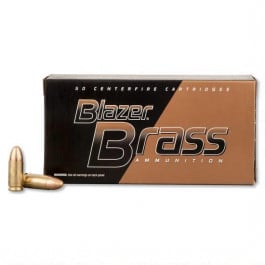

Which weight buyers pick
Which weight buyers pick
Share of 9mm loads with a stated weight that our users clicked to buy or added in the Ammo Finder, July 1 to November 4, 2026
| Item | Share (%) |
|---|---|
| 115 grain | 48.3% |
| 124 grain | 36.4% |
| 147 grain | 15.3% |
115 grain leads by a wide margin, and almost all of it is range ammo. 124 grain is the most bought weight for defense. 147 grain is the smallest group, and a big share of those buyers pick a load built for suppressors.
Speed and recoil
From Federal's American Eagle line, a 115 grain FMJ leaves a 4 inch barrel at about 1,180 fps. A 124 grain runs about 1,150 fps. A 147 grain runs about 1,000 fps.
Recoil is where opinions split. Momentum is bullet weight times speed, and by that math a 147 grain load pushes back about 8 percent harder than a 115. The difference is in how it feels. Many shooters describe 115 as snappy and 147 as a slower, softer push. You'll find people who swear by each.
If you're not sure, buy a box of each and shoot them side by side. At about 33 to 40 cents a round for range ammo, it's a cheap test.
Shooting suppressed
The speed of sound is about 1,125 fps at sea level on a mild day. Anything faster cracks as it breaks the sound barrier, and no suppressor can remove that crack.
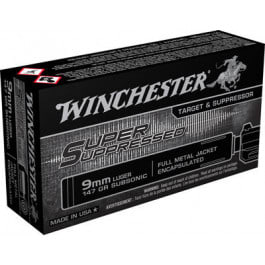
At about 1,000 fps, 147 grain stays under it from a pistol. That's why loads like Winchester Super Suppressed exist. Winchester lists it at about 990 fps.
115 and 124 grain loads usually run faster than sound, even from a pistol. From a pistol caliber carbine with a 16 inch barrel, they'll run faster still. If you shoot a suppressed carbine, 147 grain is the weight to buy.
Cold weather and high altitude lower the speed of sound. A 147 grain load that's subsonic in summer at sea level can creep over it on a cold day in the mountains.
Defense loads by weight
For carry, all three weights come in good hollow points. 124 grain is the most bought defensive weight in our data, led by Federal Hydra-Shok.
Defense ammo costs more. In our feeds this week, 124 grain defensive loads ran a median of about 98 cents a round, while 115 and 147 grain defensive loads ran about 65 to 67 cents. Whatever you carry, run enough of it through your gun to trust it.
Our best 9mm ammo guide has the full picks for range, carry and bulk.
Will it hit where you aim?
Switching weights can move your point of impact. A heavier, slower bullet spends a little longer in the barrel while the gun is already starting to recoil, so in many pistols 147 grain hits slightly higher than 115 at the same aim point.
At 7 yards the shift is small. At 25 yards you'll see it. If you carry 124 or 147 grain hollow points, practice and zero with the same weight so your dot or sights match what's in the gun.
Red dot shooters should confirm their zero with their carry load, not just their cheapest range box.
What about +P?
+P means the load runs at higher pressure than standard 9mm, so it's faster for the same bullet weight. You'll see +P versions of all three weights, mostly in defensive hollow points.
Most modern 9mm pistols are rated for +P. Check your gun's manual before you shoot it. Expect more recoil and more wear if you shoot a lot of it, and keep standard pressure ammo for practice.
Price per round by weight
In range FMJ, the three weights cost nearly the same. 115 grain runs a median of about 33 cents a round, 124 grain about 34 cents, and 147 grain about 40 cents.
That gap is small enough that you should pick the weight for the job, not the price. The cheapest boxes in our feeds run about 26 to 28 cents a round for all three.
How we pick
Weight shares count 9mm loads with a stated bullet weight that our users clicked through to buy or added in the Ammo Finder, counted once per person, from July 1 to November 4, 2026. Prices are the median in stock price per round across every merchant feed we track for the week to November 4, with listings dropped where the title's round count disagrees with the catalog. Velocities come from Federal's American Eagle 9mm data, measured in a 4 inch test barrel, and Winchester's Super Suppressed listing.
Filed underHome Defense/Training/Comparison
FAQ
Frequently asked questions
Is 115 or 124 grain 9mm better?
- For the range, 115 grain is slightly cheaper and is the weight most GunPartPicker buyers pick. For carry, 124 grain is the most bought defensive weight. In range FMJ the two cost nearly the same, about 33 and 34 cents a round in our feeds for the week to November 4, 2026.
Is 147 grain 9mm subsonic?
- Usually, from a pistol. Federal lists its 147 grain American Eagle FMJ at about 1,000 fps from a 4 inch barrel, under the speed of sound of about 1,125 fps at sea level. Cold weather, high altitude and longer carbine barrels can push it close to or over the line.
Does 147 grain 9mm recoil less?
- It feels softer to many shooters, but it doesn't carry less momentum. A 147 grain load at 1,000 fps has about 8 percent more momentum than a 115 grain load at 1,180 fps. It pushes slower rather than snapping, so the difference is how it feels.
What 9mm grain is best for a suppressor?
- 147 grain. It runs under the speed of sound from most pistols, so a suppressor only has to deal with the muzzle blast and not the supersonic crack. Winchester Super Suppressed 147 grain is built for exactly that.
What 9mm grain is best for self defense?
- 124 grain is the most bought defensive weight on GunPartPicker, led by Federal Hydra-Shok. Good hollow points exist in all three weights. Pick one your gun runs reliably and that you can shoot well.
How much does 9mm cost per round by grain?
- In range FMJ for the week to November 4, 2026, the median was about 33 cents a round for 115 grain, 34 cents for 124 grain and 40 cents for 147 grain. Defensive hollow points ran about 65 cents to 98 cents a round.
Written by
GPP Editorial TeamAR Build Specialists
GunPartPicker guides are powered by data from real builds. What builders actually select tells the story.
Read next
All guides → GUIDE/09.17.26Best 9mm PCC in 2026: Pistol Caliber Carbines Compared
 GUIDE/11.11.26Best 9mm Ammo in 2026: Range, Carry and Bulk
 HOLSTERS/10.02.26Glock 17 vs 19 vs 45: Which Size to Buy
 OPTICS/05.02.26Are LPVOs Still Cool? An AR Buyer's Guide
 LIGHTS/03.23.26Best AR-15 Weapon Lights for 2026: What Builders Actually Buy
 HOLSTERS/09.30.26Best Glock Holsters: Narrowing Down the Field
 MAGAZINES/10.06.26Best Glock Magazines and Basepads
 TRIGGERS/09.16.26Best Glock Triggers in 2026
Tools for this guide
- Legal toolGun Travel CheckerCan I bring my gun to another state? Pick where you start, where you are going and what is coming along: carry pistol, AR-15, magazines, suppressor, SBR, brace, forced reset or binary trigger, hollow points. Every state on the route is checked for transporting firearms across state lines: magazine limits, assault weapon bans, NFA rules, carry permit type and trigger bans, with what to do before the state line.
- Planning toolNight VisionLook around a real 360 degree scene through Gen 1, Gen 2+, Gen 3 green and white phosphor tubes, digital night vision and thermal. Turn the moon down from full to overcast, switch on an IR light, compare two devices side by side. Or walk a 3D farm at night and spot the people, hogs and deer hiding in it. Then see the PVS-14, PVS-31, GPNVG-18 and the thermal scopes people buy, with prices.