Tucking a suppressor under the handguard is one of the better tricks in AR building. You get the sound reduction and the recoil behaviour of a can without the rifle growing six inches longer, and the result handles like a gun with a heavy barrel rather than one with a pipe hanging off the front.
It also goes wrong more often than people admit, and almost always for one of four reasons: the can does not fit, it touches the rail, the handguard gets too hot to hold, or the rail is not rigid enough to stay off the can under load.
| Metric | Value |
|---|---|
| Measure first | Inner dia |
| Leave room | Clearance |
| The real risk | Heat |
| Non negotiable | Free float |
The measurement nobody publishes
The number you need is the inner diameter of the handguard, measured at its narrowest point, which is usually right behind the front face where the tube steps down or where a barrel nut boss intrudes.
Most manufacturers do not publish it. Some publish an outer diameter, which tells you nothing useful. Some publish an inner diameter measured at the widest point, which is worse than useless because it looks like an answer.
What you actually need to compare is the handguard's narrowest inner diameter against the largest outer diameter of the suppressor, including the mount, which is frequently fatter than the can body. If the manufacturer will not tell you, ask them directly before ordering, or measure a rail you already own with calipers.
Clearance, and why touching is not acceptable
Aim for real air gap all the way around, not a fit that just clears on the bench.
A suppressor grows when it heats up. It expands, and on a quick detach mount it can shift a little as the mount settles under recoil. A rail that clears by a hair when cold will make contact when hot.
Contact matters for two reasons. The obvious one is that heat conducts straight into the handguard and makes it painful to hold. The one that costs you is that a suppressor pressing on the inside of a rail applies force to the handguard, and a handguard under load moves your optic if anything is mounted to it, and moves your point of impact if the rail is touching the barrel.
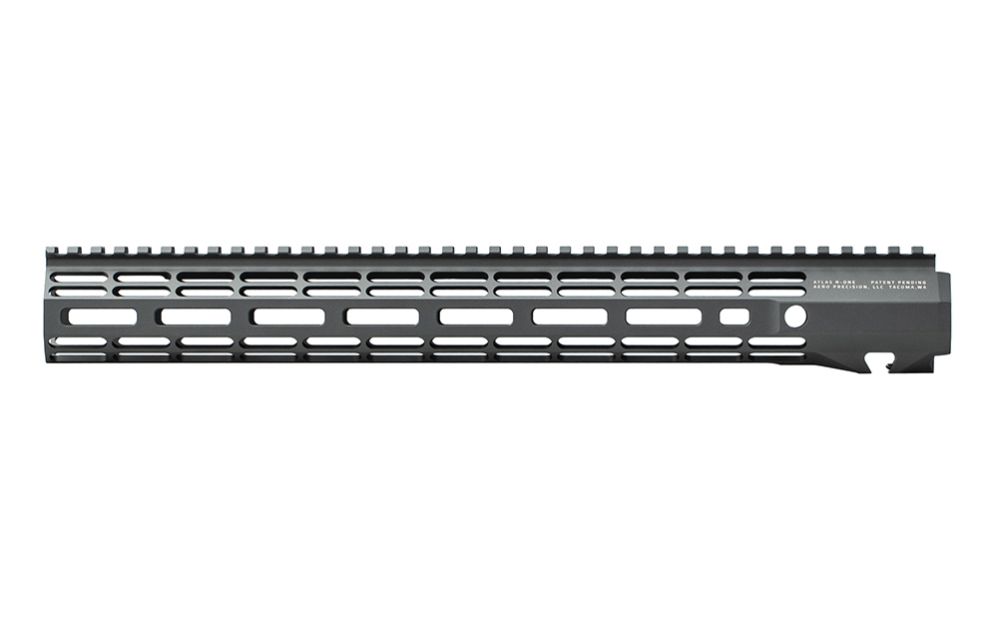
Free floating is not optional on a tucked build. Whatever else you compromise on, the rail must contact nothing but the barrel nut.
Out of stock

No stores yet
Heat is the part people underestimate
An exposed suppressor radiates heat into open air. A tucked suppressor radiates it into a closed aluminium tube that you are holding.
Practically this means a tucked build gets hot faster and stays hot longer, and the handguard becomes the thing that limits your rate of fire rather than the can. A few things help:
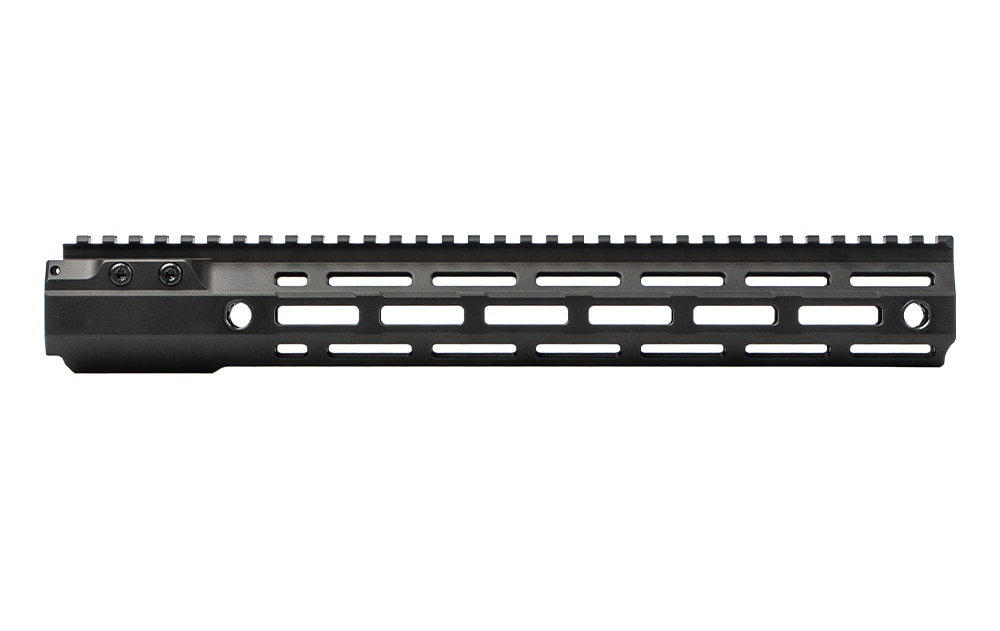
- Length. A longer rail puts more of your support hand away from the hottest section, which sits over the blast chamber at the rear of the can.
- Venting. M-LOK slots and lightening cuts let hot air out. A sealed tube traps it.
- A hand stop. Giving your hand a fixed index point well forward keeps it off the hot zone by feel rather than by memory.
- A rail cover or a barricade stop. Cheap, and the difference between usable and not on a long string.
If the rifle is going to see sustained fire, particularly with a fast trigger, plan for this properly. Our buffers for fast triggers guide covers the rest of that setup.
Mount choice interacts with rail choice
The mounting system changes the diameter you have to clear, and it is easy to forget.
A direct thread can is the slimmest option, because there is no mount adding girth. On a tight rail it may be the only thing that fits, and for a tucked build that mostly stays assembled, direct thread is a reasonable choice anyway.
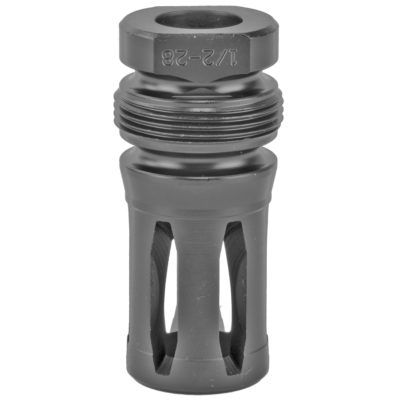
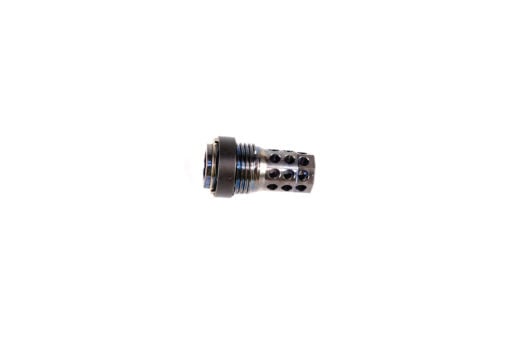
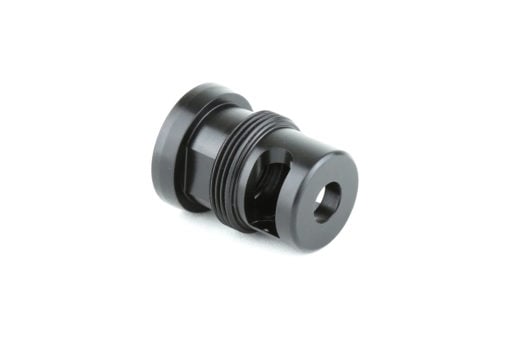
A quick detach mount adds diameter at exactly the wrong place, the rear of the can, which is also the fattest part of most suppressors and the part furthest inside the handguard. If you want quick detach on a tucked build, check the mount diameter specifically, not the can diameter.
How much barrel do you actually need to cover
Work it backwards from the rifle you want.
Decide the overall length you are happy with. Subtract the length of the can plus its mount. What remains is the barrel length you should be buying, and the rail needs to reach far enough over the can to be worth doing at all.
A partially tucked can, where only an inch or two sits under the rail, gets you the heat problem without much of the length benefit. Either commit to covering most of the can or leave it exposed and buy a shorter rail.
What to check before you order
- Narrowest inner diameter of the handguard, from the manufacturer or with calipers.
- Largest outer diameter of the suppressor including the mount.
- Real clearance all round, not a slip fit.
- Rail length against can length plus mount.
- Free float confirmed, with nothing touching but the barrel nut.
- Thread pitch on the barrel, which our muzzle thread checker will confirm.
Get those six right and a tucked build is one of the nicest rifles you can put together. Guess at any of them and you will be selling a handguard.
For the wider handguard picture, including attachment standards and what builders actually install, see our handguard guide and the M-LOK install data.
Filed underAR-15/Handguards/Suppressors/Suppressed/How-To
FAQ
Frequently asked questions
What inner diameter handguard do I need for a suppressor?
- Enough to clear the largest outer diameter of your suppressor including its mount, with real air gap all round rather than a slip fit. The number that matters is the handguard's narrowest inner diameter, usually near the front face, and most manufacturers do not publish it. Ask them or measure with calipers.
Can a suppressor touch the inside of the handguard?
- No. Contact conducts heat straight into the rail and makes it painful to hold, and it applies load to the handguard, which moves your point of impact and shifts anything mounted to the rail. A suppressor also expands as it heats, so a fit that just clears when cold will touch when hot.
Does a tucked suppressor get the handguard hot?
- Yes, considerably hotter than an exposed can, because the heat radiates into a closed tube you are holding rather than into open air. A longer rail, M-LOK venting, a hand stop placed well forward and a rail cover all help. On sustained fire the handguard, not the can, usually becomes the limit.
Direct thread or quick detach for a tucked build?
- Direct thread is slimmer and may be the only thing that fits a tight rail, and it suits a build that stays assembled. Quick detach adds diameter at the rear of the can, which is the fattest part and the part furthest inside the handguard, so check the mount diameter specifically.
Does the handguard need to free float the barrel?
- Yes, and on a tucked build it matters more than usual. Any contact between the rail and the barrel moves your zero, and a rail that is also being loaded by contact with the suppressor will move under fire. Nothing should touch but the barrel nut.
How long should the handguard be for a tucked can?
- Long enough to cover most of the suppressor, otherwise you take on the heat problem without gaining much length benefit. Work backwards: pick your acceptable overall length, subtract the can and mount, and what remains is your barrel. The rail often ends up longer than the barrel, which is correct.
Written by
GPP Editorial TeamAR Build Specialists
GunPartPicker guides are powered by data from real builds — what builders actually select tells the story.
Read next
All guides → CLONE BUILD/09.16.26M4A1 URGI Clone Build Guide: The Modern SOCOM Standard
 SUPPRESSORS/09.18.26Best 300 Blackout Suppressors in 2026
 SUPPRESSORS/09.17.26Best 5.56 Suppressors in 2026
 CLONE BUILD/09.16.26Sicario Task Force Build: The Parts List
 SUPPRESSORS/09.18.26Best .22 LR Suppressors in 2026
 STATE LAW/09.20.26The ATF Paperwork Rule: Comments Close October 5
 STATE LAW/09.23.26Suppressors in 2026: The Tax Is Zero, the Paperwork Depends
 BUFFERS & RECOIL/09.17.26AR9 FRT Build: Blowback Tuning for a Forced Reset Trigger
Tools for this guide
- Legal toolGun Travel CheckerCan I bring my gun to another state? Pick where you start, where you are going and what is coming along: carry pistol, AR-15, magazines, suppressor, SBR, brace, forced reset or binary trigger, hollow points. Every state on the route is checked for transporting firearms across state lines: magazine limits, assault weapon bans, NFA rules, carry permit type and trigger bans, with what to do before the state line.
- Compatibility toolMuzzle Thread CheckerPick your barrel's caliber and platform, get the standard thread pitch, and see every muzzle device and suppressor in the catalog that actually threads on, with live prices.
- Legal toolBarrel and Overall Length CheckerEnter barrel length, muzzle device and how the back end is configured, and see whether the build is a rifle, a short barreled rifle, a pistol or an AOW under federal law, with the barrels in stock at that length.