Nearly every pistol red dot zeroes the same way. You turn a screw, a carrier holding the emitter physically moves, and springs hold it where you left it. Then the slide stops and reverses direction a few hundred times and those parts have to not move.
The XRAY5 deletes that entire mechanism. Its emitters are a fixed grid of 225 LEDs arranged 15 across and 15 high, and zeroing means telling the sight which LED to light up. Windage and elevation inputs move the dot without moving any hardware.
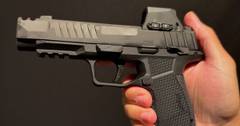
Before anything else: there is no photograph of this optic. SIG has no product page for it, and searching sigsauer.com for XRAY5 returns nothing. What exists is a deliberately blurred pistol on SIG's homepage countdown wearing something that looks like it, four dealer records with part numbers, and one retailer listing for an XRAY5 and FOXTROT2R combo that a forum member turned up this week. Everything below comes from those records, from SIG's own patent language, and from our own price and pick data.
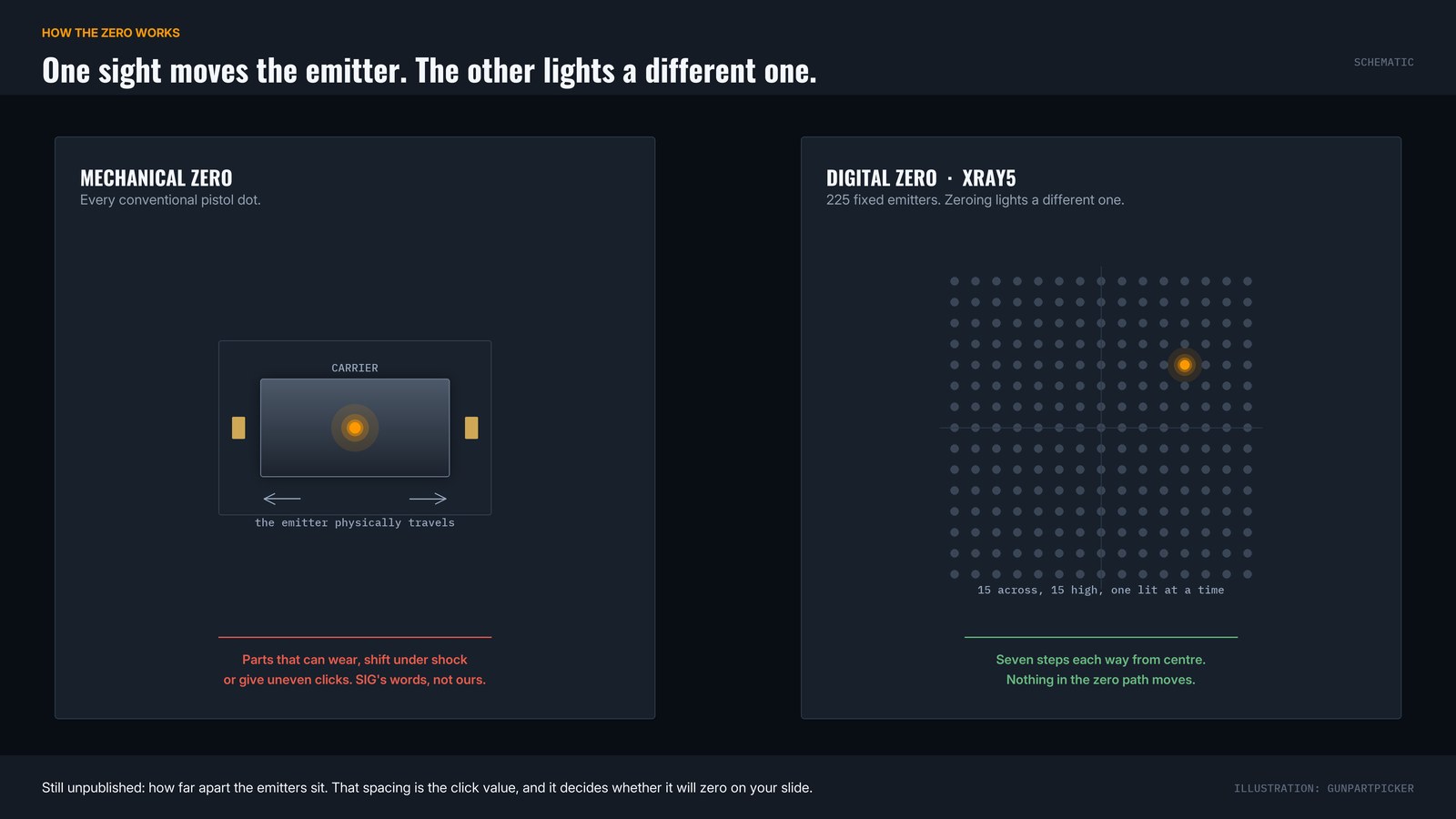
No photograph of the XRAY5 exists yet, so this is the mechanism, drawn from SIG's own patent language. Schematic, not to scale.
| Metric | Value |
|---|---|
| Emitter grid | 15 by 15 |
| Zeroing parts | None |
| Dot size | 3.5 MOA |
| Unpublished | Click value |
Why removing the carrier matters
SIG's own patent language is unusually blunt about the problem it set out to solve. It describes conventional carrier plates as tolerance sensitive parts that can wear, break, shift under shock, and produce uneven travel or dead adjustment clicks. Anyone who has chased a zero that would not stay has met that failure mode.
Selecting a different fixed emitter takes the carrier out of the zero path entirely. That also makes saved zero profiles practical in a way they are not on a mechanical sight, because the sight can return to a known coordinate on the grid rather than to a physical position it has to remember.
Whether the complete optic is tougher than an established enclosed dot is a separate question, and it needs recoil testing on production units. The claim that holds up on the drawings is narrower: the zero no longer depends on a carrier staying put.
The number SIG has not published
225 aiming points sounds like a lot. What matters is the spacing between adjacent LEDs, because that is your click value. A centered 15 position axis gives seven moves in either direction. At half a minute of angle per move that is roughly three and a half minutes of adjustment each way, which is not much for a pistol with a slide cut that is slightly off. At a full minute per move it is about seven minutes each way. At four minutes per move you get useful range and lose the ability to make fine corrections.
Those are illustrations, not specifications. SIG's patent explicitly allows uneven spacing, which would let fine steps sit near the center and coarser corrections sit near the edges. That would be a sensible design. It also has not been confirmed for the production sight.
What our own data says about a 600 dollar SIG optic
This is the part we can answer that nobody else can. We record which optic a builder actually commits to and what it costs at the moment they pick it, not what it lists for.
| Metric | Value |
|---|---|
| Optic picks | 3,135 |
| Median at selection | $464 |
| SIG's share | 14.1% |
| Median SIG pick | $239 |
Across the last 90 days the optic slot took 3,135 picks from 2,526 sessions, and the median price at the moment of selection was 464 dollars. SIG is the third most picked optic brand on the site at 14.1 percent of those picks, behind EOTech and Vortex.
Then look at what SIG picks actually are. The median SIG optic selected here goes for 239 dollars, and the ten most picked SIG optics are, in order, Romeo 5 variants, a Romeo 5 with a magnifier, a Romeo 7 and a Romeo 8T. Every one. On this site SIG is the value brand, chosen at roughly half what the average optic buyer spends and a quarter of what someone reaching for Trijicon or Aimpoint pays.
That is the commercial question hanging over the XRAY5, and it has nothing to do with the engineering. The dealer preloads put it between 500 and 600 dollars. SIG sells plenty of optics to our audience, but not at that number.
You can buy into SIG-LOC today
That 18 product shelf matters for a second reason. SIG-LOC gets written about as if it were unreleased, because it is the interface named for the unannounced P385. It is not. The Romeo-X line ships with it now, in both Compact and PRO sizes, and those are the sights that will already fit a SIG-LOC cut whenever one arrives.

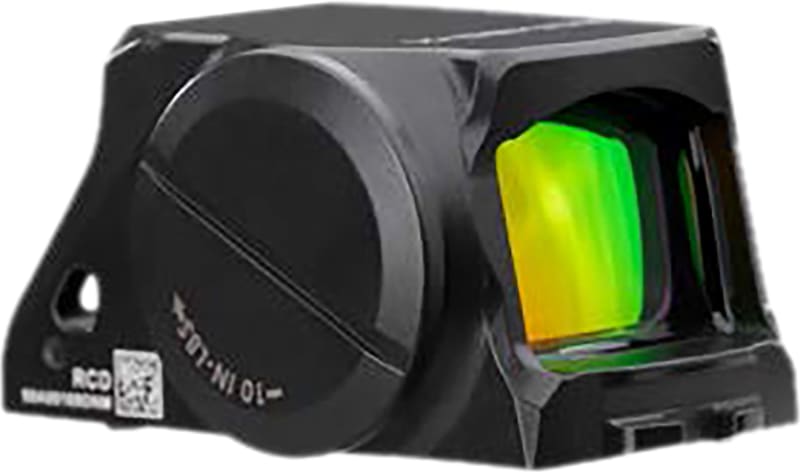

Prices there are the best in stock offer across our merchant feeds today, not manufacturer suggested retail, and they move.
Four versions, and the footprint trap
Dealer systems have loaded four separate records with their own part numbers and barcodes, which is how the lineup became public. Two mount conventionally on top of the slide, on a DeltaPoint pattern cut and a Shield pattern cut respectively. Two use SIG's underside mounted SIG-LOC system, in PRO and Compact sizes.
Early dealer prices put the conventional Compact around five hundred dollars, the conventional PRO and the SIG-LOC Compact around five fifty, and the SIG-LOC PRO around six hundred. Two bundles pairing a conventional sight with a weapon light sit above those. Every one of those numbers is a preload value rather than a SIG published price, so use them for positioning and not for budgeting.
| Metric | Value |
|---|---|
| XRAY5 preload | $500 to $600 |
| SIG median today | $480 |
| Aimpoint median | $617 |
| Holosun median | $340 |
The trap is the footprint. A DeltaPoint pattern cut, a Shield pattern cut and an underside mounted SIG-LOC system are three different interfaces. They are not interchangeable, and choosing by housing size is how people end up with a sight that does not bolt to their slide. The SIG-LOC PRO record also lists a pistol SIG has not announced, which is covered in what we know about the SIG P385.
What the forums make of it
The reaction on SIG Talk since the lineup surfaced splits cleanly, and the split is not about the optics.
The enthusiasm is for the feature list. One longtime member called the digital zeroing, the battery gauge and the round counter "pretty impressive," another said he expects the same technology to reach rifle optics, and a third reported that a rifle version was demonstrated at SHOT Show earlier this year. When a retailer listing for the XRAY5 and FOXTROT2R combo appeared this week, the thread's reaction was relief at the price rather than sticker shock.
The objection is the phone. "I have no desire for an optic that requires an app to operate," one member wrote, "I'll stick with mechanical windage and elevation adjustments." That view is worth taking seriously on a duty sight, and it is also worth checking against the spec, which is what the next section does.
The app, and what it does not control
The XRAY5 pairs to a phone app that saves and names multiple zero profiles, tracks a round count from the optic's accelerometer, and exposes brightness, motion activation, auto off timing and lockout. The round counter needs a five shot calibration so it can learn the recoil signature of the host pistol, and SIG says to recalibrate when the optic moves to another gun. It is a recoil event estimate, not a record of rounds through the chamber.
The important detail is what the phone is not. Power, brightness, windage, elevation and lockout all remain available from the two buttons on the optic itself. The app is an extra control surface rather than a requirement, which is the right way to build this, and it is the direct answer to the objection above.
If what you want is a sealed dot, that is already solved
If your reason for wanting the XRAY5 is the digital zero, there is nothing to buy instead, because nothing else on the shelf works that way. If your reason is that you want a sealed pistol dot that will not lose its dot to weather or pocket lint, that problem is solved, and has been for a while.
An enclosed emitter puts a rear window behind the optical path so nothing can land between the LED and the lens. That is the failure mode that actually removes open emitter sights from service, and it is why duty and carry guns keep moving toward enclosed housings.
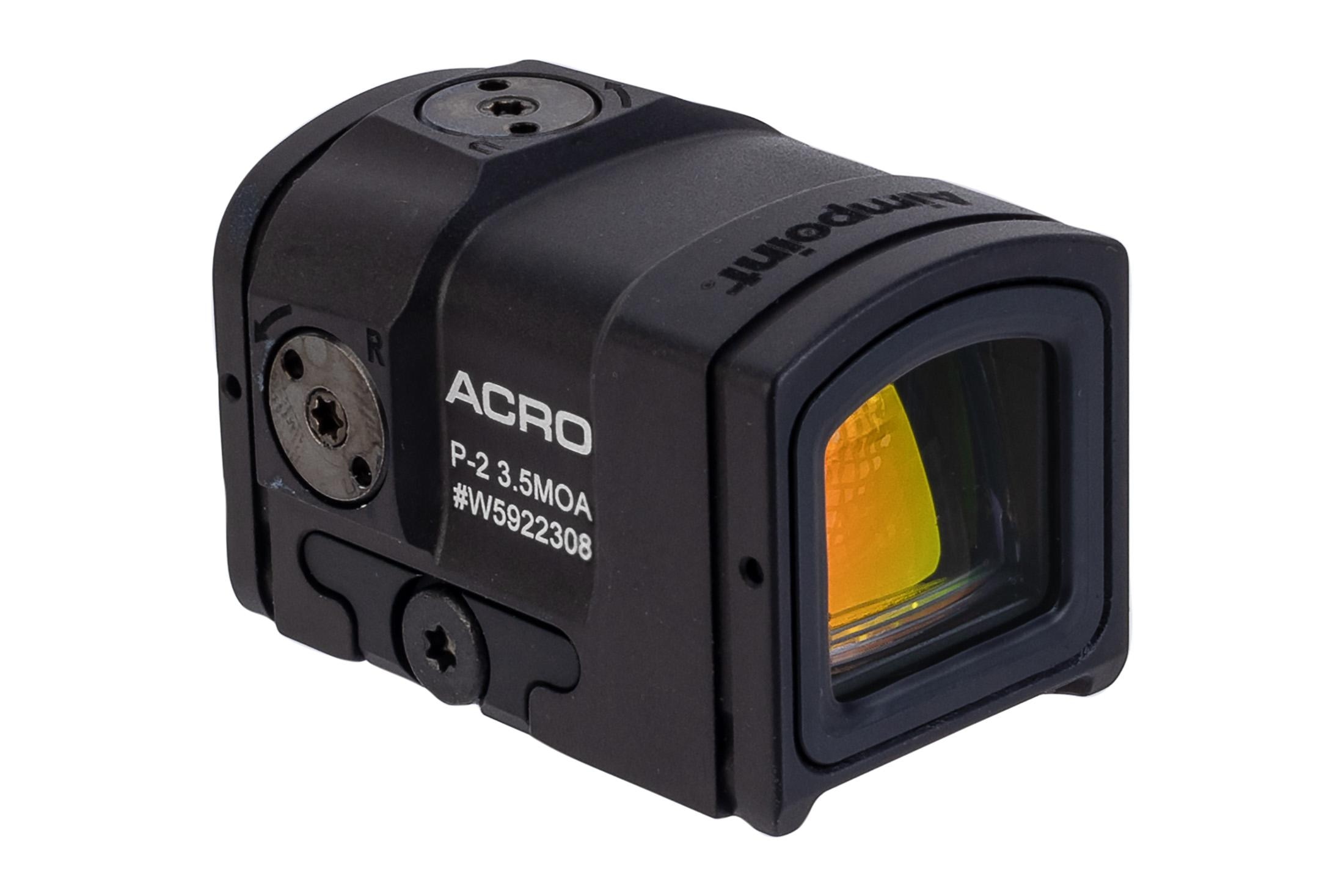
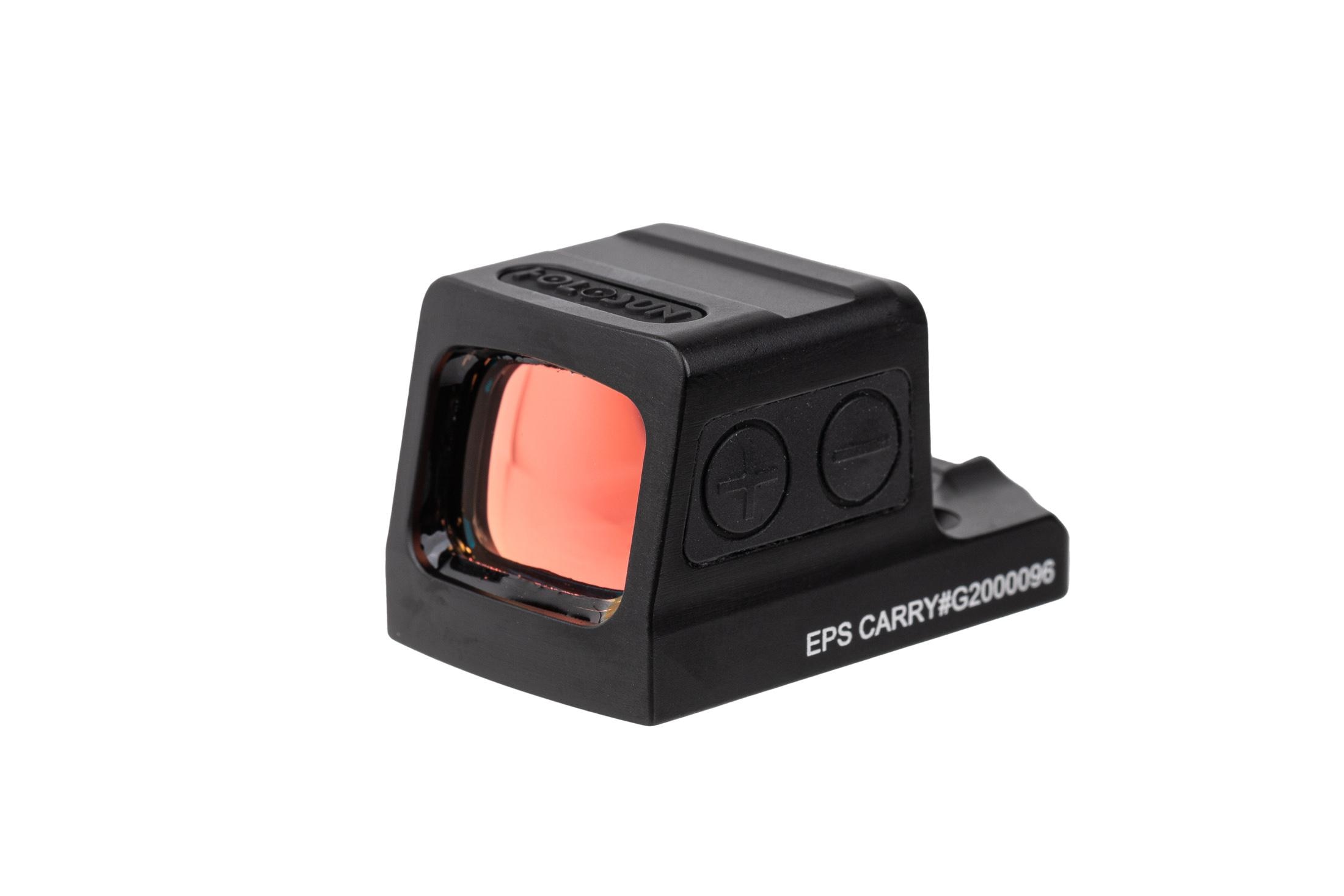
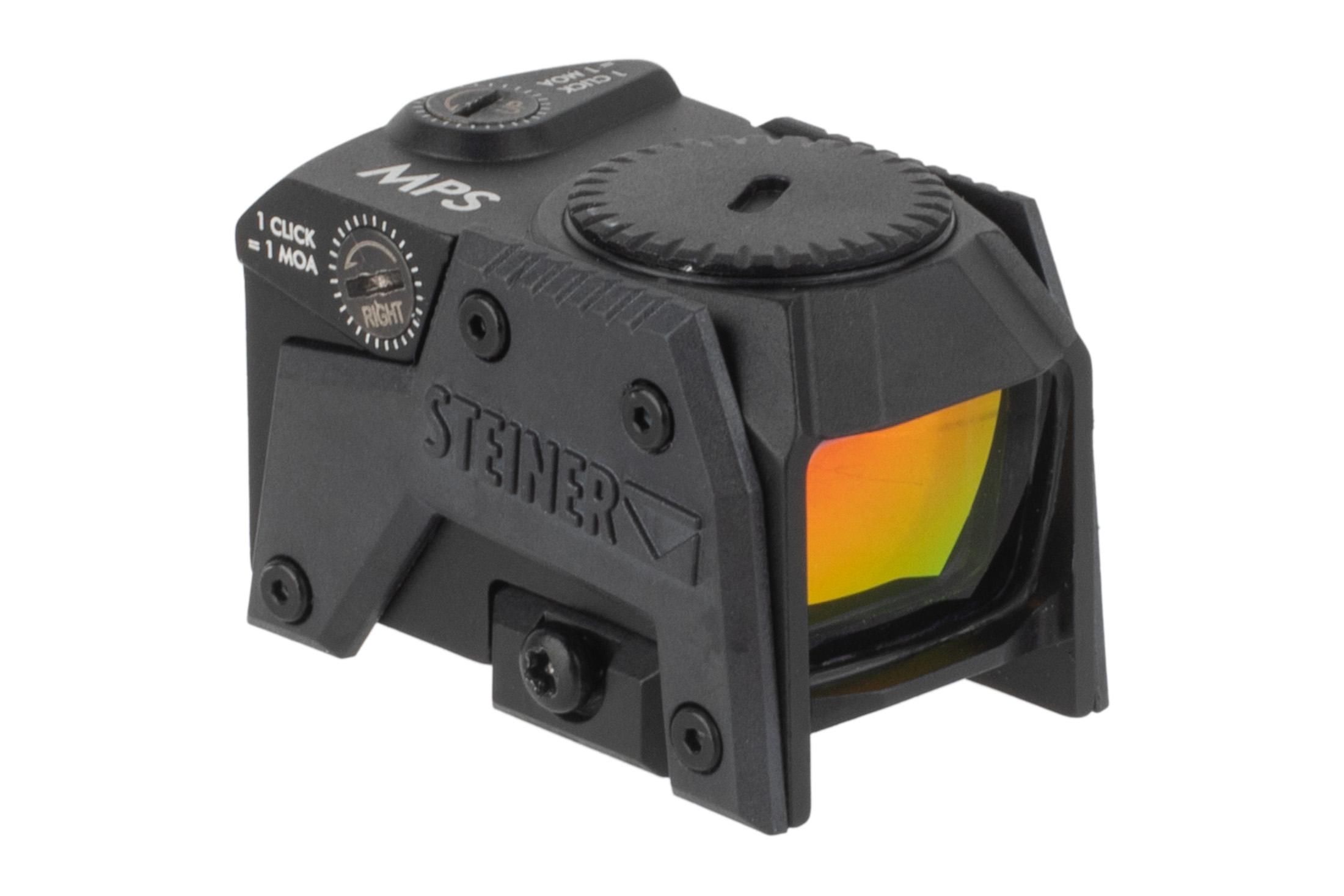
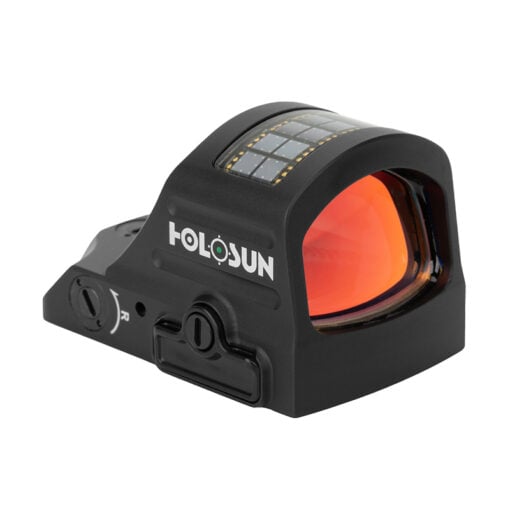
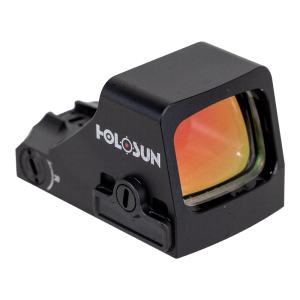
All three mount to footprints that have been stable for years, which means they are still the right purchase for the pistol you own now regardless of what SIG ships later.
If the gun you are mounting to is a carry sized slide rather than a duty slide, the smaller footprints are worth looking at before you size up to a full PRO housing.
The paper trail
How the XRAY5 Became Public
Every dated step, and who it came from
- Jan 2026CommunityA rifle version is said to have been shown at SHOT Show
Reported by a SIG Talk member citing trade coverage. Not confirmed by SIG.
- Sep 2026Public recordFour dealer records appear
Separate part numbers and barcodes for conventional and SIG-LOC versions, in Compact and PRO sizes, plus two light bundles.
- Sep 2026First partySIG's own prelaunch material names the hosts
Hidden text in the XRAY5 material lists the SIG-LOC PRO hosts, including the unannounced P385.
- Sep 18, 2026First partyA countdown appears on sigsauer.com
A blurred pistol wearing an optic and a light, COMING SOON 09.23.26, SIG NEXT badge. Posted to Facebook the same day.
- Sep 19, 2026CommunityA retailer combo listing surfaces
An XRAY5 and FOXTROT2R combo under part number SOXF54320, found by a forum member. Around 500 dollars.
- Sep 23, 2026First partySIG NEXT reveal
The only date SIG has committed to in public.
| Date | Event | Source |
|---|---|---|
| Jan 2026 | A rifle version is said to have been shown at SHOT Show | community |
| Sep 2026 | Four dealer records appear | record |
| Sep 2026 | SIG's own prelaunch material names the hosts | official |
| Sep 18, 2026 | A countdown appears on sigsauer.com | official |
| Sep 19, 2026 | A retailer combo listing surfaces | community |
| Sep 23, 2026 | SIG NEXT reveal | official |
What to watch on Wednesday
SIG NEXT Reveal
September 23, 2026
This date has passed. The status of the law is covered below.
| Event | Date | Days Remaining |
|---|---|---|
| SIG NEXT Reveal | 2026-09-23T09:00:00-04:00 | -4 days |
SIG's countdown runs out on September 23, and the teaser pistol is wearing an optic that matches this housing paired with a FOXTROT2R light. Whatever else is on that stage, the XRAY5 is the most likely thing on top of it.
Three numbers decide whether this is a serious duty optic or an interesting one. The click value and total adjustment range, which decide whether it will zero on your slide. The battery type and life, because a sight that holds 225 emitters and a radio has a power budget a simple dot does not. And the real price, because 500 dollars buys a Romeo-X SIG-LOC today and around 580 buys the PRO.
The design is genuinely new, which is rare in pistol optics. That is a reason to pay attention and not a reason to buy on preorder.
Filed underIron Sights/Optics/Explainer
FAQ
Frequently asked questions
What is digital zero on the SIG XRAY5?
- Instead of turning a screw to physically move an emitter, the XRAY5 holds 225 LEDs in a fixed 15 by 15 grid and lights one of them. A windage or elevation input tells the sight which LED to use, so the dot moves without any hardware moving. That removes the carrier plate, adjustment screws and springs from the zeroing system.
When does the SIG XRAY5 ship?
- SIG has not published a ship date and has not placed the optic in its public catalog. Four versions and a price ladder appeared in dealer systems in September 2026, which usually runs a few weeks ahead of shelves, but no availability has been confirmed.
How much does the SIG XRAY5 cost?
- Early dealer listings put the conventional Compact near five hundred dollars, the conventional PRO and SIG-LOC Compact near five hundred and fifty, and the SIG-LOC PRO near six hundred, with light bundles above those. These are preload values entered by dealers, not SIG published suggested retail, and preload prices commonly change before launch.
What footprints does the XRAY5 use?
- Four versions cover two conventional top mounted footprints, DeltaPoint pattern and Shield pattern, plus two underside mounted SIG-LOC versions in PRO and Compact sizes. These are separate interfaces and are not interchangeable, so the slide cut has to match the exact optic version rather than just the housing size.
Is the XRAY5 more durable than a normal red dot?
- Its zero no longer depends on a carrier staying in one physical position, which removes a known failure point. Whether the complete optic survives recoil better than an established enclosed dot is a different question that needs testing on production units, and SIG has not published a shock rating.
What specification is still missing?
- The adjustment range and the value of each step. 225 aiming points tells you nothing without knowing the spacing between adjacent LEDs, because that spacing is the click value and it sets the total travel. Battery type, weight, window dimensions and night vision settings are also unpublished.
Does the XRAY5 need a phone to work?
- No. The app saves zero profiles, reads the round counter and exposes settings, but power, brightness, windage, elevation and lockout are all available from the two buttons on the optic. The phone is an additional control surface, not a requirement for basic operation.
Are there any photos of the SIG XRAY5?
- No. SIG has no product page for it and a search of sigsauer.com for XRAY5 returns nothing. The only SIG image is the deliberately blurred pistol in its September 23 countdown, which is wearing an optic that matches the housing. Everything else in circulation is dealer record text or an illustration.
How much will the SIG XRAY5 cost?
- Dealer preloads put the four versions between about 500 and 600 dollars, with light bundles above that, and a retailer listing for the XRAY5 and FOXTROT2R combo turned up around 500. None of those are SIG published prices. For scale, the median price builders here commit to an optic is 464 dollars, and SIG-LOC optics we already price in stock run 500 to 632.
Can I buy a SIG-LOC optic now?
- Yes. SIG-LOC is not unreleased. The Romeo-X line ships with it in Compact and PRO sizes and we price 18 SIG-LOC optics across 9 merchants, with in stock offers from 500 dollars. The XRAY5 would add digital zeroing to an interface that already exists.
Does the XRAY5 need a phone app?
- No. The app saves and names zero profiles, reads the round counter and exposes brightness and timeout settings, but power, brightness, windage, elevation and lockout all stay on the two buttons on the optic. That matters to the most common objection on the forums, which is that a duty sight should not depend on a phone.
Written by
GPP Editorial TeamAR Build Specialists
GunPartPicker guides are powered by data from real builds — what builders actually select tells the story.
Read next
All guides →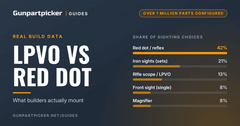 IRON SIGHTS/09.15.26What Builders Actually Mounted in 2026: LPVO vs Red Dot
 CLONE BUILD/09.16.26M4A1 Block I Clone Build Guide: The Standard-Issue SOCOM Carbine
 CLONE BUILD/09.16.26CQBR Block I Clone Build Guide: Every Part You Need
 CLONE BUILD/09.16.26Mk18 Mod 0 Clone Build Guide: The Original CQB Weapon System
 HOLSTERS/09.21.26Glock Gen6: Which Models Come Next, and What Fits Now
 MAGAZINES/09.21.26PSA Sabre 5.56 AK: What Is Confirmed Before the September 25 Launch
 TRIGGERS/09.24.26SHOT Show 2027: What Builders Actually Care About
 HOLSTERS/09.18.26SIG P385: Specs, Price and What Fits