Buy supersonic if you shoot unsuppressed or want reach. Buy subsonic only if you're running a suppressor. Without a can, subs lose most of their point.
The short answer
Best supersonic: Federal American Eagle 150 grain FMJ. It's the 300 Blackout load our users pick most since July 1, about one in nine of all 300 Blackout picks, and it's in stock at about 69 cents a round.
- What we like: Federal lists it at about 1,900 fps, and it cycles almost any 300 Blackout gun.
- Watch out for: loud without a can, and FMJ is practice ammo, not a hunting or defense load.
Best subsonic: Magtech 200 grain FMJ subsonic. AAC's 220 grain Sabre Blade draws a few more picks, but it's sold out everywhere we track this week. Magtech is the most picked sub in stock, about 84 cents a round.
- What we like: listed at about 1,017 to 1,060 fps depending on the source, safely under the speed of sound.
- Watch out for: your gun may need an adjustable gas block or a suppressor to cycle it.
Best subsonic for defense: SIG Sauer 194 grain Max Expansion subsonic. The most picked expanding sub that's in stock, about $3 a round.
- What we like: built to expand at subsonic speed, where FMJ subs just poke holes.
- Watch out for: about four times the price of FMJ subs, so buy it for carry, not practice.
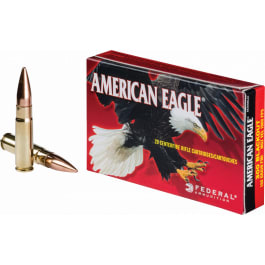


Price is the median in stock price per round across our merchant feeds, 7 days to November 4, 2026
| Metric | Value |
|---|---|
| Supersonic | $1.32/rd |
| Subsonic | $1.58/rd |
| Picks | 6 in 10 supers |
The speed of sound decides everything
Sound travels about 1,125 feet per second in warm air at sea level. In freezing air it drops to about 1,090.
A bullet faster than that drags a small sonic boom along with it. That's the crack you hear downrange, and a suppressor can't touch it, because the noise comes from the bullet, not the muzzle.
Subsonic 300 Blackout loads sit around 1,000 to 1,050 fps, under the line on most days. Load makers keep a margin because a hot day, a long barrel or a lot that runs fast can push a sub over. If your subs crack in summer, that's why.
Why subs need heavy bullets
At 1,000 fps a light bullet has almost no energy. So subsonic loads use heavy bullets, 190 to 220 grains, to carry more energy at that slow speed.
Supersonic loads go the other way. They use 110 to 150 grain bullets pushed to about 1,900 to 2,300 fps, which shoots flatter and hits harder at range.
Heavy, slow bullets need more spin to stay stable. That's why most 300 Blackout barrels are 1:7 or 1:8 twist. A slower twist may shoot supers fine and send subs sideways. Check your twist before you buy a case of subs, or run it through the twist rate calculator.
Why your gun may run only one
Subs make far less gas than supers. A gas system set up to cycle reliably with subs will run hot and hard on supers. One set up for supers may short stroke on subs and fail to lock back.
A suppressor helps subs cycle, because it raises back pressure. Plenty of guns run subs only with the can on.
The fix most people use is an adjustable gas block. You open it up for subs and close it down for supers. If you plan to shoot both, budget for one when you buy the upper, not after.
Some owners go the other way and run a heavier buffer to tame supers. That can make subs worse. Change one thing at a time and test with a full magazine.
How quiet is subsonic, really?
Quieter, not silent. A suppressed sub removes the downrange crack, so what's left is the action cycling and the gas leaving the can. Most people describe it as a loud nail gun.
A suppressed super still cracks downrange. It's a lot quieter at your ear than an unsuppressed rifle, but the bullet's sonic crack follows it all the way to the target.
Without a suppressor, a sub is still loud. You've just bought more expensive ammo that drops faster.
Price per round
Subs cost about a fifth more than supers per round in our feeds right now. Heavy bullets and smaller production runs both push the price up.
FMJ practice ammo of either kind is the cheap end. Expanding subs built for defense or hunting cost two to four times as much, so most people practice with FMJ and keep a few boxes of the good stuff.
Which should you buy?
Unsuppressed range gun or truck gun: supers. They're cheaper and flatter, and they cycle without tuning.
Suppressed gun: both. Practice with FMJ subs, keep a box of expanding subs for home, and keep supers for anything past about 100 yards.
Hunting: expanding supers for most deer sized game. Subs drop fast past 100 yards.
If you're still choosing between 300 Blackout and 5.56 in the first place, our 300 Blackout vs 5.56 guide covers that, including how to mark your mags so a 300 Blackout round never ends up in a 5.56.
How we pick
Picks are the 300 Blackout loads our users clicked through to buy or added to Ammo Finder most often from July 1 to November 4, 2026, counted once per person, among loads in stock at write time. Prices are the median in stock price per round across every merchant feed we track. Velocities are each maker's or retailer's published figures.
Filed under.300 BLK/Suppressed/Comparison
FAQ
Frequently asked questions
What is the difference between subsonic and supersonic 300 Blackout?
- Speed and bullet weight. Supersonic loads use 110 to 150 grain bullets at about 1,900 to 2,300 fps. Subsonic loads use 190 to 220 grain bullets at about 1,000 to 1,050 fps, under the speed of sound, so a suppressor can remove the crack.
Is subsonic 300 Blackout quiet without a suppressor?
- No. Without a suppressor, subsonic 300 Blackout is still loud. Its quiet comes from pairing it with a suppressor, which handles the muzzle blast while the slow bullet makes no sonic crack downrange.
Why won't my 300 Blackout cycle subsonic ammo?
- Subsonic loads make much less gas than supersonic ones. A gas system tuned for supers can short stroke on subs. An adjustable gas block, or running subs with a suppressor attached, usually fixes it.
How much does 300 Blackout cost per round?
- In our merchant feeds for the week to November 4, 2026, supersonic 300 Blackout ran a median of about $1.32 a round and subsonic about $1.58. Cheap FMJ supers started around 69 cents.
What twist rate do I need for 300 Blackout subsonic?
- 1:7 or 1:8. Heavy subsonic bullets need fast twist to stay stable. A slower twist may shoot supersonic loads fine and keyhole subsonic ones.
Is subsonic 300 Blackout good for hunting?
- Only at short range with an expanding bullet. Subsonic loads drop quickly past about 100 yards. For most deer hunting, an expanding supersonic load is the better choice.
Written by
GPP Editorial TeamAR Build Specialists
GunPartPicker guides are powered by data from real builds. What builders actually select tells the story.
Read next
All guides → BARRELS/10.15.26300 Blackout vs 5.56: Which One Belongs in Your Build
 BARRELS/10.19.26338 ARC Explained
 SUPPRESSORS/09.18.26Best 300 Blackout Suppressors in 2026
 CLONE BUILD/11.05.26LVAW clone build: the SIG MCX Low Visibility Assault Weapon
 SUPPRESSORS/09.18.26Best .22 LR Suppressors in 2026
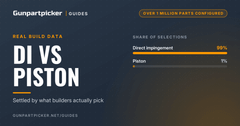 BCGS/10.12.26DI vs Piston, Settled by Build Data
 GUIDE/10.08.26Cost Per Round by Caliber
 GUIDE/10.09.26Ammo Price Watch: What to Buy and When
Tools for this guide
- Planning tool300 BLK vs 5.56 Race (3D)Race a 9 inch .300 Blackout against a 10.3 inch 5.56, or up to four rifles of your own, down a 3D range. Every rifle fires at once in slow motion, and you get each one's time, speed, energy and drop at 100 to 500 yards.
- Planning toolAmmo Cutaway (3D)Cut M193, M855 green tip, M855A1, 77 gr OTM and .300 BLK supersonic and subsonic in half and compare them side by side in 3D: what each bullet is made of, its speed from short barrels, steel targets, and today's price per round. Then watch a .300 BLK round go into a 5.56 chamber.
- Tuning toolGas Block vs Buffer (3D)Can on and brass at 1 o'clock: turn the gas down or add buffer weight? Turn an adjustable gas block's screw in 3D and watch less gas reach the bolt carrier, or step from H to H2 and H3 and watch the same gas push more weight. See where the brass lands, the carrier speed, the gas at your face and when it short strokes.